Fundy National Park
Fundy National Park is a national park located in New Brunswick, Canada. Established in 1948, the park encompasses 80 square miles (206 square km) of rugged…
What is Fundy National Park?
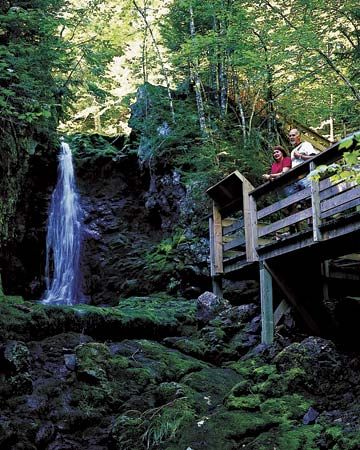
Fundy National Park is a national park located in New Brunswick, Canada. Established in 1948, the park encompasses 80 square miles (206 square km) of rugged coastline along the Bay of Fundy.12
The park is most famous for its extraordinary tides, which are the highest in the world, reaching up to 70 feet (21 meters). The landscape features stream-riven hills and steep cliffs that rise up to 1,200 feet (365 meters) above sea level. As a popular destination for outdoor recreation, the park offers visitors opportunities for hiking, camping, and bird watching, providing a scenic look at the unique coastal environment of the Atlantic region.132
How do the extreme tides affect the local wildlife?
The extreme tides of the Bay of Fundy create a dynamic and challenging environment that significantly influences local wildlife. The dramatic rise and fall of water levels, which can reach up to 70 feet (21 meters), define the littoral zone—an area characterized by alternating periods of submergence and exposure.53
Impact on Coastal Ecosystems
The tidal cycle acts as a powerful ecological force that shapes the distribution and behavior of marine life:
- Nutrient Cycling: The vigorous movement of water in estuaries and coastal areas pumps nutrients from decomposing organic matter into the water column, stimulating biological production. This supports a rich food web, from microscopic zooplankton to larger organisms.6
- Habitat Adaptation: Organisms in these zones must be highly specialized. On rocky shores, species often possess structures like holdfasts to anchor themselves against strong currents, or they are firmly cemented to the substrate to avoid being swept away.63
- Intertidal Biodiversity: The constant disturbance caused by tidal currents and wave action creates “gaps” in habitats, such as mussel beds. These disturbances prevent any single species from dominating indefinitely, allowing a diverse suite of species to colonize the area over time.7
- Feeding Strategies: Many shorebirds, such as oystercatchers and other Charadriiform species, rely on the receding tide to expose mudflats and rocky areas where they can forage for worms and other prey in shallow water.8
The extreme tidal range essentially dictates the rhythm of life for these coastal communities, forcing species to adapt to a landscape that is constantly shifting between land and sea.93
What are some other famous national parks in Canada?
Canada boasts a vast and diverse national park system that spans the country, protecting unique landscapes and ecosystems. Beyond Fundy, several other parks are internationally recognized for their natural beauty and ecological significance:
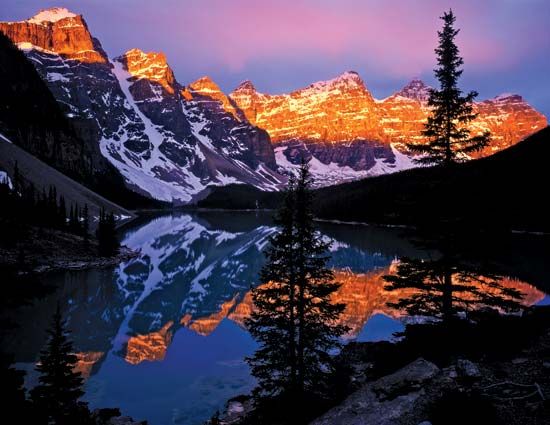
- Banff National Park: Established in 1885, this was Canada’s first national park. Located in the Canadian Rockies of Alberta, it is famous for its stunning alpine scenery, hot springs, and vibrant lakes like Lake Louise.1314
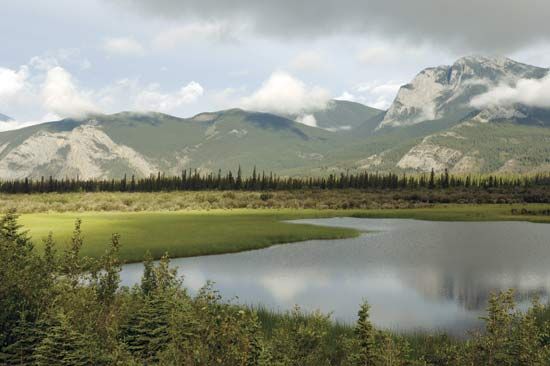
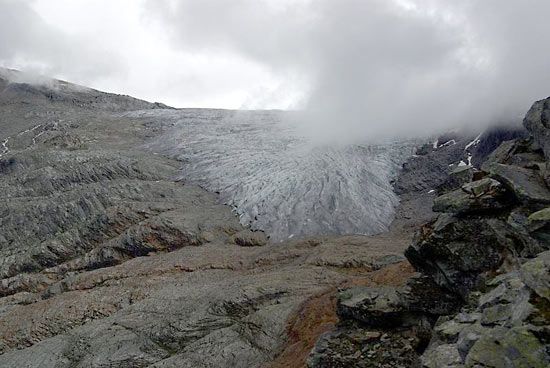
- Jasper National Park: Situated north of Banff, Jasper is the largest national park in the Canadian Rockies. It features the massive Columbia Icefield, dramatic canyons, and diverse wildlife.15
- Wood Buffalo National Park: Spanning northern Alberta and the Northwest Territories, this is Canada’s largest national park. It was created to protect bison herds and serves as the only known nesting ground for the endangered whooping crane.16
- Waterton Lakes National Park: Located in Alberta, this park was joined with Montana’s Glacier National Park in 1932 to form the world’s first binational peace park.13
Many of these sites are designated World Heritage sites due to their rare animal populations and significant geological features.1317
How can tidal energy be used to generate electricity?
Tidal power is a form of renewable energy that converts the natural movement of ocean tides and currents into electric power. There are two primary methods for harnessing this energy:
- Tidal Barrage Systems: These systems utilize a dam or “barrage” to block water during high tide. As the tide recedes, the trapped water is released through a turbine, which generates electricity. Notable examples include the Rance River station in France and the Sihwa Lake station in South Korea.1819
- Tidal Stream Systems: These systems capture energy from fast-moving ocean currents. They can be installed as tidal fences across channels or as underwater turbines that function similarly to wind turbines. These are generally considered to have a lower environmental impact than barrage systems.18
While tidal energy currently contributes a small fraction of global power, it holds significant potential, with experts estimating that fully developed systems could eventually meet a substantial portion of global electricity demand.18
Sources
- Fundy National Park — Encyclopædia Britannica
- Fundy National Park — Merriam-Webster
- Bay of Fundy — Encyclopædia Britannica
- New Brunswick - Sports and recreation — Encyclopædia Britannica
- estuary - Salt wedge estuaries — Encyclopædia Britannica
- coastal landforms - Tides — Encyclopædia Britannica
- Indian Ocean - Tides — Encyclopædia Britannica
- Atlantic Ocean - Tides of the Atlantic Ocean — Encyclopædia Britannica
- ecological disturbance - Disturbance and biodiversity in intertidal zones — Encyclopædia Britannica
- pelecaniform - Physiological adaptations — Encyclopædia Britannica
- Charadriiform - Shorebirds (suborder Charadrii) — Encyclopædia Britannica
- littoral zone — Encyclopædia Britannica
- Canada - Sports and recreation — Encyclopædia Britannica
- Wood Buffalo National Park — Encyclopædia Britannica
- Jasper National Park — Encyclopædia Britannica
- Banff National Park — Encyclopædia Britannica
- list of World Heritage sites - Canada — Encyclopædia Britannica
- tidal power — Encyclopædia Britannica
- turbine - Tidal plants — Encyclopædia Britannica
- Atlantic Ocean - Other uses — Encyclopædia Britannica
Published on · 3 min read