Yoho National Park
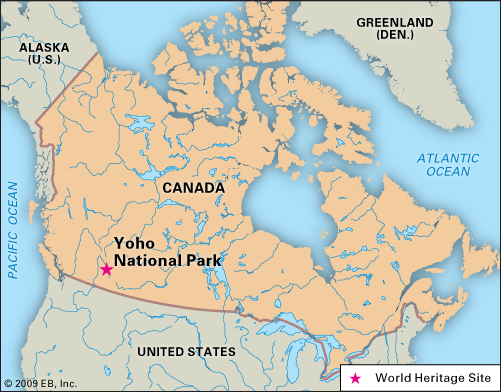
Yoho National Park, located in southeastern British Columbia, Canada, is defined by the rugged terrain of the Rocky Mountains. Its landscape is characterized…
What are the main geological features and attractions in Yoho National Park?
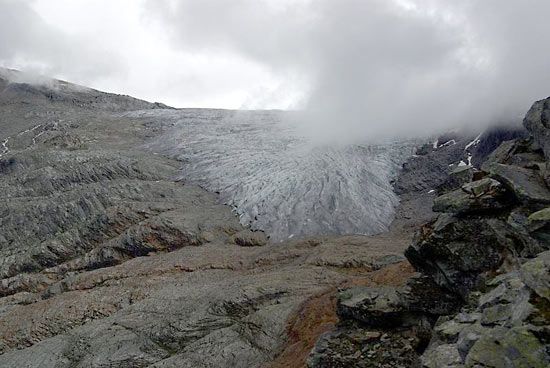
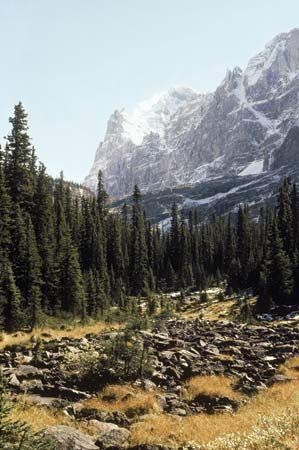
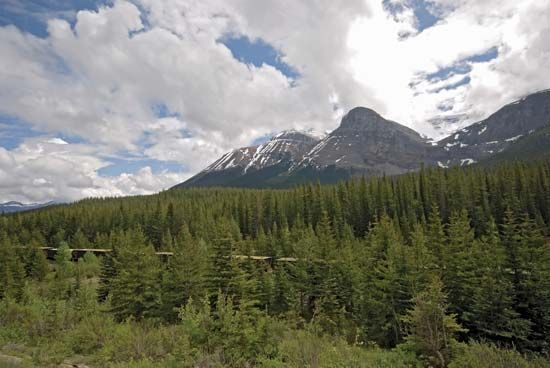
Yoho National Park, located in southeastern British Columbia, Canada, is defined by the rugged terrain of the Rocky Mountains. Its landscape is characterized by dramatic geological features, including expansive ice fields, glaciers, steep mountain peaks, and broad valleys.1
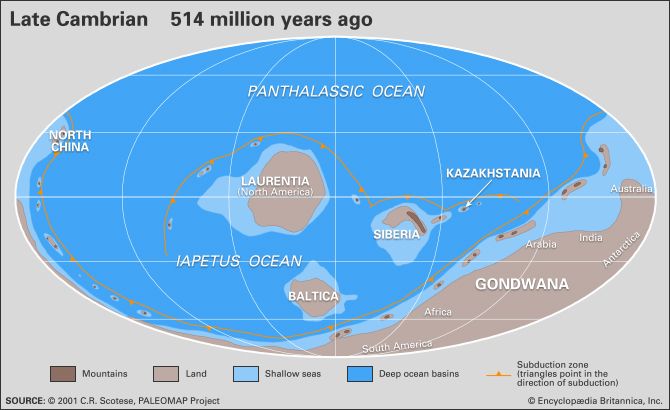
The park is internationally recognized for the Burgess Shale, a world-renowned fossil site that preserves soft-bodied marine animals from the Cambrian Period, dating back approximately 520 to 510 million years.1
Key attractions within the park include:
- Takakkaw Falls: A prominent waterfall known for its significant height and scenic beauty.1
- Emerald Lake: A picturesque lake surrounded by unique pockets of temperate rainforest, featuring species like western red cedar and western hemlock.1
- Natural Bridge: A notable rock formation carved by the Kicking Horse River.1
Designated as part of a UNESCO World Heritage site in 1984, the park serves as a vital habitat for diverse wildlife, including grizzly bears, moose, and mountain goats.1
What recreational activities are available for visitors in Yoho National Park?
Sorry, the Britannica knowledge base does not contain information regarding specific recreational activities available for visitors in Yoho National Park.
How did Yoho National Park get its name, and when was it established?
Yoho National Park was established as a dominion park in 1886, when the Canadian government reserved 10 square miles (26 square km) at the foot of Mount Stephen. It was later declared a national park in 1930, encompassing a much larger area.1
The name “Yoho” is derived from a Cree expression of awe or wonder, which is often used to describe the park’s spectacular scenery and dramatic geological features.1
How does Yoho National Park compare in size and features to other national parks in British Columbia?
Yoho National Park covers an area of 507 square miles (1,313 square km) in southeastern British Columbia. When compared to other major parks in the region, it is slightly smaller than Glacier National Park, which spans 521 square miles (1,349 square km). Both are significantly smaller than Banff National Park in neighboring Alberta, which encompasses 2,564 square miles (6,641 square km).145
Like its neighbors, Yoho is defined by the rugged, mountainous terrain of the Rocky Mountains, featuring glaciers, ice fields, and steep valleys. While all these parks share similar alpine ecosystems and wildlife—such as grizzly bears, mountain goats, and elk—Yoho is uniquely distinguished by the Burgess Shale. This world-renowned fossil site provides critical evidence of the evolution of soft-bodied marine animals from the Cambrian Period, a feature not found in the other parks. Together with Kootenay, Banff, and Jasper, Yoho forms part of a UNESCO World Heritage site recognized for its outstanding natural beauty and geologic significance.156
Sources
- Yoho National Park — Encyclopædia Britannica
- Yoho National Park — Merriam-Webster
- Burgess Shale — Encyclopædia Britannica
- British Columbia - Sports and recreation — Encyclopædia Britannica
- Glacier National Park — Encyclopædia Britannica
- Banff National Park — Encyclopædia Britannica
Published on · 2 min read