Kootenay National Park
Kootenay National Park is a national park located in the southeastern region of British Columbia, Canada. Established in 1920, the park spans the western…
What is Kootenay National Park?
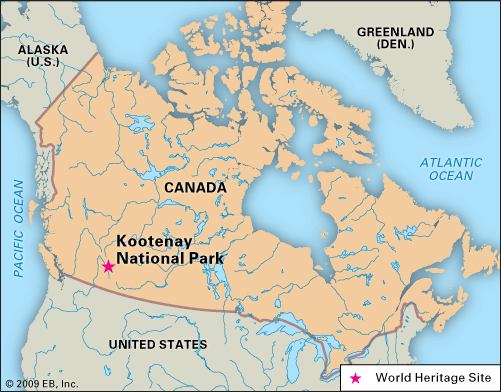
Kootenay National Park is a national park located in the southeastern region of British Columbia, Canada1. Established in 1920, the park spans the western slopes of the Rocky Mountains and is situated adjacent to Banff and Yoho national parks. In 1984, it was designated part of the Canadian Rocky Mountain Parks World Heritage site.12
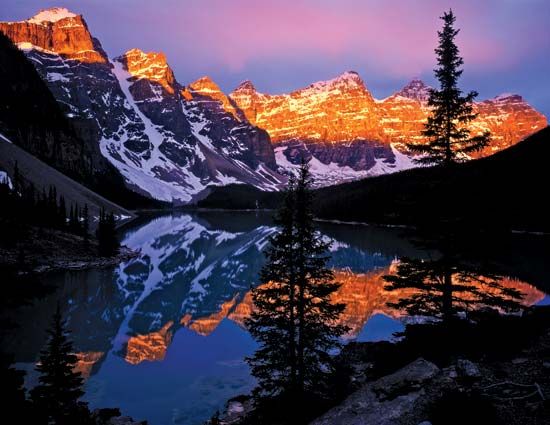
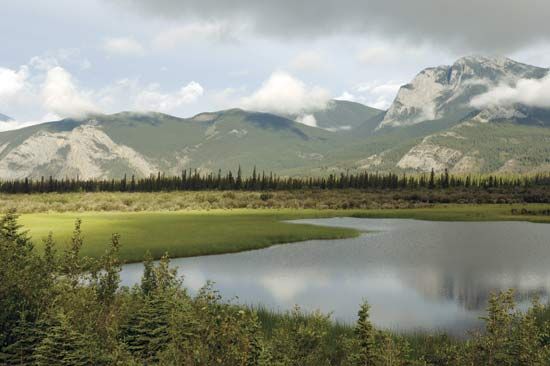
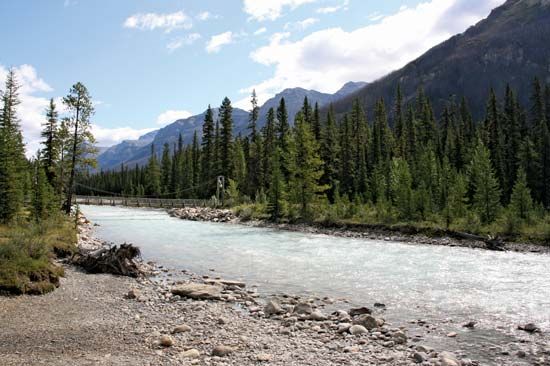
The park’s landscape is defined by the Kootenay River, along with glaciers, canyons, verdant valleys, and snowcapped peaks. It has served as a travel route for thousands of years, with archaeological evidence suggesting human presence near its hot springs dating back 11,000 to 12,000 years. Today, the park supports diverse wildlife, including wapiti, bighorn sheep, moose, and mountain goats.1
What are the other national parks in the Canadian Rocky Mountain World Heritage site?
The Canadian Rocky Mountain Parks World Heritage site is a collective designation that includes four contiguous national parks, along with several provincial parks. In addition to Kootenay National Park, the national parks within this site are:
- Banff National Park: Established in 1887, it is Canada’s first national park and is renowned for its alpine scenery, including Lake Louise and the Columbia Icefield.4
- Jasper National Park: Located north of Banff, it is the largest of the four parks and features significant geologic sites, including the Columbia Icefield and the Athabasca River valley.1
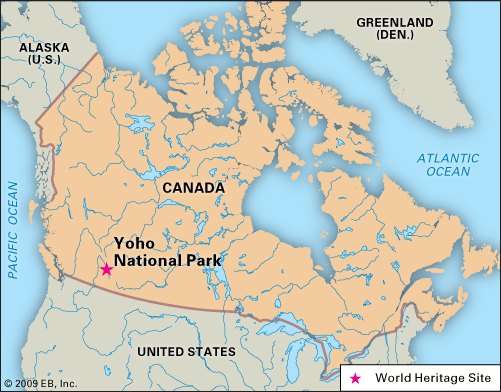
- Yoho National Park: Situated in British Columbia, this park is famous for the Burgess Shale fossil beds, which provide critical evidence of early marine evolution.5
The World Heritage site also encompasses provincial parks such as Mount Assiniboine, Hamber, and Mount Robson, which collectively protect the diverse ecosystems and dramatic mountain landscapes of the Canadian Rockies.6
How do hot springs form in mountainous regions?
Hot springs in mountainous regions typically form through two primary processes:
- Volcanic Activity: In regions with recent or active volcanism, groundwater seeps deep into the Earth’s crust through fractures. This water comes into contact with shallow intrusions of magma, which heats the water to high temperatures. The superheated, mineral-rich water then rises back to the surface as hot springs, geysers, or fumaroles.8910
- Convective Circulation: In non-volcanic mountainous areas, hot springs can form through the normal geothermal gradient of the Earth’s crust. As groundwater percolates downward to depths of a kilometer or more, it encounters rock temperatures that increase by approximately 30 °C (54 °F) per kilometer. This heated water then circulates back to the surface via convection.8
In many mountainous regions, such as Yellowstone National Park, tectonic activity creates a deeply fractured crust that facilitates this movement of water, while minor tremors help keep these subterranean channels open.9
What are some examples of pictographs found in Canadian national parks?
Pictographs are significant archaeological features found within Canadian national parks, serving as evidence of long-term human presence in these regions.
In Kootenay National Park, for example, pictographs indicate that humans settled near the area’s hot springs approximately 11,000 to 12,000 years ago, highlighting the park’s role as a major travel route since prehistoric times. Additionally, Writing-on-Stone/Áísínai’pi is a site renowned for its extensive collection of rock art, including both petroglyphs and pictographs, which hold deep cultural and historical significance.71
Sources
- Kootenay National Park — Encyclopædia Britannica
- Kootenay National Park — Merriam-Webster
- British Columbia - Sports and recreation — Encyclopædia Britannica
- Yoho National Park — Encyclopædia Britannica
- Jasper National Park — Encyclopædia Britannica
- Banff National Park — Encyclopædia Britannica
- list of World Heritage sites - Canada — Encyclopædia Britannica
- hot spring — Encyclopædia Britannica
- Yellowstone National Park - Physical features — Encyclopædia Britannica
- volcano - Volcanoes and geothermal energy — Encyclopædia Britannica
- volcano - Subduction volcanoes — Encyclopædia Britannica
Published on · 2 min read