Barley
Barley is a highly adaptable cereal crop that serves as the fourth largest grain produced globally. Its agricultural significance stems from its ability to…
What role does barley play in agriculture and livestock feed?
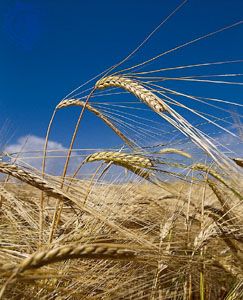
Barley is a highly adaptable cereal crop that serves as the fourth largest grain produced globally. Its agricultural significance stems from its ability to thrive in diverse climates, ranging from temperate and subtropical regions to harsh, short-season environments like the Himalayan slopes. It is notably more resistant to dry heat than other small grains and can be cultivated on poorer soils and at lower temperatures than wheat.12
In the context of livestock feed, barley is a primary global use for the crop. Its utility varies by variety:12
- Six-row barley: Characterized by higher protein content, making it particularly well-suited for animal feed.1
- Nutritional role: It serves as a staple ingredient for pigs and is increasingly utilized for cattle.2
- By-products: The plant’s soft straw is commonly used as livestock bedding and as a source of bulk roughage.1
While valuable, its use in poultry production has declined due to its lower starch content compared to corn or wheat, which results in a lower-energy ration.2
What are the health benefits of barley grass and how is it consumed?
The provided search results do not contain information regarding the specific health benefits of barley grass or how it is consumed. While the text notes that barley is used in “health products,” it does not elaborate on the properties or consumption methods of the grass itself.
Sorry, the Britannica knowledge base does not contain this information.
How long has barley been cultivated and what are its origins?
Barley (Hordeum vulgare) is one of the oldest cultivated grains in human history. It was domesticated approximately 10,000 years ago, around 8000 BCE, in the Fertile Crescent, originating from its wild progenitor, Hordeum spontaneum. Genetic research also indicates that Tibet served as an additional, independent center of domestication for the crop.1
Following its initial domestication, barley cultivation spread rapidly alongside the development of settled agricultural societies. Archaeological evidence tracks its expansion across the ancient world:
- 5000 BCE: Cultivation established in Egypt.1
- 3000 BCE: Cultivation present in northwestern Europe.1
- 2350 BCE: Evidence of cultivation in Mesopotamia.1
- 1500 BCE: Cultivation established in China.1
For millennia, barley served as a foundational food source, acting as the primary bread grain for the Hebrews, Greeks, and Romans, and remaining a staple throughout much of Europe until the 16th century.1
What are the different types of barley and how are they used?
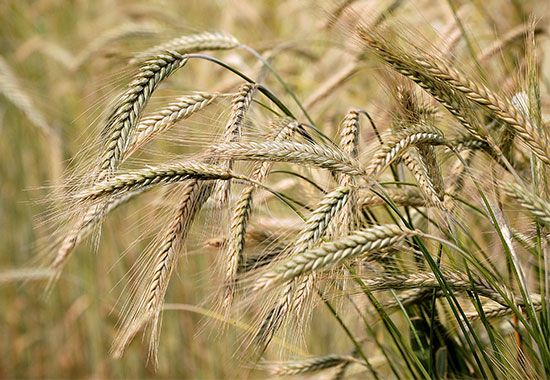
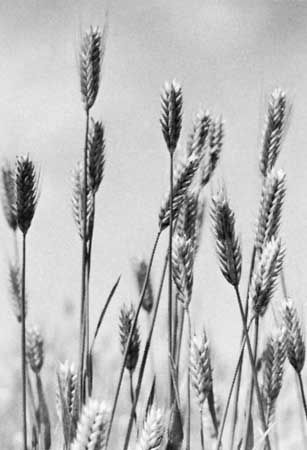
Barley (Hordeum vulgare) is primarily categorized into two varieties based on the structure of its flower spike, which dictates its primary use:1
- Six-row barley: This variety features three spikelets at each notch of the flower spike, each developing a kernel. Due to its higher protein content, it is most commonly utilized for animal feed.1
- Two-row barley: In this variety, only the central florets produce kernels, while the lateral florets remain sterile. Because it possesses a higher sugar content, it is the preferred choice for malt production.1
Beyond these botanical types, barley is processed into various forms for human consumption and industrial use:
- Pearl barley: The most popular form globally, this consists of whole kernels polished to remove the outer husk and part of the bran layer. It is frequently added to soups and various cooked foods.12
- Barley flour: Because it contains little gluten, it is used for unleavened flatbreads and porridge rather than porous loaves.1
- Industrial/Other: Barley is also used to manufacture vinegar, malt extract, and certain breakfast foods.2
Sources
- Barley — Encyclopædia Britannica
- Cereal processing - Barley — Encyclopædia Britannica
- Neolithic: Top Questions — Encyclopædia Britannica
- Origins of agriculture - Europe — Encyclopædia Britannica
Published on · 3 min read