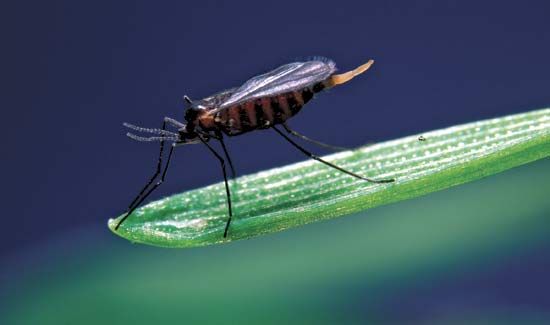
Gall Midge
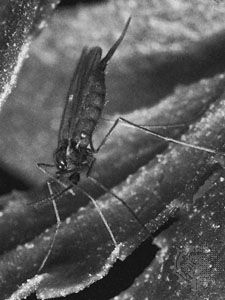
Gall midges (family Cecidomyiidae) typically follow a standard insect life cycle, though they are notable for their role in creating galls—abnormal tissue…
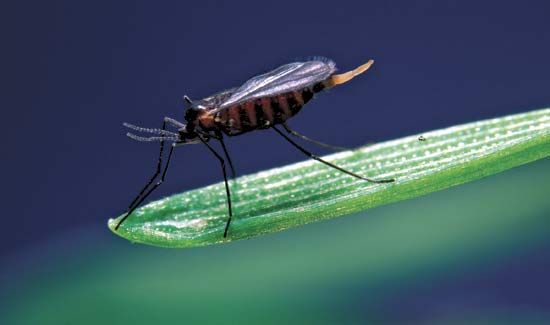
How do gall midges reproduce and what is their life cycle like?
Gall midges (family Cecidomyiidae) typically follow a standard insect life cycle, though they are notable for their role in creating galls—abnormal tissue swellings—on plants.
Life Cycle
The life cycle of a gall midge generally involves the following stages:
- Larval Stage: Brightly colored larvae inhabit leaves and flowers, where they induce the formation of galls. While most species develop within these plant structures, some live in galls created by other insects.1
- Pupation: Depending on the species, pupation occurs either within the gall itself or in the soil.1
- Overwintering: These insects typically pass the winter in an immature stage.1
Reproduction
While most gall midges reproduce through standard sexual means, some species exhibit a remarkable biological phenomenon known as paedogenesis. In the genus Miastor, large larvae produce smaller daughter larvae internally. These offspring feed on the mother larva until they consume it entirely, after which they emerge to potentially repeat the process for several generations before eventually pupating.1
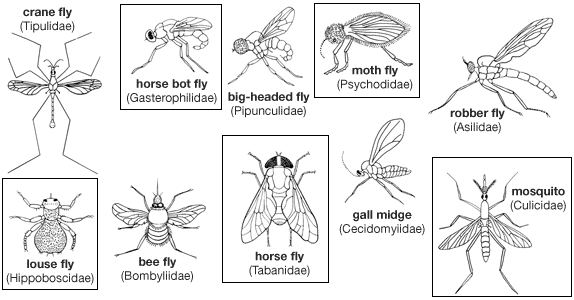
What are some common examples of gall midges that affect crops or garden plants?
Several species of gall midges are significant pests that affect various agricultural crops and ornamental garden plants. These insects are members of the family Cecidomyiidae and are known for causing tissue swellings, or galls, on their host plants.1
Common examples include:
- Hessian fly: Considered the most serious pest in the family, it is highly destructive to wheat, barley, and rye crops1.3
- Chrysanthemum midge: Found in Europe and North America, this species creates small galls within the leaves of chrysanthemums.1
- Rose midge: A serious greenhouse pest that infests the young buds and shoots of roses.1
- Other agricultural pests: Various species also target specific crops, including the wheat midge, sorghum midge, rice midge, clover midge, and pear midge.1
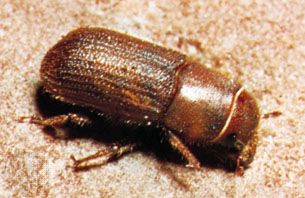
While many are pests, it is important to note that a few beneficial species exist that prey on aphids, mites, scale insects, and bark beetle larvae.1
How do gall midges induce gall formation in plants?
Gall midges induce the formation of galls—abnormal tissue swellings—through a specific biological process initiated during the early stages of their life cycle.
When a female gall midge deposits an egg into plant tissue, the process begins upon the hatching of the larva. As the larva begins to feed, it secretes specific substances into the surrounding plant tissue. These secretions trigger the plant to undergo rapid cell proliferation, causing the tissue to grow and swell around the feeding insect. This resulting structure, known as a gall, provides the larva with both a protected environment and a localized source of nutrition.4
The galls produced are typically characteristic of the specific species of midge that induces them, and in most cases, the insect will remain within this structure until it reaches the pupal stage.41
We could dive deeper into the different types of galls these insects create or explore the ecological impact of these plant-insect interactions.
Are there any beneficial gall midge species used in pest control or pollination?
While the family Cecidomyiidae is primarily known for species that act as agricultural pests, there are indeed beneficial gall midge species. Certain members of this family are predacious, meaning they play a helpful role in natural pest control by feeding on other harmful insects.
These beneficial gall midges prey on several common garden and crop pests, including:
- Aphids
- Mites
- Scale insects
- Bark beetle larvae14
Regarding pollination, the provided information does not indicate that gall midges serve as significant pollinators. Their life cycles are generally focused on plant tissue consumption or, in the case of predacious species, the hunting of other small insects.15
Sources
- gall midge — Encyclopædia Britannica
- gall midge — Merriam-Webster
- Hessian fly — Encyclopædia Britannica
- gall fly — Encyclopædia Britannica
- homopteran - Associations with other insects — Encyclopædia Britannica
Published on · 3 min read