Broomcorn
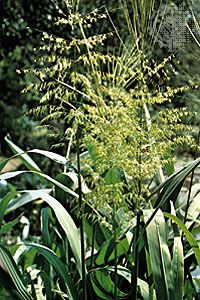
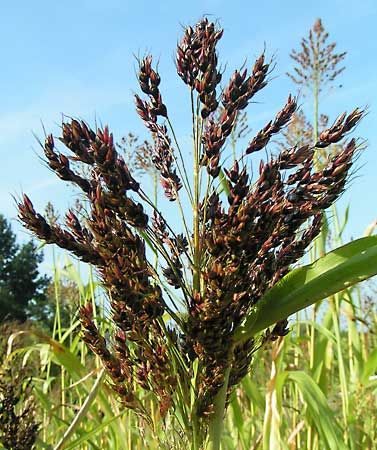
Broomcorn (Sorghum bicolor) is an upright variety of sorghum belonging to the Poaceae family, cultivated specifically for its stiff, long-branched stems.
What is Broomcorn?
Broomcorn (Sorghum bicolor) is an upright variety of sorghum belonging to the Poaceae family, cultivated specifically for its stiff, long-branched stems.12
When harvested and dried, these durable bristles are processed and bound together to create corn brooms and brushes, or used for decorative purposes like wreaths. The term “broomcorn” is also used as a common name for Panicum miliaceum, a type of millet.13
How is sorghum related to other common grains?
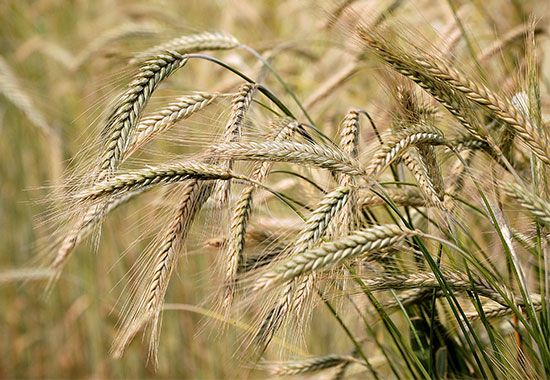
Sorghum (Sorghum bicolor) is a member of the grass family (Poaceae), sharing the same botanical classification as other major cereal grains such as wheat, corn, rice, rye, oats, and barley.45
Like these other grains, sorghum is a starchy seed valued for its nutritional properties, being rich in carbohydrates and containing protein, though it is generally lower in protein and deficient in calcium and vitamin A compared to some other staples. While it ranks fifth in global importance among cereals, it is uniquely distinguished by its exceptional resistance to heat and drought, making it a vital crop in arid regions where other grains may struggle to thrive.456
Functionally, sorghum mirrors other cereals in its versatility:
- Human Consumption: It is a gluten-free grain often ground into meal or flour for porridge, flatbreads, and cakes.46
- Animal Feed: Like corn, oats, and barley, a significant portion of the global harvest is used as livestock and poultry feed.456
- Industrial Use: Similar to other grains, it is processed into products such as edible oils, starch, and biofuels.45
What are the different varieties of millet?
Millet refers to several species of cereal grasses in the Poaceae family, valued for their hardiness and small edible seeds. While they are often used for animal feed or hay in Western nations, they remain essential food staples in many parts of Asia and Africa.78
Common varieties of millet include:
- Pearl millet (Pennisetum glaucum): Known as bajra in India, this is a tall, drought-tolerant variety well-suited to soils of low fertility.7
- Proso millet (Panicum miliaceum): Also called common or broomcorn millet, it matures quickly and is frequently used in birdseed mixtures.7
- Foxtail millet (Setaria italica): Characterized by small, pointed seeds, this is a significant food crop in Asia and is grown for hay in North America and Europe.7
- Finger millet (Eleusine coracana): An important food grain cultivated in parts of Africa and southern Asia.7
- Japanese millet (Echinochloa frumentacea): Also known as barnyard millet, it is grown primarily as a hay crop in the United States and Japan.78
- Little millet (Panicum sumatrense): Primarily cultivated as a food crop in India.7
How were brooms made before the use of broomcorn?
Before the widespread use of broomcorn (a variety of sorghum first cultivated for this purpose around 1782), brooms were crafted from various natural materials found in the local environment.
The term “broom” itself originates from leguminous shrubs (such as those in the genera Cytisus and Genista), which feature long, slender, and flexible branches that were historically bundled together to create sweeping tools. Beyond these shrubs, many other plants were utilized for their stiff or fibrous qualities, collectively known as broomweed. These included various tropical herbs and plants from genera such as Sida, Triumfetta, and Corchorus, which were gathered and bound to a handle to serve the same functional purpose.
Sources
- Broomcorn — Encyclopædia Britannica
- broomcorn — Merriam-Webster
- corn broom — Merriam-Webster
- Sorghum — Encyclopædia Britannica
- Cereal — Encyclopædia Britannica
- Origins of agriculture - Sorghum — Encyclopædia Britannica
- Millet — Encyclopædia Britannica
- millet grass — Merriam-Webster
- Cereal processing - Millet — Encyclopædia Britannica
- broom — Merriam-Webster
- broomweed — Merriam-Webster
Published on · 3 min read