Frit Fly
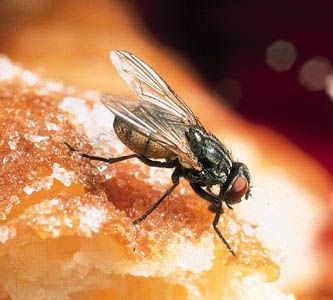
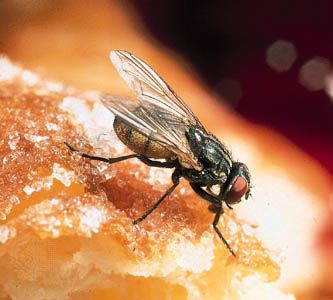
A frit fly is any small fly belonging to the family Chloropidae (order Diptera). These insects are often characterized by their bright yellow and black…
What is frit fly?
A frit fly is any small fly belonging to the family Chloropidae (order Diptera). These insects are often characterized by their bright yellow and black coloration and are typically found in grassy areas.1
Frit flies are considered agricultural pests because they are destructive to cereal grains, including oats, rye, barley, and wheat. Their larvae, which are maggots, live within the stems and developing grain heads of these plants, causing the central leaf to wilt.1
Beyond their impact on crops, some species—such as those in the genus Hippelates—are known as eye gnats because they are attracted to the eyes of animals and humans. These flies can act as carriers for conditions like conjunctivitis and yaws, as they often feed on blood, pus, and other fluids.1
What are eye gnats and how do they differ from other frit flies?
Eye gnats are a specific subset of frit flies, which belong to the family Chloropidae. While all frit flies are small insects often found in grassy areas, the term “eye gnat” is specifically applied to those species—such as those in the genus Hippelates—that are notably attracted to the eyes of humans and other animals.25
The primary distinction lies in their behavior and feeding habits:
- General Frit Flies: These are primarily recognized as agricultural pests. Their larvae live within the stems and developing grain heads of cereal crops like oats, rye, barley, and wheat, often causing the central leaf to wilt.25
- Eye Gnats: While their larvae are also plant feeders, the small, active adults are distinguished by their attraction to physiological secretions. They feed on blood, pus, and other fluids found around the eyes, nose, and mouth. Because they move frequently between hosts to feed on these secretions, they can mechanically transfer disease-causing organisms, including those responsible for conjunctivitis and yaws.52
How do farmers use biological controls to manage crop pests?
Farmers utilize biological control to manage pests by introducing or encouraging natural enemies—such as predators, parasites, or disease-causing organisms—to reduce pest populations in an environmentally sound manner. This approach is a cornerstone of integrated pest management, which seeks to minimize reliance on chemical pesticides by combining multiple ecological strategies.8910
Key methods include:
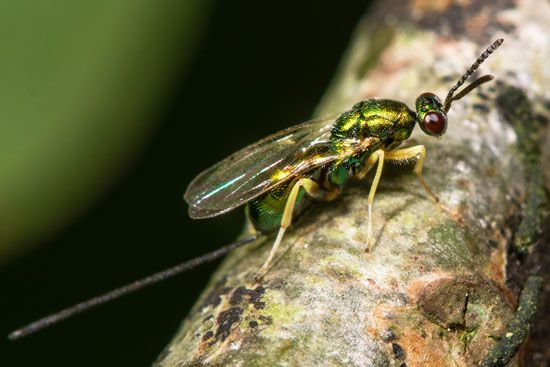
- Natural Enemies: Releasing predators or parasites, such as the vedalia beetle used to control scale insects or chalcid wasps to target mealybugs.810
- Microbial Agents: Applying pathogens like the soil-dwelling bacterium Bacillus thuringiensis (Bt), which produces toxins that target specific insect larvae.83
- Genetic Engineering: Developing genetically modified crops that produce their own protective proteins to deter pests.3
- Reproductive Disruption: Releasing sterilized male insects to reduce the breeding success of wild populations.1011
- Resistant Varieties: Breeding crops naturally resistant to specific pests.910
While effective, these methods require careful consideration to avoid introducing invasive species that could disrupt local ecosystems.812
What are some other common insects that damage cereal grains?
Beyond the eye gnats and frit flies previously discussed, several other insects pose significant threats to cereal grains, both in the field and during storage.
Field Pests
- Grasshoppers and Locusts: These insects can cause immense, widespread damage to cereal crops, often requiring large-scale chemical intervention.13
- Wireworms: The larvae of click beetles live underground for several years, feeding on the roots and stems of young, slow-growing plants.13
- Wheat Stem Sawfly: These insects lay eggs in plant tissues; the larvae feed within the stem until it collapses. Infested fields often show fallen straw filled with sawdust-like material.13
- Wheat Bugs: Species such as Aelia and Eurygaster puncture grains and inject enzymes that degrade gluten, rendering the flour unsuitable for baking.13
Storage Pests
When grain is stored in silos or elevators, it becomes vulnerable to various insects that thrive in warm, high-moisture environments:
- Endosperm Borers: These include the grain weevil, rice and maize weevils, the lesser grain borer, and the angoumois grain moth.14
- Germ Eaters: These pests specifically target the grain germ and include the rust-red grain beetle, saw-toothed grain beetle, khapra beetle, and the warehouse moth.14
- Secondary Pests: Insects such as the Mediterranean flour moth, various flour beetles, and the yellow mealworm often infest mills and stored stocks.14
Sources
- frit fly — Merriam-Webster
- frit fly — Encyclopædia Britannica
- Agricultural technology - Biological controls — Encyclopædia Britannica
- Spraying and dusting — Encyclopædia Britannica
- Diptera - Importance — Encyclopædia Britannica
- gnat — Encyclopædia Britannica
- Diptera - General features — Encyclopædia Britannica
- Biological control — Encyclopædia Britannica
- Integrated pest management — Encyclopædia Britannica
- Pest — Encyclopædia Britannica
- Bacillus thuringiensis — Encyclopædia Britannica
- invasive species — Encyclopædia Britannica
- Cereal farming - Insects — Encyclopædia Britannica
- Hessian fly — Encyclopædia Britannica
- Cereal farming - Storage — Encyclopædia Britannica
- Agricultural technology - Chemical control of insects — Encyclopædia Britannica
- aphid — Encyclopædia Britannica
Published on · 3 min read