Basenji
The Basenji is an ancient breed of hound native to Central Africa, where it has historically lived as a village dog. Often called the "barkless dog," it does…
What is a Basenji?
The Basenji is an ancient breed of hound native to Central Africa, where it has historically lived as a village dog. Often called the “barkless dog,” it does not bark but instead produces a variety of sounds, including a noise similar to a yodel.12
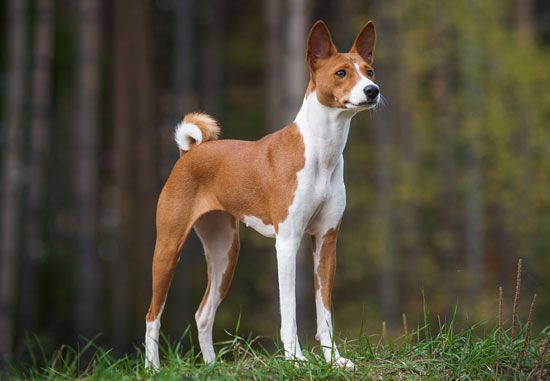
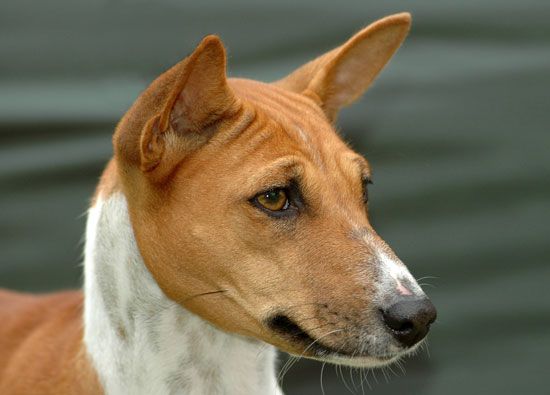
Physically, the Basenji is characterized by a finely wrinkled forehead, erect ears, and a tightly curled tail. It stands 16–17 inches (41–43 cm) tall and weighs 22–24 pounds (10–11 kg). Known for being clean and intelligent, the breed is independent, lively, and can be difficult to train. Because of a history of Fanconi syndrome, a kidney disorder, owners are encouraged to monitor their pet’s health regularly.21
Historically, these dogs were used to drive quarry into nets and have been depicted in ancient Egypt and Stone Age cave paintings.1
Where did the Basenji breed come from?
The Basenji is an ancient breed of hound that originated in the deeply forested areas of Central Africa. Historically, these dogs lived as village dogs—roaming freely and belonging to no one—before becoming revered by villagers as skilled hunting companions used to drive quarry into large nets.1
The breed is considered one of the oldest in the world, with evidence of its existence dating back to the Stone Age. Depictions of the animal have been discovered in African cave paintings and on the tombs of ancient Egypt, where they were potentially kept as house dogs. While they have a long history in Africa, they were not successfully established as a pet and show breed in the United States until the 1940s.1
What does a Basenji look like?
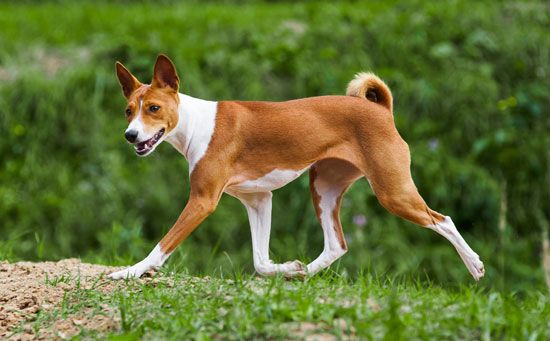
The Basenji is a sleek, squarely proportioned hound known for its poised and alert expression. It stands 16–17 inches (41–43 cm) tall and weighs between 22 and 24 pounds (10–11 kg).12
Key physical features include:
- Head: It has a finely wrinkled forehead and erect ears, which contribute to its characteristic alert look.12
- Body: The breed has long legs and a graceful trot that has been compared to the smooth, efficient stride of a racehorse.2
- Tail: A defining feature is its tightly curled tail.12
- Coat: The Basenji has a short, silky coat that comes in several colors, including reddish brown, black, black-and-tan, or brindle. Regardless of the base color, the feet, chest, and tail tip are typically white.12
Because of their catlike grooming habits, they are naturally clean and odorless, requiring minimal maintenance to keep their coat in good condition.2
Why are Basenjis called “barkless dogs”?
The Basenji is commonly referred to as the “barkless dog” because it does not produce the typical barking sound associated with most domestic dogs. However, this label is somewhat misleading, as the breed is not mute; it is capable of producing a variety of other vocalizations, including a unique sound often compared to a yodel.12
While the breed is physically capable of making noise, its vocal range and behavior differ from the standard canine bark. This characteristic, combined with their independent and somewhat feral nature, distinguishes them from many other breeds.2
Sources
- Did you know? — Merriam-Webster
- Basenji — Encyclopædia Britannica
- speech - Vocal cords — Encyclopædia Britannica
Published on · 2 min read