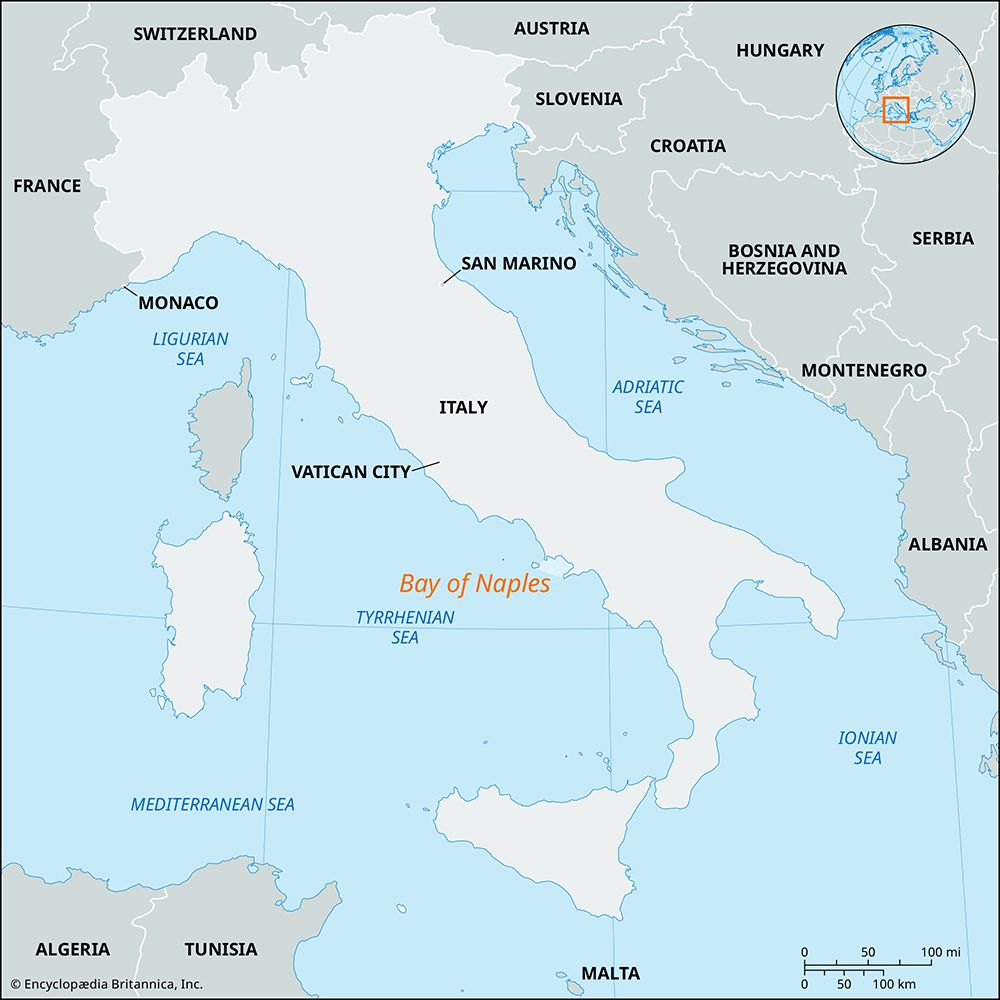
Bay of Naples
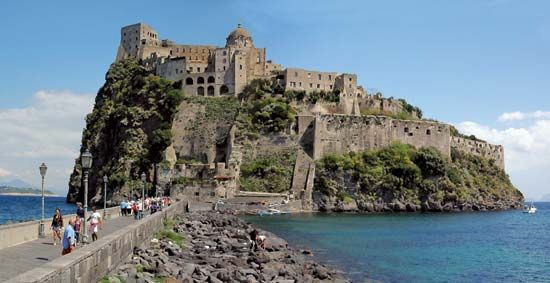
The Bay of Naples has long served as a profound source of inspiration for artists and writers, celebrated for its scenic beauty and rich classical heritage.
How has the Bay of Naples been depicted in art and literature throughout history?
The Bay of Naples has long served as a profound source of inspiration for artists and writers, celebrated for its scenic beauty and rich classical heritage.12
Literary Connections
In antiquity, the region was a haven for poets. Virgil famously celebrated the Neapolitan landscape in his Aeneid and composed the Georgics nearby. Other classical writers, including Horace and Statius, frequently attested to the area’s elegance. In the 14th century, the court of King Robert hosted literary figures such as Petrarch and Boccaccio. More recently, the city’s dramatic wartime experience was captured in works like Norman Lewis’s Naples ’44 and Curzio Malaparte’s La pelle.23
Artistic Influence
The 18th-century excavations of Pompeii and Herculaneum sparked a massive Neoclassical movement across Europe. Artists like Jacques-Louis David and Jean-Auguste-Dominique Ingres drew direct inspiration from these discoveries, which also influenced architecture and interior design. Additionally, the Grand Tour brought numerous artists to the bay, where they documented the landscape and ruins, further cementing the region’s status as a cultural icon.425
What role does Mount Vesuvius play in the Bay of Naples’ landscape and history?
Mount Vesuvius is a defining feature of the Bay of Naples, serving as both a dramatic backdrop to the landscape and a powerful force in the region’s history.73
Landscape and Geography
Rising above the plain of Campania, Vesuvius is an active volcano whose western base rests near the bay. Its slopes are exceptionally fertile, supporting vineyards—notably for the Lacrima Christi wine—and orchards, while higher elevations feature oak and chestnut groves. The mountain’s physical presence, characterized by the cone and the semicircular ridge of Mount Somma, has shaped local construction, with dark volcanic lava used to pave historic streets and volcanic tuff utilized in regional architecture.73
Historical Impact
Vesuvius is most famously known for the catastrophic eruption of 79 ce, which buried Pompeii, Herculaneum, and Stabiae. This event, documented by Pliny the Younger, preserved these sites for future generations, and their 18th-century excavation profoundly influenced Western science and aesthetics. Throughout history, the volcano has remained a constant, if volatile, neighbor; its eruptions have destroyed villages and reshaped the coastline, yet over two million people continue to live in its vicinity today.748
What ancient Roman ruins can be found around the Bay of Naples?
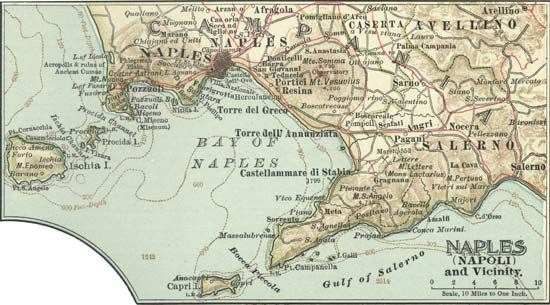
The Bay of Naples is home to some of the most significant ancient Roman archaeological sites in the world, many of which were preserved by the catastrophic eruption of Mount Vesuvius in 79 cevius](https://www.britannica.com/place/Vesuvius) in 79 ce.1011
Major Archaeological Sites
- Pompeii: A sprawling city that offers an unparalleled look at Roman urban life. Excavations have revealed a complex Forum, an amphitheatre, and hundreds of private homes, such as the House of the Faun and the House of the Vettii, showcasing various styles of Roman architecture and mosaics.1213
- Herculaneum: Buried under a deep layer of volcanic material, this site is remarkably well-preserved. The unique conditions allowed for the survival of organic materials like wooden furniture, food, and even the hull of a boat. Notable structures include the Villa of the Papyri and the Trellis House.10
- Stabiae: Known for its luxurious villas, such as the Villa of San Marco, which served as a retreat for the wealthy. The area was also famous for its medicinal waters.121
- Baiae: A famous resort town for the Roman elite, including Julius Caesar and Nero. Much of the ancient city is now submerged in the bay due to volcanic activity, though extensive remains of its grand bathing facilities, often misidentified as temples, remain visible.14
Other Notable Locations
- Naples: The city itself contains Roman remnants, such as the Crypta Neapolitana and the tomb traditionally associated with the poet Virgil.15
How did the eruption of Mount Vesuvius in 79 AD affect the Bay of Naples region?
The eruption of Mount Vesuvius in 79 ce was a transformative catastrophe for the Bay of Naples region, resulting in the total destruction and burial of several thriving Roman cities, including Pompeii, Herculaneum, Oplontis, and Stabiae.177
The event began on August 24, when the volcano ejected massive amounts of ash and pumice, burying Pompeii under several meters of debris and causing building collapses. By the following morning, lethal surges of pyroclastic material—superheated gas and rock—swept through the area, asphyxiating those who had remained or were attempting to flee. While Pompeii was entombed in ash and pumice, Herculaneum was overwhelmed by mudflows.17187
This sudden burial, which reached depths of up to 23 feet in some areas, effectively froze these cities in time. By sealing them away from the elements, the eruption inadvertently protected them from centuries of looting and decay, providing modern historians with an unparalleled record of Roman life, architecture, and culture.17
Sources
- Bay of Naples — Encyclopædia Britannica
- Pompeii - Influence on European culture — Encyclopædia Britannica
- Naples - The early period — Encyclopædia Britannica
- Naples - Description and climate — Encyclopædia Britannica
- grand tour — Encyclopædia Britannica
- Naples - The Castel Nuovo — Encyclopædia Britannica
- Vesuvius — Encyclopædia Britannica
- Naples — Encyclopædia Britannica
- Are Volcanoes Dangerous When They’re Not Erupting? — Encyclopædia Britannica
- Pompeii - History of excavations — Encyclopædia Britannica
- Baiae — Encyclopædia Britannica
- Herculaneum — Encyclopædia Britannica
- Naples - Layout and architecture — Encyclopædia Britannica
- list of cities and towns in Italy - Campania — Encyclopædia Britannica
- Pompeii - Description of the remains — Encyclopædia Britannica
- Stabiae — Encyclopædia Britannica
- Pompeii - History — Encyclopædia Britannica
- Pompeii: Top Questions — Encyclopædia Britannica
Published on · 4 min read