Belfast Lough
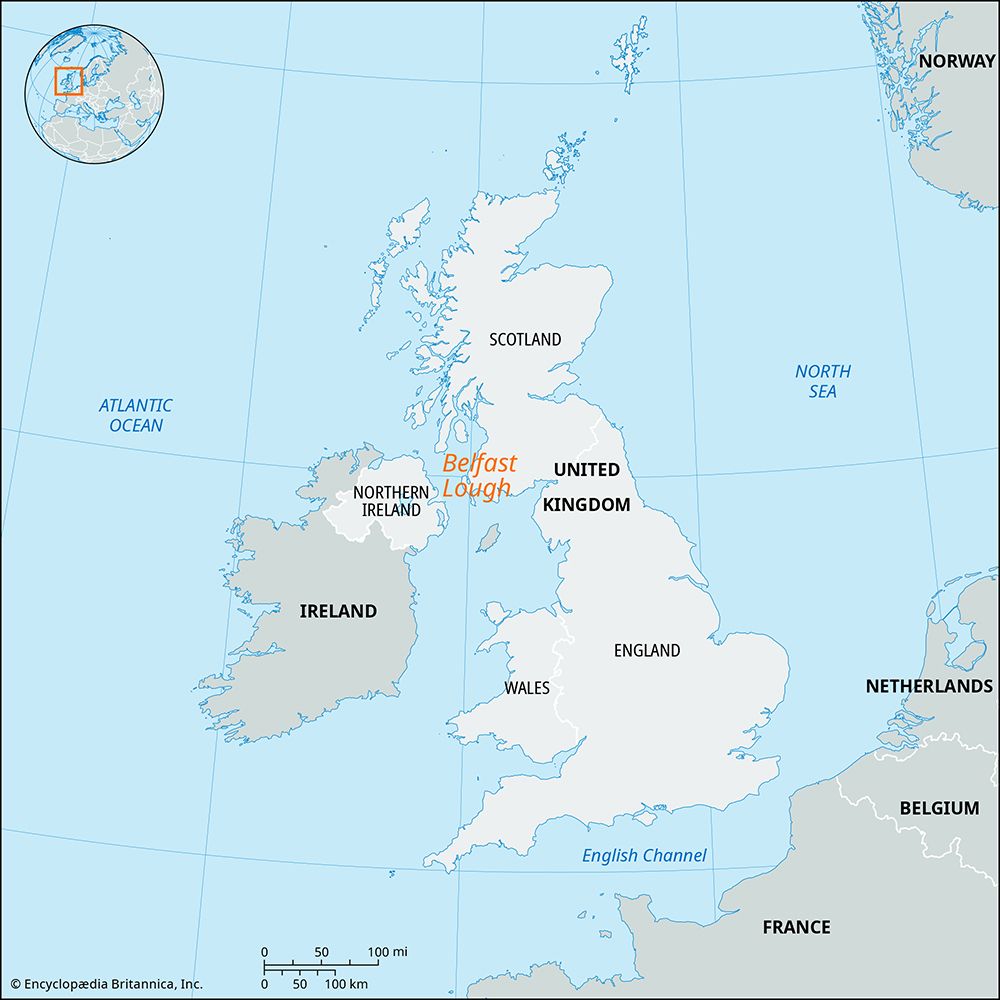
Belfast Lough is an inlet of the North Channel that connects the Irish Sea to the Atlantic Ocean. Indenting the northeastern coast of Ireland, the lough…
What is Belfast Lough?
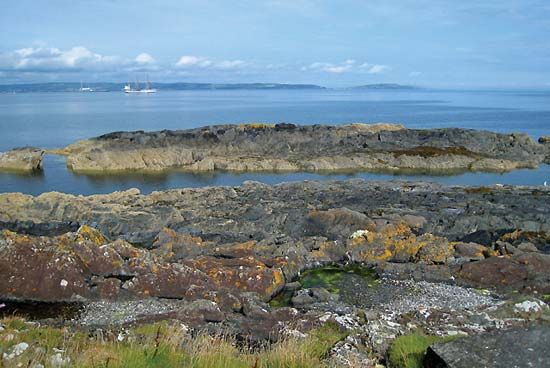
Belfast Lough is an inlet of the North Channel that connects the Irish Sea to the Atlantic Ocean. Indenting the northeastern coast of Ireland, the lough measures approximately 12 miles (20 kilometers) in length and between 3 and 5 miles (4.8 to 8 kilometers) in width.1
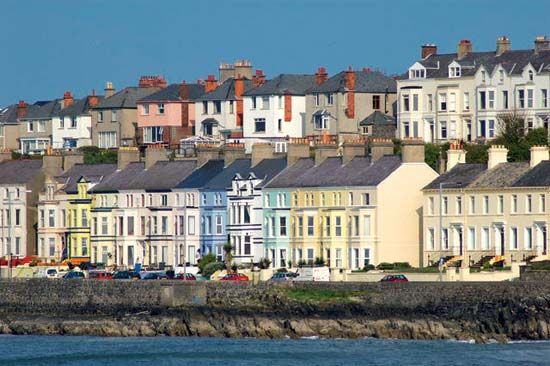
Geographically, the lough is bordered to the north by the elevated basaltic Antrim Mountains, while the southern shores are characterized by older Ordovician and Silurian rock formations. The sheltered harbor provided by the lough was instrumental in the development of Belfast as a major city and port. The River Lagan flows through Belfast and enters the sea at this inlet. Historically, the shores of the lough have supported various settlements, including Carrickfergus, Bangor, and Whiteabbey.123
What role did the shipbuilding industry play in Belfast’s history?
The shipbuilding industry was a cornerstone of Belfast’s economic identity and development for centuries. While the city maintained small shipbuilding interests as early as the 17th century, the industry became firmly established following the founding of a shipyard in 1791 and a graving dock in 1796 by William Ritchie.3
Following the Industrial Revolution, the firm Harland and Wolff emerged as the city’s preeminent shipbuilder. The company gained global renown for its large-scale engineering projects, most notably the construction of the ill-fated luxury liner Titanic.23
For much of the 19th and 20th centuries, shipbuilding—alongside the linen industry—served as a primary driver of Belfast’s manufacturing economy. However, these traditional sectors began a long period of decline starting in the 1970s. Today, the city’s industrial landscape has shifted, with shipbuilding now overshadowed by service activities, food processing, and machinery manufacturing.3
How did the River Lagan influence the development of Belfast?
The River Lagan has been fundamental to the development of Belfast, serving as both a geographic anchor and an economic catalyst. Its name, derived from the Gaelic Béal Feirste, translates to “Mouth of the Sandbank” or “Crossing of the River,” highlighting the city’s origins as a strategic river crossing point.4
The river’s influence on the city’s growth includes:
- Strategic Positioning: Located at the entrance of the river to Belfast Lough, the site provided a natural harbor that allowed Belfast to supersede other regional towns, such as Carrickfergus, as a primary port.4
- Industrial Connectivity: The Lagan Valley has historically functioned as a vital routeway, penetrating from the coast into the heart of Ulster. This accessibility supported the region’s transformation into one of the most intensively industrialized and urbanized areas in Northern Ireland.25
- Economic Hub: The river facilitated the transport and trade necessary for Belfast’s rise as a global center for the linen industry and, eventually, large-scale shipbuilding.4
What are some other major ports located along the coast of Northern Ireland?
Beyond Belfast, Northern Ireland features several other ports of significance that facilitate trade and transport:
- Larne: Located on the northeast coast, Larne is a vital port equipped with modern loading facilities. It maintains regular passenger and commercial services to Cairnryan in Scotland.67
- Derry: Situated in the northwest, Derry (also known as Londonderry) has historically served as a strategic port, notably acting as a naval base during both World Wars. While its contemporary port facilities are of minor importance compared to its past, it remains a recognized port of significance for the region.68
- Coleraine: This port handles a portion of the region’s freight traffic, supported by commercial activity along the Lower Bann Navigation.6
- Warrenpoint: Located in the southeast, this port is also utilized for handling freight.6
- Fishing Ports: Ocean fishing is primarily concentrated in the northern Irish Sea, with trawlers operating out of the ports of Kilkeel, Ardglass, and Portavogie.9
Sources
- Belfast Lough — Encyclopædia Britannica
- Belfast — Encyclopædia Britannica
- Belfast: Top Questions — Encyclopædia Britannica
- River Lagan — Encyclopædia Britannica
- Northern Ireland - Drainage — Encyclopædia Britannica
- Northern Ireland - Transportation — Encyclopædia Britannica
- Larne — Encyclopædia Britannica
- Northern Ireland - Agriculture, forestry, and fishing — Encyclopædia Britannica
- Larne River — Encyclopædia Britannica
- Northern Ireland - Settlement patterns — Encyclopædia Britannica
- Londonderry — Encyclopædia Britannica
Published on · 3 min read