Beagle Channel
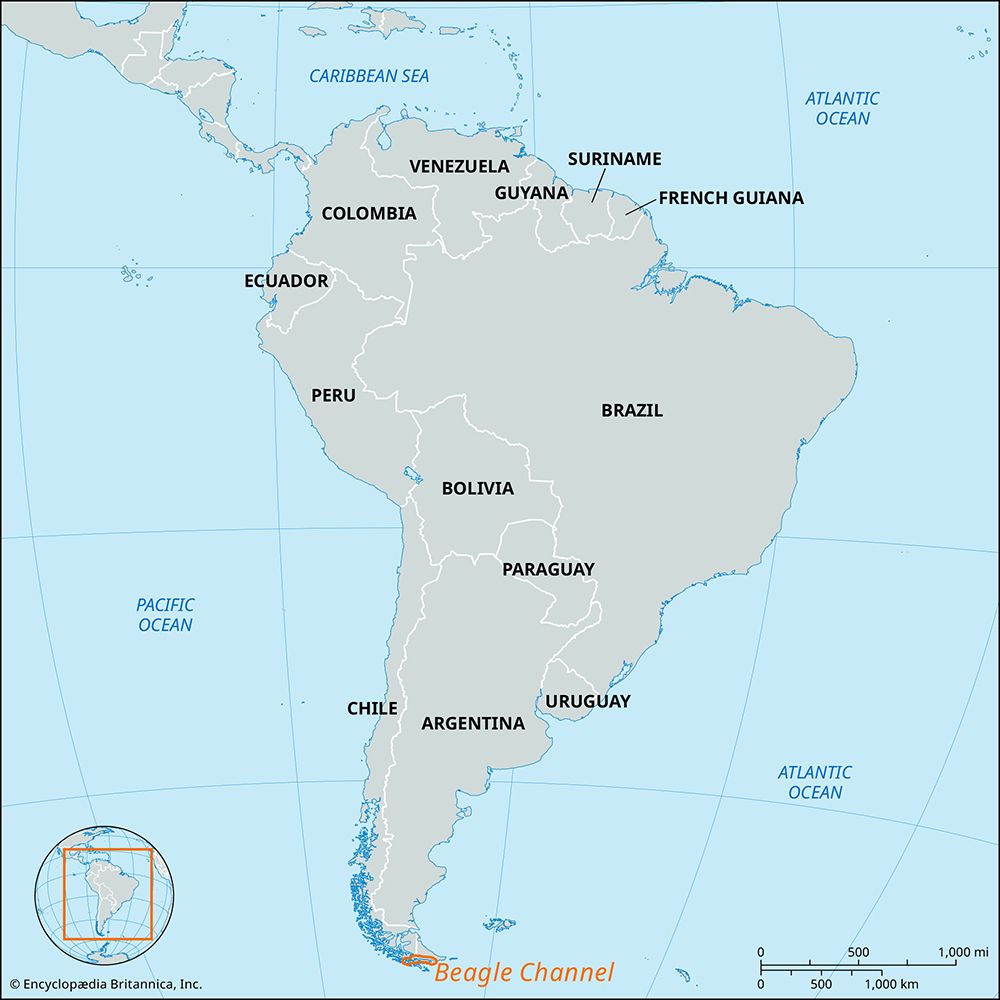
The Beagle Channel, a 150-mile-long strait located in the Tierra del Fuego archipelago, holds significant historical importance due to its role in…
What is the historical significance of the Beagle Channel, particularly in relation to European exploration?
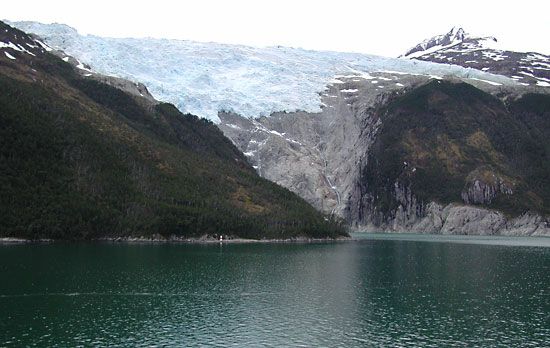
The Beagle Channel, a 150-mile-long strait located in the Tierra del Fuego archipelago, holds significant historical importance due to its role in 19th-century British maritime exploration.1
The channel is named after the HMS Beagle, a British naval vessel that conducted extensive surveys of the South American coastline. During the ship’s second voyage (1831–1836), commanded by Robert Fitzroy, the naturalist Charles Darwin explored the region. The observations and biological specimens Darwin collected during this expedition provided the foundational evidence for his theory of natural selection.12
Beyond its scientific legacy, the channel served as a site for geopolitical maneuvering. In 1833, the Beagle participated in the British effort to secure control of the Falkland Islands. Furthermore, the channel itself became the subject of a long-standing territorial dispute between Chile and Argentina regarding the sovereignty of islands at its eastern end, a conflict that persisted from the 1840s until a treaty resolution in 1985.21
How has the Beagle Channel been involved in territorial disputes between Argentina and Chile?
The territorial dispute over the Beagle Channel centered on the sovereignty of three islands located at its eastern end: Picton, Nueva, and Lennox. This disagreement between Chile and Argentina originated in the 1840s and persisted for over a century.1
The conflict escalated significantly in 1978, bringing the two nations to the brink of war. Tensions were eventually mitigated through international mediation, leading to a formal resolution. The dispute officially concluded on May 2, 1985, when a treaty went into effect that awarded the three contested islands to Chile.1
Today, the channel serves as a defined international boundary, with the eastern portion marking the border between the two countries, while the western portion remains entirely within Chilean territory.1
How was the Beagle Channel formed, and what are its key geographical features?
The provided search results do not contain information regarding the specific geological formation of the Beagle Channel.
Regarding its geographical features, the Beagle Channel is a 150-mile (240 km) long strait located in the Tierra del Fuego archipelago at the southern tip of South America. Key features include:
- Dimensions: It trends east-west and ranges from 3 to 8 miles in width.1
- Connectivity: It serves as a passage connecting the Pacific Ocean with the Atlantic Ocean.4
- Topography: At its western end, the channel splits into two branches that encircle Isla Gordon.1
- Location: It separates the main island of the archipelago to the north from smaller islands, such as Navarino and Hoste, to the south.1
- Settlements: The city of Ushuaia, located on the channel, is recognized as the southernmost city in the world.2
How does the Beagle Channel impact local climate and ecosystems in Tierra del Fuego?
The Beagle Channel serves as a significant geographical feature of Tierra del Fuego, influencing both the local environment and human activity, though it is not described as a primary driver of the regional climate. The climate of the archipelago is generally characterized as monotonously cool in summer and cold in winter, with rainfall varying drastically across the region due to its mountainous topography rather than the channel itself.6
Regarding ecosystems, the areas surrounding the Beagle Channel support distinct biological communities:
- Forestry: The regions bordering the channel contain forested areas that support local lumbering activities. These forests are characterized by Antarctic beech and cypress, which thrive in the valleys and on steep slopes.61
- Marine Life: The waters of the channel and the surrounding archipelago are rich in marine resources. Fishing industries in settlements like Ushuaia focus on spider crabs, mussels, and other mollusks. Additionally, coastal areas in the south are frequented by penguins and seals.641
- Biodiversity: The region is noted for a local phenomenon where certain bird species, including parrots, are found in these southern latitudes, despite being more typically associated with tropical climates.1
Sources
- Beagle Channel — Encyclopædia Britannica
- Beagle Channel — Merriam-Webster
- Beagle — Encyclopædia Britannica
- Tierra del Fuego — Encyclopædia Britannica
- Tierra del Fuego — Encyclopædia Britannica
- Argentina - Patagonia and Tierra del Fuego — Encyclopædia Britannica
Published on · 3 min read