Beas River
The Beas River is a significant waterway in northwestern India, rising at the Rohtang Pass in the Himalayas and flowing through the states of Himachal…
What is the historical and cultural significance of the Beas River in India?
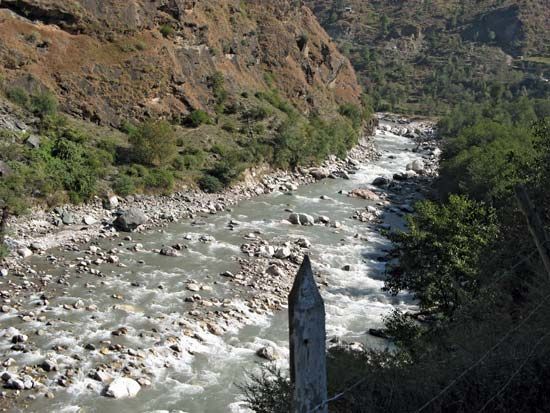
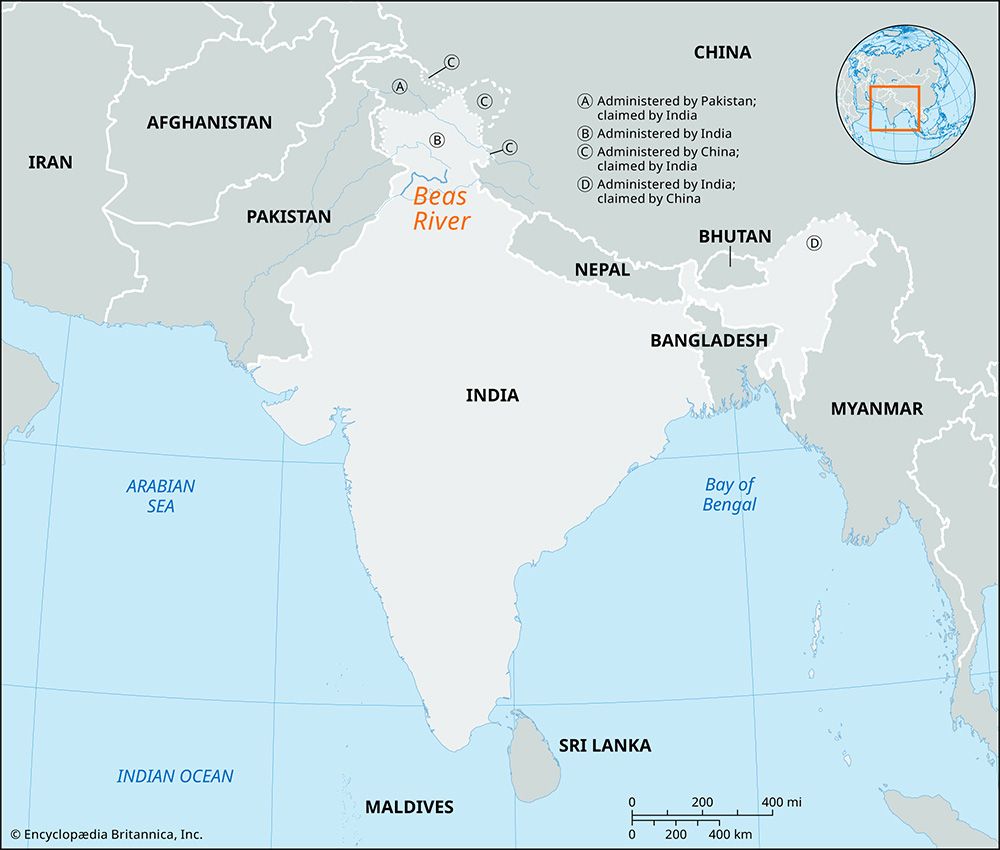
The Beas River is a significant waterway in northwestern India, rising at the Rohtang Pass in the Himalayas and flowing through the states of Himachal Pradesh and Punjab. It is one of the five rivers that give the Punjab region—meaning “Five Rivers”—its name.12
Historically, the river is notable for marking the easternmost limit of Alexander the Great’s invasion of India in 326 BCE. Known to the Greeks as the Hyphasis, it was at this river that Alexander’s army, exhausted by the tropical rains and long campaigns, mutinied and refused to advance further. In response to this turning point, Alexander erected 12 altars to the 12 Olympian gods on the banks of the river before beginning his retreat.13
Culturally and geographically, the river serves as a vital drainage system for the western part of Himachal Pradesh, carving through scenic regions like the Kullu and Kangra valleys before joining the Sutlej River at Harike.12
Are there any major dams or hydroelectric projects on the Beas River, and what are their impacts?
Following the Indus Waters Treaty of 1960, the waters of the Beas River were reserved exclusively for India, leading to the development of significant infrastructure to distribute this water for irrigation and power generation.56
Major Infrastructure
A key structure on the river is the Harike Barrage, located at the confluence of the Beas and Sutlej River. This barrage serves as a critical diversion point, channeling water into the Indira Gandhi Canal. This canal system extends approximately 400 miles (640 km) to the southwest, providing essential irrigation to about 1.5 million acres of desert land in western Rajasthan.5
Impacts of Irrigation Projects
While these projects have been vital for agricultural expansion, they carry significant environmental risks. The expansion of canal irrigation in the Indus basin has historically led to:
- Waterlogging: Seepage from unlined canals can raise the water table, rendering soil unsuitable for cultivation.5
- Soil Salinization: In arid regions, water evaporation leaves behind salt deposits, which can make land infertile over time.5
To mitigate these issues, authorities have implemented drainage systems to manage water levels and prevent salt accumulation.5
What role did the Beas River play in ancient Indian history, particularly in relation to Alexander the Great’s campaign?
The Beas River, known to the ancient Greeks as the Hyphasis, holds significant historical importance as the easternmost boundary of Alexander the Great’s campaign in India in 326 BCE.821
Following his victory at the Battle of the Hydaspes, Alexander’s forces continued their eastward march across the Punjab region. Upon reaching the banks of the Beas, the Macedonian army—exhausted by years of continuous warfare and discouraged by the prospect of facing the vast Nanda empire of North India—mutinied. The soldiers, weary in body and spirit and unwilling to press further into the region during the tropical monsoon rains, demanded to return home.82
Faced with this adamant refusal from his troops, Alexander was forced to abandon his plans for further conquest. To commemorate his arrival at this limit, he erected 12 altars dedicated to the 12 Olympian gods on the banks of the river before beginning his retreat toward the Indus River and eventually back to Babylon.82
How long is the Beas River and what are the major cities or towns it passes through?
The Beas River flows for approximately 290 miles (470 km) from its source at the Rohtang Pass in the western Himalayas to its confluence with the Sutlej River at Harike.1
Along its course, the river passes through several notable locations, including:
Sources
- Beas River — Encyclopædia Britannica
- Alexander the Great - Invasion of India — Encyclopædia Britannica
- Himachal Pradesh - Relief and drainage — Encyclopædia Britannica
- Beas — Merriam-Webster
- Indus River - Irrigation of the Indus River — Encyclopædia Britannica
- Sutlej River — Encyclopædia Britannica
- Tarbela Dam — Encyclopædia Britannica
- Battle of the Hydaspes — Encyclopædia Britannica
Published on · 3 min read