Berkshire Hills
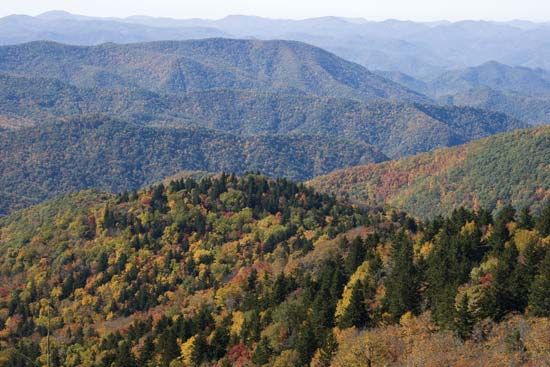
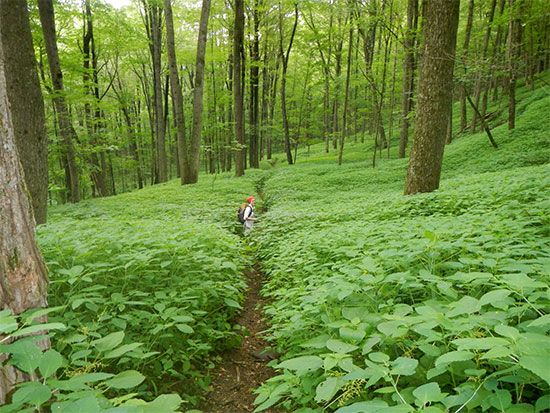
The Berkshire Hills are a segment of the Appalachian Mountains located primarily in western Massachusetts. They serve as a southern continuation of the Green…
How do the Berkshire Hills compare to other mountain ranges in the northeastern United States?
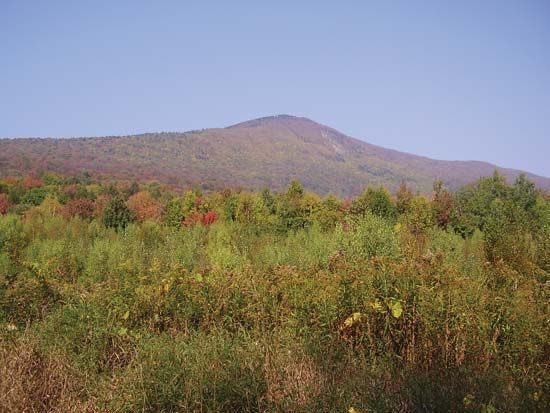
The Berkshire Hills are a segment of the Appalachian Mountains located primarily in western Massachusetts. They serve as a southern continuation of the Green Mountains of Vermont and share geological characteristics with other western New England ranges, such as the Taconic Range and the Litchfield Hills of Connecticut.1
Compared to other Appalachian regions, the Berkshires and the rest of New England are distinct due to the effects of glaciation, which scoured the crystalline rocks and resulted in a landscape more renowned for its picturesque scenery than for fertile soil. While the southern Appalachians are characterized by long, parallel ridges or the high elevations of the Blue Ridge, the Berkshires exhibit a north-south lineation similar to the Ridge and Valley country. However, unlike the lofty White Mountains, which serve as the New England analogue to the Blue Ridge, the Berkshires feature more moderate elevations, with Mount Greylock reaching 3,491 feet.21
Where are the Berkshire Hills located within the United States?
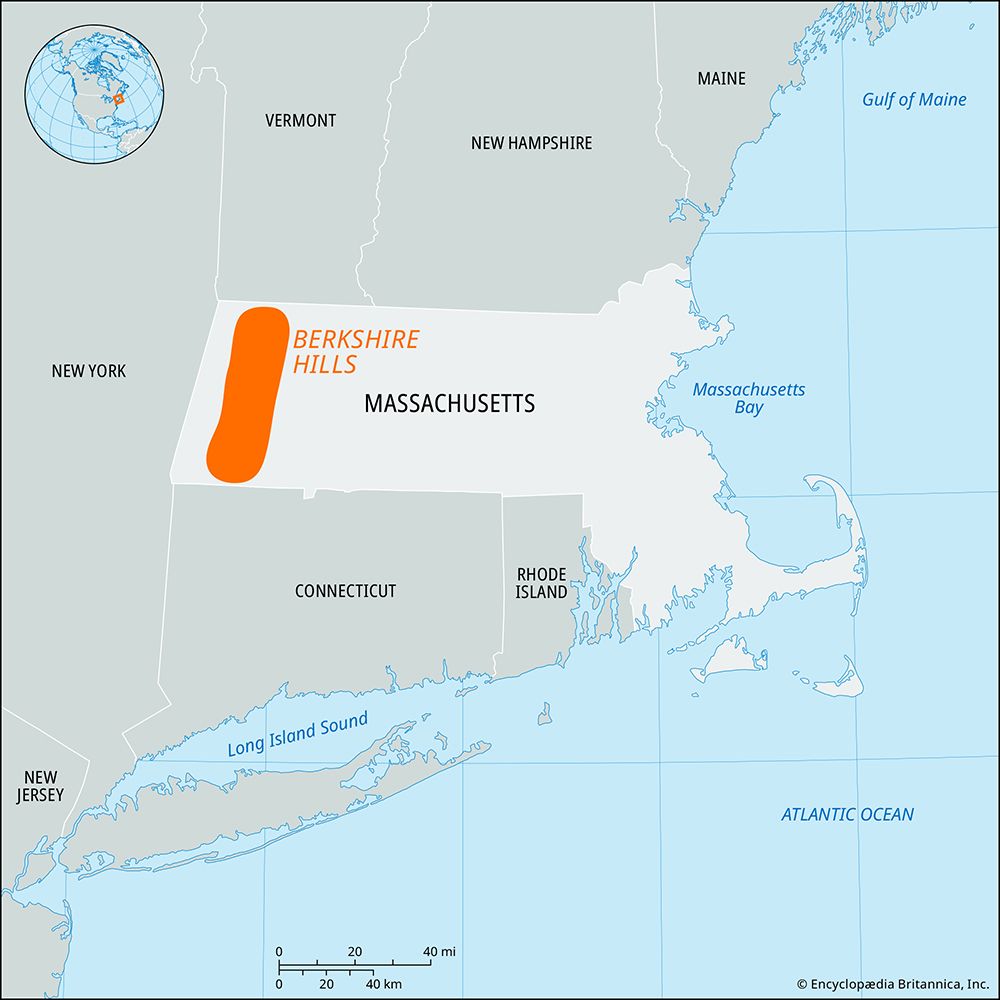
The Berkshire Hills are a segment of the Appalachian Mountains located in the United States, primarily within Berkshire county in the extreme western part of Massachusetts.13
These scenic, wooded hills extend into neighboring regions, serving as a southern continuation of the Green Mountains of Vermont. The range encompasses the Hoosac Range, the Taconic Range—which spans parts of Massachusetts and New York—and the Litchfield Hills of Connecticut.1
What is the average elevation of the Berkshire Hills?
The provided search results do not state an average elevation for the Berkshire Hills.
However, the records note that many summits within the range rise to more than 2,000 feet (600 metres), with Mount Greylock serving as the highest point at 3,491 feet (1,064 metres).14
What are some notable peaks or landmarks in the Berkshire Hills?
The Berkshire Hills are home to several notable peaks, landmarks, and recreational areas that highlight the region’s natural and cultural significance:
Notable Peaks and Geographic Features
- Mount Greylock: Standing at 3,491 feet (1,064 metres), this is the highest point in Massachusetts. The summit features a 92-foot granite memorial tower and the historic Bascom Lodge.15
- Mountain Ranges: The region includes the Taconic Range, which spans the border of Massachusetts and New York, as well as the Hoosac Range and the Litchfield Hills in Connecticut.1
Landmarks and Cultural Attractions
- Appalachian National Scenic Trail: This famous trail traverses the hills, providing a primary route for hikers.13
- Mohawk Trail: A historic and scenic highway that crosses the northern part of the region.13
- Tanglewood: Located near Lenox, this site serves as the summer home of the Boston Symphony Orchestra and is a major cultural destination.13
Recreation Areas
The area contains numerous wilderness sites, including Beartown State Forest, Mount Greylock State Reservation, and October Mountain State Forest.1
Sources
- Berkshire Hills — Encyclopædia Britannica
- United States - The Appalachian Mountain system — Encyclopædia Britannica
- Berkshire — Encyclopædia Britannica
- Appalachian Mountains - Physiography — Encyclopædia Britannica
- Mount Greylock — Encyclopædia Britannica
Published on · 2 min read