Bernese Mountain Dog
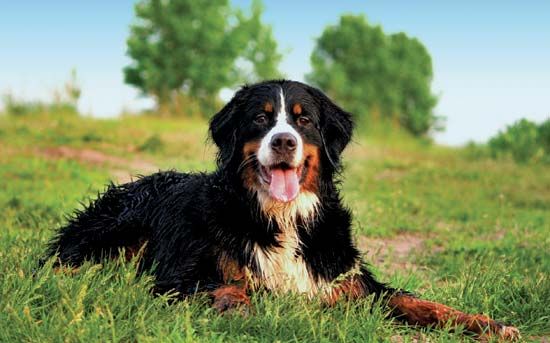
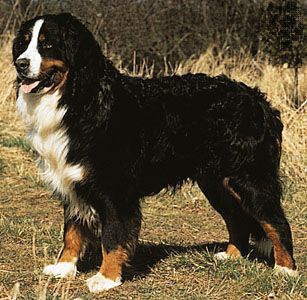
The Bernese Mountain Dog, a breed of working dog brought to Switzerland by the Romans, was traditionally utilized for several essential farm tasks. Their…
What roles were Bernese Mountain Dogs traditionally used for?
The Bernese Mountain Dog, a breed of working dog brought to Switzerland by the Romans, was traditionally utilized for several essential farm tasks. Their primary roles included:
- Draft Work: They were widely used as draft animals to pull carts.12
- Livestock Management: The breed was employed to drive cattle to and from their pastures.1
- Farm Protection: They served to protect farms from predators.1
Known for their hardiness, these dogs remain capable of activities like carting and sled pulling today. While they can act as intimidating watchdogs due to their size and deep bark, they are generally considered only fair protection dogs, as they are typically affectionate and friendly toward strangers.1
What kind of training do Bernese Mountain Dogs need?
Bernese Mountain Dogs are widely considered easy to train due to their affectionate and playful nature. Because they are intelligent and eager to engage, they respond well to a variety of activities that provide both mental and physical stimulation.1
To keep a Bernese Mountain Dog well-trained and happy, owners can incorporate the following activities:
- Trick Training: The breed enjoys learning new commands and tricks.1
- Nose Work: Engaging their sense of smell is an excellent way to provide mental enrichment.1
- Active Play: They enjoy games such as tug-of-war and swimming.1
- Drafting Sports: Given their history as working dogs, they particularly enjoy carting (pulling a loaded cart) and sled pulling, and some even compete in weight-pulling events.1
While they are generally easygoing, their large size and strength mean that training should focus on manageable behavior, as they can be challenging for children or seniors to control if not properly socialized and trained.1
Are Bernese Mountain Dogs good with children and other pets?
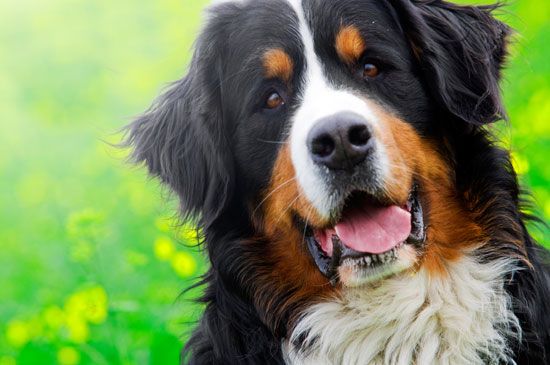
Bernese Mountain Dogs are generally friendly toward other dogs and other pets, making them well-suited for multi-pet households. Their easygoing and affectionate temperament also makes them a popular choice for families.1
However, while they are generally good-natured, potential owners should be mindful of the breed’s physical characteristics. Because Bernese Mountain Dogs are large and strong, their size can make them challenging for children or seniors to manage or control during play or walks. As with any breed, individual behavior can vary, and proper socialization is always recommended to ensure positive interactions.1
How long do Bernese Mountain Dogs typically live?
Bernese Mountain Dogs typically have a life span of 7 to 10 years. Because the breed is not long-lived, owners should be aware of specific health risks, such as gastric dilatation-volvulus—a serious condition involving stomach bloating—and a higher susceptibility to mast cell tumors compared to other breeds.1
To support their long-term health, it is recommended that puppies be fed a diet specifically formulated for large breeds to slow their growth rate, which helps reduce the risk of hip dysplasia.1
Sources
- Bernese Mountain Dog — Encyclopædia Britannica
- Bernese mountain dog — Merriam-Webster
Published on · 2 min read