Big Cypress National Preserve
Big Cypress National Preserve is a protected area in southern Florida established in 1974 to safeguard the watershed of the Everglades. Spanning 1,139 square…
What is Big Cypress National Preserve?
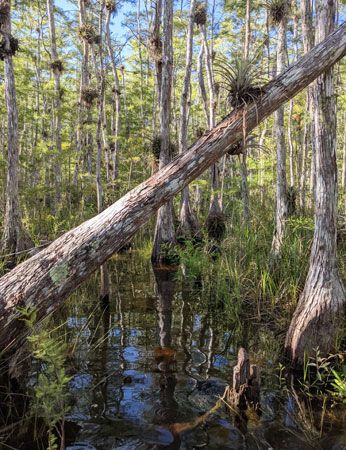
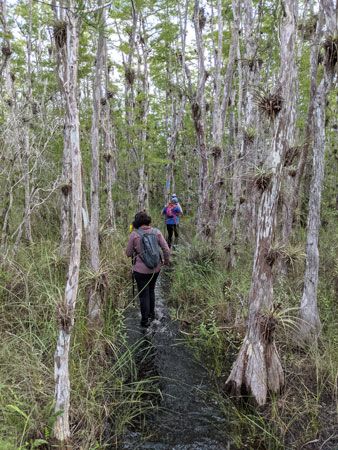
Big Cypress National Preserve is a protected area in southern Florida established in 1974 to safeguard the watershed of the Everglades. Spanning 1,139 square miles, the preserve is characterized by five distinct habitat types: cypress swamps, marl prairies, pinelands, hardwood hammocks, and estuaries.
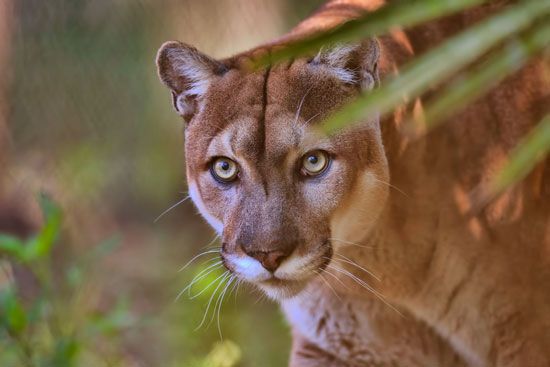
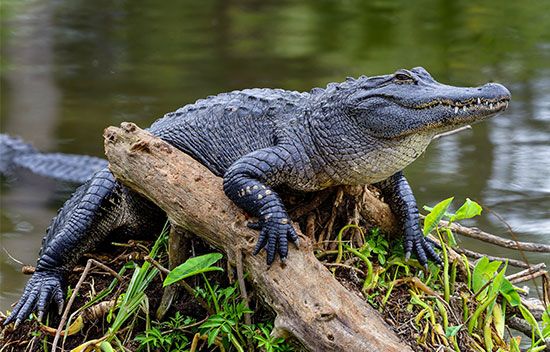
These ecosystems support diverse wildlife, including the endangered Florida panther, American alligators, and various wading birds. The area is also a significant site for recreation, offering opportunities for hiking—including the southern terminus of the Florida National Scenic Trail—canoeing, fishing, and camping.
While the preserve serves as a vital ecological sanctuary, it remains a site of human activity, including oil extraction and the presence of Seminole and Miccosukee communities. In 2025, the preserve gained attention for the repurposing of an airfield into a migrant detention center.
How do invasive species like the Burmese python affect the local food web?
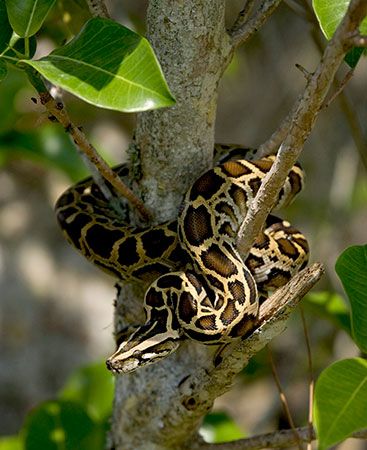
The introduction of the Burmese python into the Everglades and surrounding areas has caused catastrophic disruptions to the local food web. As highly adaptable apex predators, these snakes have significantly altered the ecosystem’s balance through the following impacts:
- Decimation of Mammal Populations: Since becoming established in the 1990s, pythons have caused population declines of 87 percent or more for several species, including raccoons, opossums, and bobcats. They have effectively wiped out foxes and rabbits in parts of the region.34
- Competition for Dominance: The pythons have challenged the American alligator for dominance in southern Florida’s wetlands. Evidence suggests that these two apex predators now actively prey upon one another.35
- Threats to Endangered Species: The snakes’ diet includes various birds, such as the wood stork, and small mammals like the Key Largo wood rat, contributing to local population declines for these vulnerable species.6
The presence of these invasive snakes represents a severe ecological challenge, prompting ongoing management efforts by the National Park Service and other agencies to mitigate their impact on native biodiversity.4
What is the ecological importance of the Everglades watershed?
The Everglades watershed is an ecologically vital subtropical region that serves as a unique sanctuary for a vast array of biodiversity. By supporting a complex blend of freshwater and marine habitats—including saw-grass marshes, mangrove swamps, and hardwood hammocks—the area provides essential nesting, feeding, and nursery grounds for hundreds of species.8910
Its ecological importance is defined by several key functions:
- Habitat for Endangered Species: The region is a critical refuge for threatened wildlife, including the Florida panther, American crocodile, and manatee. It is notably the only place in the wild where alligators and crocodiles coexist.810
- Hydrological Role: Historically, the watershed acted as a slow-moving “river of grass,” filtering and distributing water across the southern Florida peninsula. This natural flow is essential for maintaining the health of estuaries like Florida Bay, which serve as vital nurseries for fish.9108
- Global Recognition: Due to its unique environmental value, the area is designated as a Biosphere Reserve, a World Heritage site, and a Ramsar Wetland of International Importance.910
How do hardwood hammocks differ from other habitats in the preserve?
Hardwood hammocks are distinct from other habitats in the Big Cypress National Preserve primarily due to their elevation and vegetation. Situated about 13 feet (4 meters) above sea level, they represent the highest-elevation habitat in the preserve, which makes them the least prone to flooding compared to surrounding areas like cypress swamps or marl prairies.1
Key differences include:
- Vegetation: These areas support a dense, diverse mix of tropical and temperate hardwood trees and shrubs, such as mahogany, strangler fig, live oak, and red maple.19
- Density and Shade: Hardwood hammocks are more densely shaded than pinelands or prairies, creating a unique microclimate.1
- Wildlife Support: Due to their plant diversity, they provide critical habitat for large mammals, including the Florida panther, black bears, white-tailed deer, and bobcats.1
Sources
- Big Cypress National Preserve — Encyclopædia Britannica
- Big Cypress National Preserve: Top Questions — Encyclopædia Britannica
- Burmese python — Encyclopædia Britannica
- Wetland - Disturbances caused by humans — Encyclopædia Britannica
- Big Cypress National Preserve — Encyclopædia Britannica
- invasive species - A global problem — Encyclopædia Britannica
- Everglades National Park — Encyclopædia Britannica
- Everglades: Top Questions — Encyclopædia Britannica
- Everglades - Natural environment — Encyclopædia Britannica
- Everglades - Development of the Everglades — Encyclopædia Britannica
- Everglades National Park: Top Questions — Encyclopædia Britannica
- Everglades — Encyclopædia Britannica
Published on · 3 min read