Florida Panther
The Florida panther is a population of the species Puma concolor and serves as the official state animal of Florida. Once ranging across much of the…
What is a Florida panther?
The Florida panther is a population of the species Puma concolor and serves as the official state animal of Florida. Once ranging across much of the southeastern United States, this group is now confined to a small, isolated, and inbred population in southern Florida, representing the only breeding group of pumas in the eastern United States.1
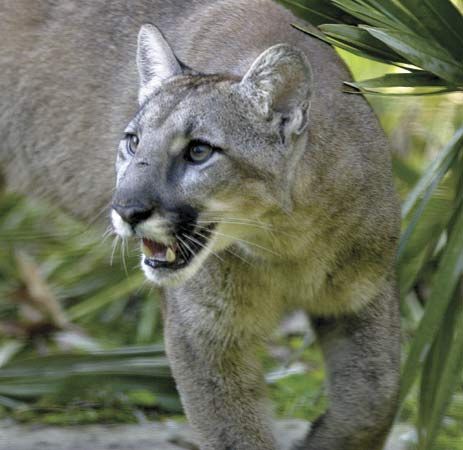
Physically, adults measure 1.8–2.1 metres (6–7 feet) in length and possess a coat that is typically tawny or rust-coloured. They primarily hunt white-tailed deer, though their diet includes smaller mammals and alligators diet includes smaller mammals and alligators.1
The population faced severe decline due to hunting and habitat loss, dropping to as few as 12–20 adults by 1967. It was one of the first animals protected under the Endangered Species Act in 1973. Thanks to conservation efforts, including genetic supplementation, the population has recovered to over 200 individuals, though they remain threatened by habitat fragmentation and vehicle collisions.1
Where does the Florida panther live?
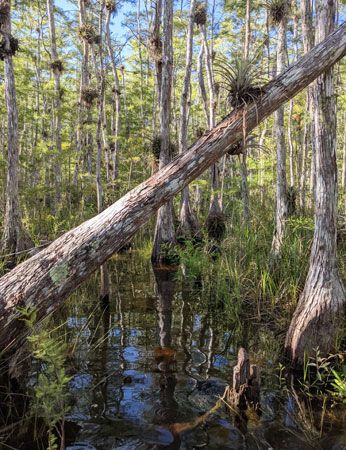
The Florida panther is currently confined exclusively to southern Florida, where it inhabits subtropical environments such as wetlands, forests, and grasslands.1
Historically, the geographic range of the Florida panther was much broader, extending northward to Tennessee and South Carolina, and westward as far as Arkansas and Louisiana. Today, their habitat is fragmented by urban sprawl and roads and highways, leading to conservation initiatives aimed at reconnecting areas like Everglades National Park and the Big Cypress National Preserve to regions north of Lake Okeechobee.13
What does the Florida panther look like?
The Florida panther (Puma concolor) is a large cat with a distinct appearance that changes as it matures.1
Adult Appearance
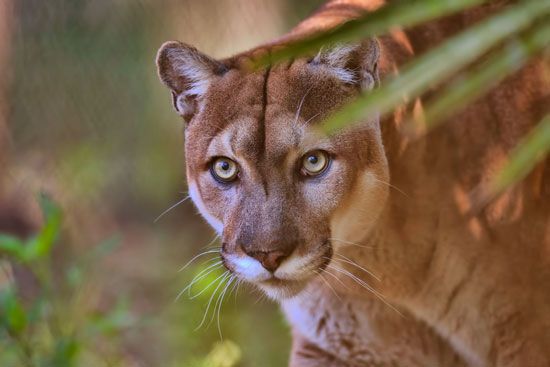
Adult Florida panthers are characterized by their sleek, muscular build and specific coat coloration:
- Coloration: Their fur is typically dark buff, tawny, or rust-coloured on the back. The sides range from brownish orange to light brown or tawny, while the undersides are light buff to white.1
- Size: Adults measure approximately 1.8–2.1 metres (6–7 feet) from nose to tail.1
- Weight: There is a notable size difference between the sexes. Males are relatively large, weighing 45–72 kg (100–160 pounds), while females weigh between 30–45 kg (65–100 pounds).1
Juvenile Appearance
At birth, Florida panther kittens look quite different from the adults. They are buff-coloured and covered in dark brown or blackish spots, which help them blend into their surroundings. At birth, they weigh approximately 0.5 kg (1 pound).1
What do Florida panthers eat?
The Florida panther is a carnivore that consumes a varied diet depending on availability within its habitat. Their preferred prey is the white-tailed deer.1
In addition to deer, they hunt a range of other animals, including:
- Smaller prey: rabbits, raccoons, and various birds.1
- Other mammals: wild hogs.1
- Reptiles: The American alligator.1
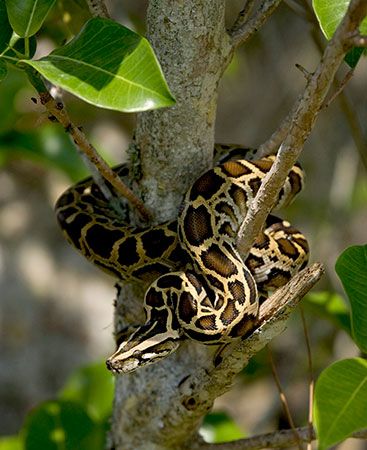
The availability of these food sources is currently a concern for conservationists, as the Burmese python—an invasive species in Florida—competes with the panther for prey, potentially reducing the food supply and contributing to higher mortality rates.1
Sources
- Florida panther — Encyclopædia Britannica
- Florida panther — Merriam-Webster
- 10 Fascinating Region-Specific Animals | Florida Panther — Merriam-Webster
- puma — Encyclopædia Britannica
- panther — Encyclopædia Britannica
Published on · 2 min read