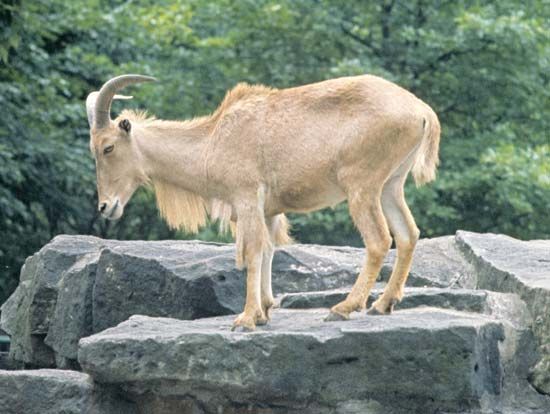
Bighorn Sheep
Bighorn sheep (Ovis canadensis) are primarily found in the mountainous and desert regions of western North America. Their historical range once extended from…
Where are bighorn sheep primarily found in North America?
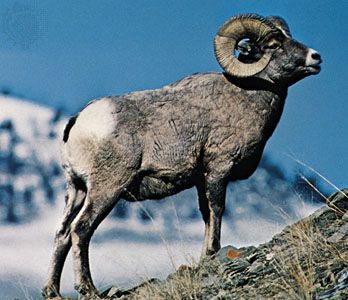
Bighorn sheep (Ovis canadensis) are primarily found in the mountainous and desert regions of western North America. Their historical range once extended from Canada down to northern Mexico, though populations were significantly reduced by overhunting, habitat loss, and disease in the 1800s.12
These animals prefer open terrain that provides access to rocky refuges, which allow them to escape from predators. While conservation efforts and translocations have helped restore them to parts of the western United States, many current herds remain small and isolated.1
What is the diet of bighorn sheep and how does it change seasonally?
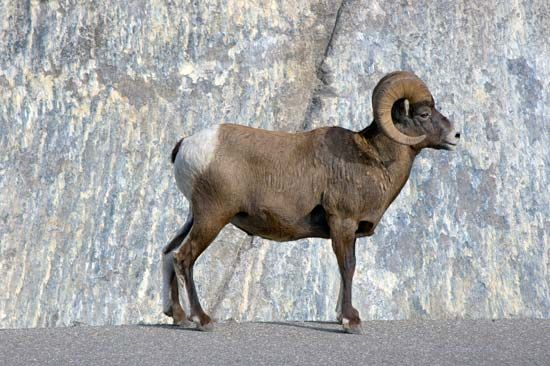
The diet of bighorn sheep consists primarily of grasses, sedges, shrubs, and herbs. These animals are herbivores that forage across their range to meet their nutritional needs.
While the provided information notes that bighorn sheep migrate seasonally between 1 and 32 kilometers to reach higher elevations during the spring and summer, and retreat to lower elevations in late fall to avoid heavy snowpack, it does not specify how the composition of their diet shifts in response to these seasonal movements. Their survival during winter is heavily dependent on the weight gained by lambs and the fat stores accumulated by ewes before the onset of cold weather.
How long do bighorn sheep typically live in the wild?
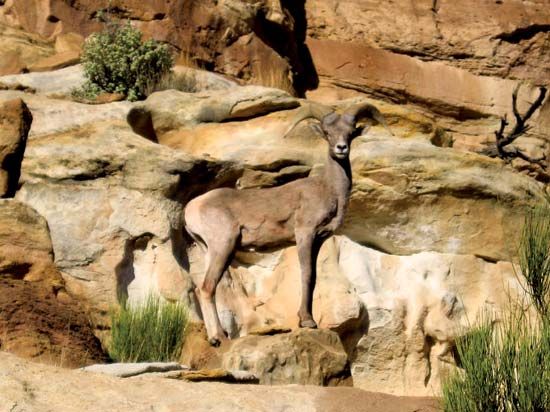
Bighorn sheep can live for 20 years or more in the wild. However, their life expectancy is often significantly lower, sometimes reaching only six or seven years in populations that are reproducing rapidly.1
What are bighorn sheep?
Bighorn sheep (Ovis canadensis) are stocky, climbing mammals native to western North America. They are easily recognized by their brown coats, white rump patches, and massive, curling horns. While both sexes grow horns, those of the males, or rams, are significantly larger, sometimes exceeding one meter in length.1
These animals are well-adapted to open, rugged terrain, often staying near rocky areas to escape predators. They live in small, single-sex groups and are known for their seasonal migrations between high-elevation summer ranges and lower-elevation winter grounds. Bighorn sheep are herbivores, feeding on a diet of grasses, sedges, shrubs, and herbs.1
Socially, the species is defined by the dramatic dominance battles of rams, who use their specialized skulls to absorb the shock of high-speed head-to-head collisions. Despite their resilience, the species faced near-extinction in the 1800s due to overhunting, habitat loss, and diseases introduced by livestock. Today, they remain a subject of significant conservation efforts.1
Sources
- bighorn sheep — Encyclopædia Britannica
- bighorn — Merriam-Webster
Published on · 2 min read