Quetico Provincial Park
Quetico Provincial Park is a wilderness park located in southwestern Ontario, Canada, situated west of Lake Superior along the U.S. border. Established in…
What is Quetico Provincial Park?
Quetico Provincial Park is a wilderness park located in southwestern Ontario, Canada, situated west of Lake Superior along the U.S. border. Established in 1913, it spans 1,832 square miles (4,744 square km) and is renowned for its rugged, roadless landscape.1
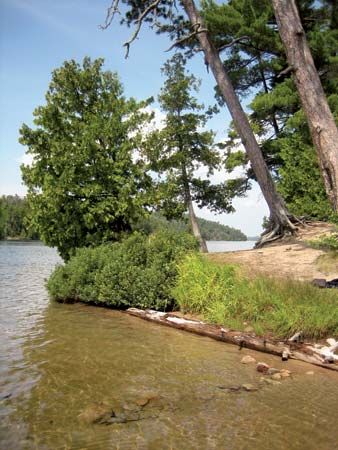
The park serves as a significant historical site, having once been a major east–west route for Indigenous peoples, explorers, and traders; remnants of the 19th-century Dawson Trail remain visible today. Access to the park is restricted to canoe entry from its perimeter, and travel within its borders is conducted exclusively via its network of over 1,000 lakes and waterways. The area is also home to ancient Indigenous pictographs and a diverse array of wildlife, including moose, wolves, and black bears, as well as various fish species like lake trout and walleye.1
What are the historical significance of the Dawson Trail?
The Dawson Trail was a significant 19th-century transportation route used by immigrants traveling to reach the western prairies of Canada. While the name “Dawson” is often associated with other Canadian locations—such as the city of Dawson in the Yukon, which rose to prominence during the Klondike Gold Rush, or Dawson Creek in British Columbia, known as the start of the Alaska Highway—the specific trail referenced in the context of Quetico Provincial Park served as a vital corridor for early settlers and traders.213
Portions of this historic trail remain visible within the park today, serving as a reminder of the region’s history as a major east–west passage for Indigenous peoples, explorers, and traders.2
How do visitors navigate the park’s waterways?
Visitors navigate the waterways of Quetico Provincial Park exclusively by canoe. Because the park is a protected wilderness area, there are no roads within its borders; therefore, travel is restricted to its network of more than 1,000 lakes and waterways. Access to these routes is gained by entering the park via canoe from various points along its perimeter.1
What types of wildlife are common in the Canadian wilderness?
The Canadian wilderness supports a diverse array of wildlife, with species distribution closely tied to the country’s distinct forest zones and ecosystems.45
Mammals
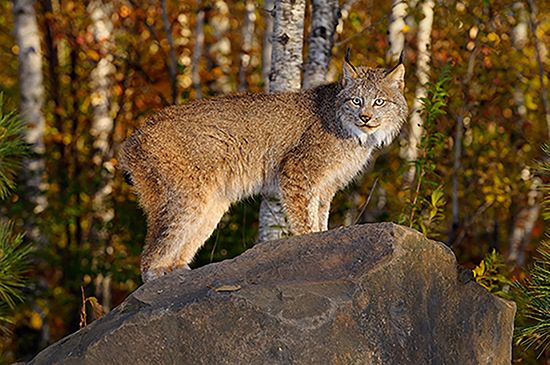
The boreal forest, or taiga, is home to many iconic Canadian mammals. Large browsing animals include moose, elk, and caribou, the latter of which are known for their extensive migrations. Predators such as wolves, black bears, and Canada lynx are also common. Smaller mammals are abundant as well, including beavers, snowshoe hares, minks, muskrats, and various squirrels. In the Western Cordillera, the terrain supports mountain goats, Rocky Mountain sheep, and mule deer.467
Birds
Canada’s forests and wetlands serve as vital breeding grounds for numerous bird species. During the summer, the taiga fills with migratory songbirds like thrushes, flycatchers, and warblers. Resident birds that remain through the winter include ravens and chickadees8. Additionally, the country’s extensive wetlands host various waterfowl, such as pintails and scoters, while specialized birds like woodpeckers and sapsuckers play critical roles in forest health.8
Sources
- Quetico Provincial Park — Encyclopædia Britannica
- Dawson — Encyclopædia Britannica
- Dawson Creek — Encyclopædia Britannica
- Canada - Forest regions — Encyclopædia Britannica
- Taiga - Mammals — Encyclopædia Britannica
- Wood Buffalo National Park — Encyclopædia Britannica
- Canada - Soils and plant and animal life — Encyclopædia Britannica
- Taiga - Birds — Encyclopædia Britannica
Published on · 2 min read