Bioko
Bioko Island’s economy has historically been centered on agriculture, specifically the cultivation of high-quality cocoa, which remains a primary product.…
What are the main economic activities and resources on Bioko Island?
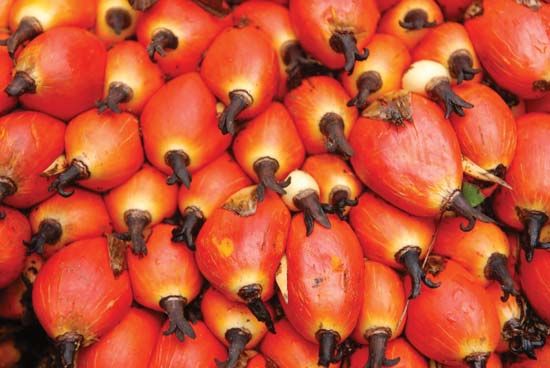
Bioko Island’s economy has historically been centered on agriculture, specifically the cultivation of high-quality cocoa, which remains a primary product. Other significant agricultural commodities include coffee, timber, and various subsistence crops such as cassava, plantains, bananas, sweet potatoes, coconuts, and oil palm fruit. Livestock farming, including the raising of sheep, goats, pigs, and cattle, also contributes to the local economy.12
Beyond agriculture, fishing and the timber industry are important economic activities. The island’s geography, characterized by volcanic terrain and rivers like the Musola, allows for the exploitation of hydroelectric power. Furthermore, the discovery and development of petroleum reserves in the 1980s and 1990s significantly transformed the economy, leading to increased business and infrastructure development, particularly in the capital city of Malabo. Malabo serves as the commercial hub, utilizing its deep-water port to facilitate the export of the island’s primary resources.1234
What languages are spoken on Bioko, and how do they reflect its history?
The linguistic landscape of Bioko reflects its complex history of indigenous settlement, European colonialism, and regional economic integration.
Indigenous and Ethnic Roots
The island’s original inhabitants, the Bubi, are descendants of Bantu-speaking migrants from the African mainland, and their native language remains a prominent ethnic tongue on the island. The Fang, who migrated from the mainland to occupy significant civil service roles, also contribute their own language to the island’s demographic mix.567
Colonial and Economic Influences
The official languages—Spanish, French, and Portuguese—highlight the island’s colonial past and modern diplomatic strategy:
- Spanish: A legacy of Spain’s colonial administration, which began in 1778 and solidified in the 19th century. It remains the primary language of education and the press.527
- French and Portuguese: Adopted to foster economic ties with Francophone and Lusophone neighbors, respectively.5
Additionally, an English-based creole serves as the lingua franca for commerce, a remnant of the island’s history as a British antislavery base and its connection to former British West Africa. A Portuguese patois is also spoken, reflecting early Portuguese exploration and claims.57
How does Bioko’s climate and ecosystem differ from mainland Equatorial Guinea?
While both Bioko and the mainland of Equatorial Guinea share an equatorial climate characterized by high temperatures, heavy rainfall, and persistent cloud cover, they exhibit distinct differences in their seasonal patterns and physical landscapes.28
Climate Variations
- Seasonal Timing: The continental region experiences wet seasons from February to June and September to December. In contrast, Bioko’s dry season occurs from November to March, with the remainder of the year being rainy.8
- Temperature and Humidity: While temperatures are consistently in the mid-to-high 70s F (about 25–26 °C) across the country, the mainland generally experiences higher relative humidity than Bioko. Additionally, temperature maxima on the mainland are slightly lower than those recorded on the island.8
- Rainfall: Bioko experiences extreme rainfall in its southern regions, with some areas receiving up to 450 inches (11,400 mm) annually, significantly exceeding the coastal rainfall averages of the mainland.8
Ecosystem and Landscape
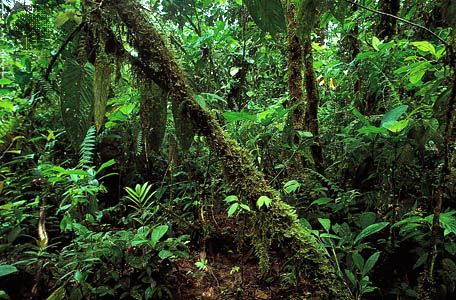
- Terrain: Bioko is volcanic in origin, featuring dramatic peaks like Santa Isabel Peak, crater lakes, and alpine-like landscapes in the Moca Heights. The mainland is primarily covered by dense tropical rainforest primarily covered by dense tropical rainforest.109
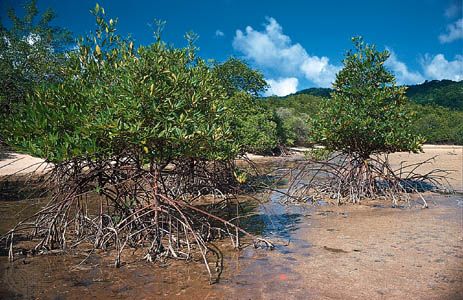
- Biodiversity: The mainland supports large game, including gorillas, elephants, and leopards. Bioko lacks such large animals, hosting instead a variety of monkeys, dwarf antelopes, and rodents. However, Bioko boasts a greater variety of tropical vegetation, including mangroves10.
What is the capital city of Bioko, and why is it significant?
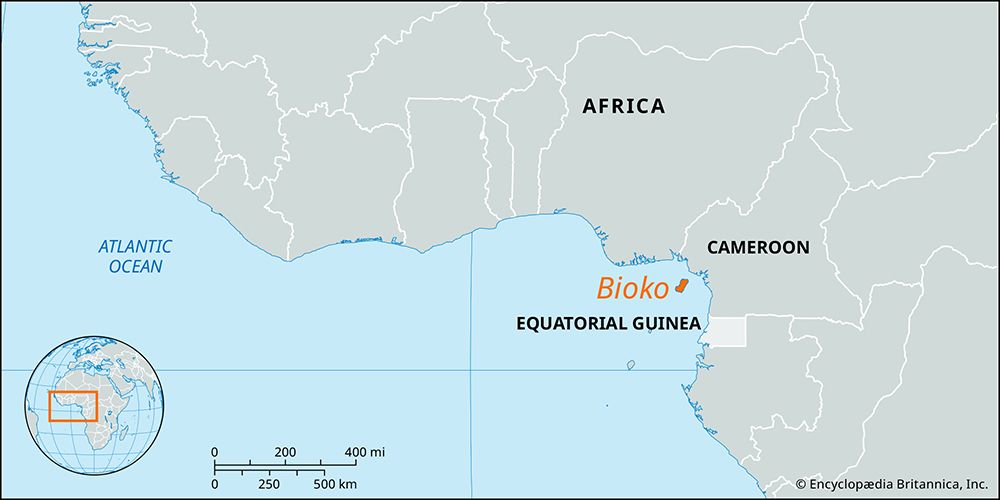
Bioko does not have its own capital city; rather, it was home to the capital of the entire nation of Equatorial Guinea, Malabo, until 2026. In January 2026, the capital was officially moved to Ciudad de la Paz, located on the African mainland.
Malabo remains a site of significant importance for the following reasons:
- Commercial and Financial Hub: It serves as the country’s primary commercial and financial center, playing a vital role in the national economy.3
- Strategic Infrastructure: The city features one of the deepest seaports in the region, which is essential for the export of cocoa, timber, and coffee. It also hosts an international airport that connects the country to other parts of Africa, Europe, and the United States.311
- Historical and Administrative Role: As the former capital, Malabo houses many government offices that are currently in the process of transitioning to the new capital. Its development was significantly bolstered in the late 20th century by the discovery and expansion of the country’s oil reserves.212311
Sources
- Equatorial Guinea - Agriculture, forestry, and fishing — Encyclopædia Britannica
- Bioko — Encyclopædia Britannica
- Malabo — Encyclopædia Britannica
- Equatorial Guinea - Insular Equatorial Guinea — Encyclopædia Britannica
- Equatorial Guinea - Languages — Encyclopædia Britannica
- Which African Countries Speak Spanish? — Encyclopædia Britannica
- Bioko: Top Questions — Encyclopædia Britannica
- Equatorial Guinea: Top Questions — Encyclopædia Britannica
- Equatorial Guinea - Climate of Equatorial Guinea — Encyclopædia Britannica
- Equatorial Guinea - Plant and animal life — Encyclopædia Britannica
- Equatorial Guinea — Encyclopædia Britannica
- history of Equatorial Guinea - Independent Equatorial Guinea — Encyclopædia Britannica
Published on · 3 min read