Bismarck Archipelago
Traditional customs and beliefs in the Bismarck Archipelago are deeply rooted in complex social structures and exchange systems that have persisted despite…
What are some of the traditional customs and beliefs of the indigenous people in the Bismarck Archipelago?
Traditional customs and beliefs in the Bismarck Archipelago are deeply rooted in complex social structures and exchange systems that have persisted despite the influence of Westernization and Christianity.12
Social Organization and Exchange
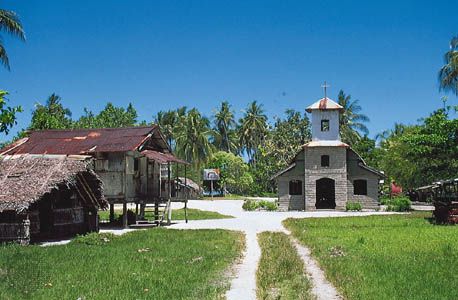
Societies in this region are frequently organized through matrilineal descent, where kinship ties define land ownership and social obligations. A central pillar of these cultures is the practice of ceremonial exchange, which serves as a foundation for social cooperation, status, and political alliance.213
- Bridewealth: The payment of bridewealth—often in the form of shell valuables—remains a resilient custom used to validate marriages and compensate a bride’s family for the loss of her labor.12
- Shell Currency: In areas like New Britain, shell currency such as tambu has historically functioned as a medium of economic value, used to trade for land, livestock, and other commodities.3
Secret Societies
The Bismarck Archipelago is also known for the duk-duk, a traditional secret society native to New Britain. Members of this society historically functioned as a self-constituted judiciary and were often perceived as sorcerers, playing a significant role in the social and political regulation of their communities.4
How is the Bismarck Archipelago governed within Papua New Guinea’s political structure?
The Bismarck Archipelago is an integral part of Papua New Guinea, having become part of the nation when it attained independence in 1975. Following a history of colonial administration—including German annexation in 1884, Australian mandates after World War I, and a period as a UN Trust Territory—the archipelago is now governed under the centralized political structure of the independent state of Papua New Guinea.789
While the provided information confirms the archipelago’s status as a constituent part of the country, it does not detail the specific provincial or local government subdivisions that manage these islands within the national framework. Governance in Papua New Guinea generally faces the ongoing challenge of integrating hundreds of diverse, historically isolated local societies into a single, viable national entity. Local administration on individual islands, such as New Ireland, is handled through regional centers like Kavieng, Konos, and Namatanai, which oversee their respective northern, central, and southern portions.7108
What are the main cultural and linguistic characteristics of the people living in the Bismarck Archipelago?
The cultural and linguistic landscape of the Bismarck Archipelago is defined by a complex historical synthesis of two distinct populations: the indigenous Papuan peoples and the Austronesian speakers who arrived approximately 3,500 years ago.7
Linguistic and Cultural Origins
- Papuan Tradition: The earliest inhabitants, the Papuans, have occupied the region for tens of thousands of years. Their descendants speak a diverse array of Papuan languages that are distinct from the Austronesian family.7
- Austronesian Influence: The arrival of Austronesian peoples—associated with the Lapita culture—introduced maritime technology, sophisticated pottery, and shell ornament trade networks. This group spoke languages ancestral to many coastal languages in the region.7
- Cultural Synthesis: Modern populations in the archipelago represent a deep mixing of these two traditions. While the degree of integration varies, the resulting cultures often feature matrilineal descent systems and complex exchange networks.37
Artistic and Social Traditions
The archipelago is renowned for its unique artistic expressions, which often carry significant religious or ceremonial weight.
- Ephemeral Art: The malanggan carvings of New Ireland are a notable example of ephemeral art, created specifically for ceremonies and subsequently abandoned or destroyed.12
- Social Structure: Societies are typically organized into kinship-based groups. Obligations toward kin serve as a primary moral imperative, and social status is often reinforced through ceremonial exchange and the payment of bridewealth.3
What is the geographical location and composition of the Bismarck Archipelago?
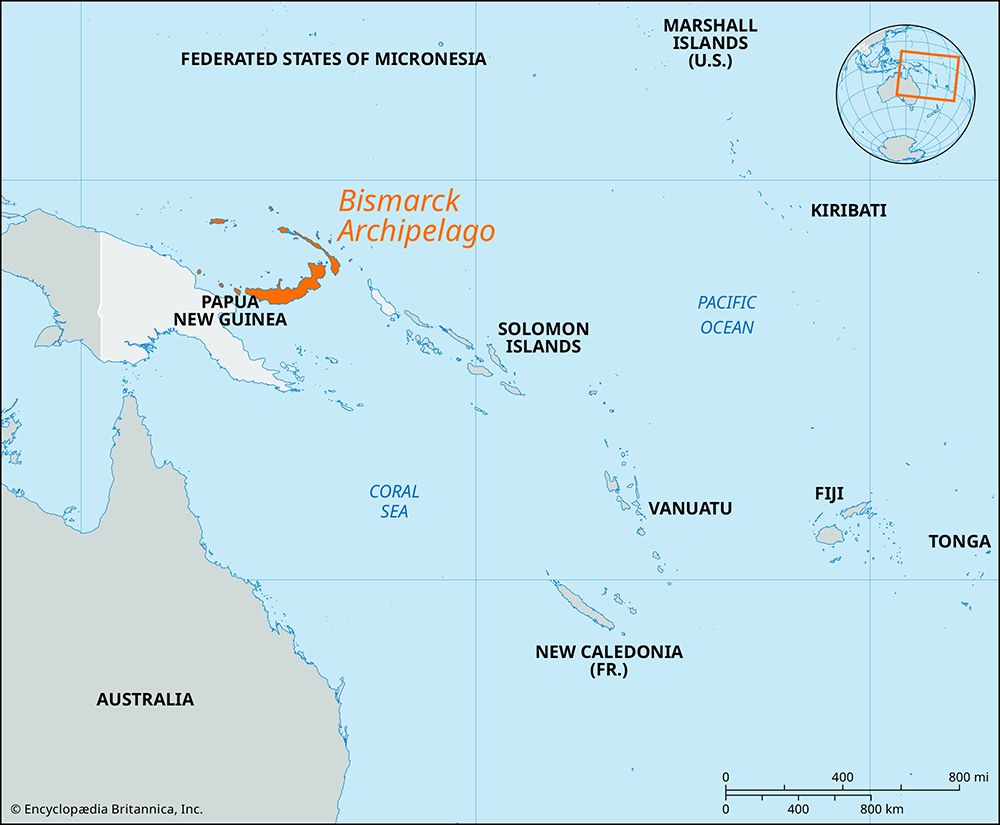
The Bismarck Archipelago is a group of islands located in the southwestern Pacific Ocean, situated northeast of the island of New Guinea and within the Bismarck Sea7. As part of Papua New Guinea, the archipelago encompasses a total land area of approximately 18,600 to 19,173 square miles (48,200 to 49,658 square km).71617
The composition of the archipelago includes several major islands and numerous smaller islets:
- Major Islands: New Britain, New Ireland, and the Admiralty Islands.1617
- Additional Components: New Hanover (Lavongai), the Duke of York Group, the St. Matthias Group, and the Witu (Vitu) Islands, along with roughly 200 other smaller islands and islets.1617
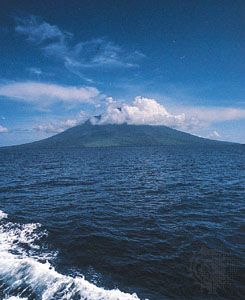
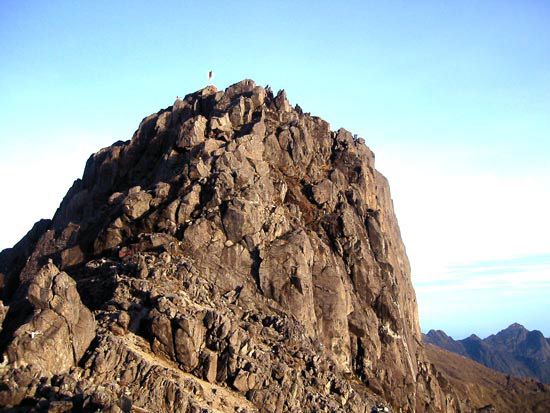
Geologically, these islands are primarily volcanic or formed from raised coral limestone and are characterized by dense forest cover.16
Sources
- Melanesian culture - Contemporary Melanesia — Encyclopædia Britannica
- duk-duk — Merriam-Webster
- Melanesian culture - Kinship and local groups — Encyclopædia Britannica
- American Subarctic peoples - Religious beliefs — Encyclopædia Britannica
- Melanesian culture - Trade and exchange systems — Encyclopædia Britannica
- Micronesian culture - Religion — Encyclopædia Britannica
- Bismarck Archipelago — Encyclopædia Britannica
- New Guinea — Encyclopædia Britannica
- New Ireland — Encyclopædia Britannica
- Papua New Guinea — Encyclopædia Britannica
- New Britain — Encyclopædia Britannica
- Micronesia - Cultural life — Encyclopædia Britannica
- Micronesian culture - Kinship and marriage — Encyclopædia Britannica
- Melanesian culture - Traditional Melanesia — Encyclopædia Britannica
- Melanesian culture - Art of the Melanesian culture — Encyclopædia Britannica
- Bismarck Archipelago — Merriam-Webster
- Bismarck Sea — Encyclopædia Britannica
Published on · 3 min read