Bitterling
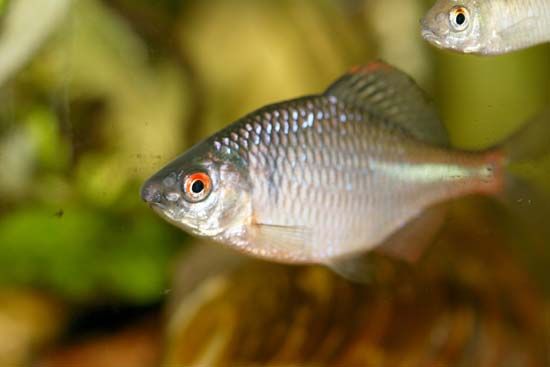
The bitterling (Rhodeus) is a small, carplike fish typically measuring between 5 and 7.5 centimetres (2 to 3 inches) in length.
What is the average size and lifespan of bitterling fish?
The bitterling (Rhodeus) is a small, carplike fish typically measuring between 5 and 7.5 centimetres (2 to 3 inches) in length.1
Regarding your inquiry about their lifespan, the provided information does not contain data on the average life expectancy of the bitterling.1
How do bitterling fish interact with freshwater mussels?
The bitterling (Rhodeus) exhibits a fascinating symbiotic relationship with freshwater mussels during its breeding season, which occurs from April to June.](https://www.britannica.com/animal/mussel) during its breeding season, which occurs from April to June.1
- Egg Deposition: The female bitterling develops a long, tubular ovipositor that she inserts into the incurrent respiratory siphon of a mussel. She then deposits her eggs directly into the mollusk’s gill chamber.1
- Fertilization: The male releases sperm nearby, which the mussel draws into its gill chamber along with water for respiration, effectively fertilizing the eggs inside the host.1
- Development: The eggs remain protected within the gill chamber for approximately one month until the young fish are ready to emerge.1
- Reciprocal Benefit: This relationship is mutualistic; while the mussel provides a safe nursery for the fish eggs, the mollusk releases its own larvae onto the bitterling. These larvae then undergo a stage of their development while encysted in the skin of the fish.1
What do bitterling fish typically eat?
Sorry, the Britannica knowledge base does not contain information regarding the specific diet of the bitterling fish.
What are the unique reproductive characteristics of bitterling fish?
The bitterling (Rhodeus) is distinguished by a highly specialized reproductive strategy that relies on a symbiotic relationship with freshwater mussels.12
During the spawning season, which occurs from April to June, the fish undergo significant physical changes:
- Male: Develops vibrant nuptial coloration, characterized by an orange belly and reddish fins.1
- Female: Develops a long, tubular [ovipositor].12
The female uses this organ to insert her eggs directly into the incurrent respiratory siphon of a host mussel, depositing them within the mollusk’s gill chamber. Fertilization occurs when the male releases sperm nearby, which the mussel draws into its gill chamber along with water during respiration. The eggs develop safely inside the host for approximately one month before the young fish emerge. This relationship is reciprocal, as the mussel simultaneously releases its own larvae onto the bitterling, where they develop while encysted in the fish’s skin.12
Sources
- bitterling — Encyclopædia Britannica
- ostariophysan - Breeding — Encyclopædia Britannica
Published on · 2 min read