Black Fly
Black flies, members of the family Simuliidae, are distinguished from other small insects by several specific physical characteristics. They are typically…
What physical characteristics distinguish black flies from other similar insects?
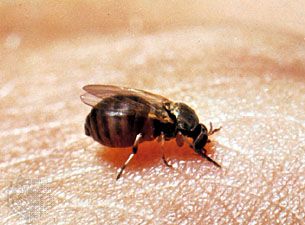
Black flies, members of the family Simuliidae, are distinguished from other small insects by several specific physical characteristics. They are typically small, humpbacked flies that appear black or dark gray in color.1
Key identifying features include:
- Body Shape: They possess a distinctively humpbacked appearance.1
- Wings: They have gauzy wings.1
- Appendages: They are characterized by stout antennae and legs.1
- Mouthparts: They feature relatively short mouthparts that are specifically adapted for sucking blood.1
While the term “gnat” is sometimes colloquially applied to black flies in North America, black flies are taxonomically distinct members of the order Diptera and are defined by these specific morphological traits. It is important to note that only the females of the species bite, and they can be significant pests to both humans and domestic animals.12
What is a black fly and which family of insects does it belong to?
A black fly is a small, humpbacked insect belonging to the family Simuliidae within the order Diptera. There are approximately 1,800 species of black flies, which are typically dark gray or black in color and possess gauzy wings, stout legs, and short mouthparts adapted for bloodsucking.1
While the term “gnat” is sometimes used to describe them in North America, black flies are distinct from other small insects like midges or fruit flies. Only the females bite, and they can be significant pests to livestock and humans; some species are also known to transmit parasites that cause onchocerciasis. Their larvae and pupae develop in flowing water before emerging as adults.51
How have black flies adapted to survive in fast-flowing water environments?
Black flies (family Simuliidae) have evolved specialized strategies to thrive in fast-flowing water environments during their immature stages. Both the larvae and pupae are aquatic, requiring the oxygen-rich conditions found in running water to develop.1
To survive the constant movement of their habitat, black fly pupae have developed the ability to swim actively, which helps them maintain their position or navigate within the water column. Furthermore, the pupae are often protected by a cocoon constructed from silk or other materials, providing a secure anchor against the current.6
When the insect reaches maturity, it employs a unique emergence strategy: the adult frees itself from the pupal case and rises to the water’s surface inside a bubble of air, allowing it to safely transition from the aquatic environment to flight.1
What role do black flies play in disease transmission, particularly in tropical regions?
Black flies of the genus Simulium play a significant role in disease transmission, most notably as the vectors for onchocerciasis, commonly known as river blindness.17
In tropical regions, particularly in sub-Saharan Africa and parts of the Americas such as Brazil and Venezuela, these flies transmit the parasitic nematode Onchocerca volvulus to humans through their bites. The disease is termed river blindness because the flies breed in fast-moving streams and rivers, primarily affecting populations living near these water sources.17
When an infected fly bites a human, it introduces the parasite into the skin. Over time, these parasites mature and produce microfilariae that can migrate throughout the body, including into the eyes. If left untreated, the resulting tissue damage in the cornea can lead to permanent blindness. Other symptoms include severe itching, skin pigmentation changes, and the formation of subcutaneous nodules.17
While efforts by organizations like the World Health Organization have made significant progress in eliminating transmission in several endemic areas, the flies remain a major public health concern in tropical environments.1
Sources
- black fly — Encyclopædia Britannica
- blackfly — Merriam-Webster
- simuliid — Merriam-Webster
- simuliid — Merriam-Webster
- gnat — Encyclopædia Britannica
- Diptera - Pupa — Encyclopædia Britannica
- onchocerciasis — Encyclopædia Britannica
- filariasis — Encyclopædia Britannica
- Diptera - Importance — Encyclopædia Britannica
- insect - Medical significance — Encyclopædia Britannica
Published on · 3 min read