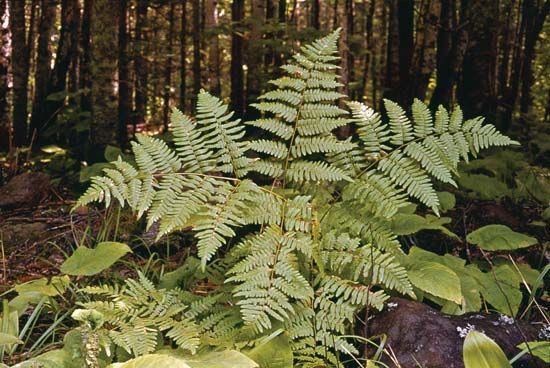
Blechnaceae
Blechnaceae, commonly known as the chain fern family, is a group within the order Polypodiales that includes 7–9 genera and over 200 species. While found…
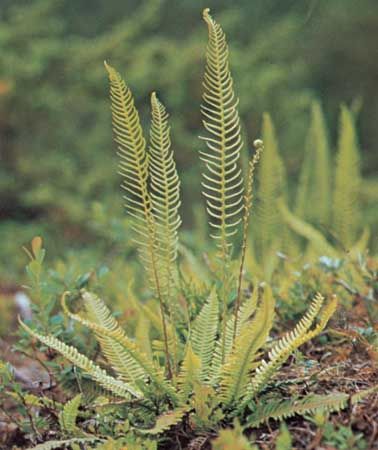
What is Blechnaceae?
Blechnaceae, commonly known as the chain fern family, is a group within the order Polypodiales that includes 7–9 genera and over 200 species. While found nearly worldwide, the family is most diverse in the tropical regions of the Southern Hemisphere.12
Most species are terrestrial or grow on rocks, and many, such as those in the genera Blechnum, Doodia, and Woodwardia, are popular as ornamentals. The family exhibits significant morphological variety; some species develop stout, trunklike stems and leathery leaves, resembling cycads more than typical ferns. Their sori are often linear or bean-shaped and are frequently protected by a membranous flap of tissue called an indusium.1
How do ferns reproduce using spores instead of seeds?
Ferns reproduce through a process known as alternation of generations, which involves two distinct life stages: the sporophyte and the gametophyte.34
The Sporophyte Stage
The familiar fern plant is the sporophyte, which produces spores in specialized structures called sporangia. These are often clustered on the undersides of leaves in groups called sori. Through meiosis, the sporophyte creates haploid spores that are released and carried by the wind to new locations.345
The Gametophyte Stage
When a spore lands in a suitable, moist environment, it germinates into a tiny, heart-shaped, independent plant called a prothallium. This gametophyte produces male (antheridia) and female (archegonia) sex organs.3645
Fertilization
For fertilization to occur, sperm must swim through a film of water to reach an egg. The resulting zygote develops into a new, independent sporophyte plant, eventually causing the small prothallium to wither and die. While this sexual cycle is vital for colonization, many ferns also reproduce vegetatively through rhizomes or leaf proliferations rhizomes or leaf proliferations.4357
What are the main differences between terrestrial and epiphytic ferns?
The primary difference between terrestrial and epiphytic ferns lies in their habitat and the resulting structural adaptations they have developed to survive.
Habitat and Growth
- Terrestrial ferns grow directly in the soil, often in shaded, damp forest environments, though some species occupy rocky crevices or exposed sites like salt marshes and open fields.7
- Epiphytic ferns grow upon other plants, typically on the trunks and branches of trees. While some are true epiphytes, others are climbers that begin their life on the ground and ascend tree trunks as they mature.7
Structural Adaptations
Because epiphytes often face drier conditions than ground-dwelling plants, they frequently exhibit specialized features to conserve moisture, such as:
- Hard tissues and thick textures to prevent water loss.7
- A thick cuticle, which is a waxy layer on the epidermis that helps retain water.7
- Abundant trichomes (plant hairs) or scales on the surfaces of their leaves and stems.7
While terrestrial ferns in exposed or harsh environments may also possess these protective modifications, those in stable, shaded forest floors generally do not require them to the same extent.7
What is the function of an indusium in fern anatomy?
The primary function of an indusium in fern anatomy is to provide protection for the sorus—the cluster of sporangia where spores are produced. This protective covering shields the developing sporangia from environmental hazards such as exposure and drying.115
There are two main types of protective structures:
- True indusium: A distinct, often papery layer of tissue that covers the sorus. These vary in shape, ranging from cup-like structures that enclose the base of the sorus to two-lipped (valvate) covers found in certain genera.115
- False indusium: A protective cover formed by the rolled-over margin of the fern leaf, under which the sporangia mature.1112
In some fern species, the sori may be protected by being positioned in grooves or pockets on the leaf, while in others, such as Polypodium, the sori remain entirely uncovered.115
Sources
- Blechnaceae — Encyclopædia Britannica
- fern - Distribution and abundance — Encyclopædia Britannica
- fern - Life cycle — Encyclopædia Britannica
- prothallium — Encyclopædia Britannica
- plant reproductive system - Ferns — Encyclopædia Britannica
- lower vascular plant - Reproduction — Encyclopædia Britannica
- fern - Ecology — Encyclopædia Britannica
- water fern — Encyclopædia Britannica
- houseplant - Ferns — Encyclopædia Britannica
- plant - Subclass Polypodiidae — Encyclopædia Britannica
- fern - The indusium — Encyclopædia Britannica
- Hymenophyllaceae — Encyclopædia Britannica
- false indusium — Merriam-Webster
Published on · 3 min read