Boobook
The boobook (Ninox novaeseelandiae) is a small owl species belonging to the subfamily Surniinae. These birds are commonly found in eucalyptus forests across…
What is a boobook, and why is it called that?
The boobook (Ninox novaeseelandiae) is a small owl species belonging to the subfamily Surniinae. These birds are commonly found in eucalyptus forests across Australia, New Zealand, New Guinea, and the Lesser Sunda Islands.1
The name “boobook” is onomatopoeic, meaning it is derived from the bird’s distinctive call. This vocalization is also responsible for the owl’s common nicknames, such as “mopoke” in Australia and “morepork” in New Zealand. While the taxonomy of the boobook is subject to debate among ornithologists—with some classifying them as a single species and others dividing them into three based on geography—they remain widely recognized for these characteristic sounds.21
Where are boobook birds typically found in the wild?
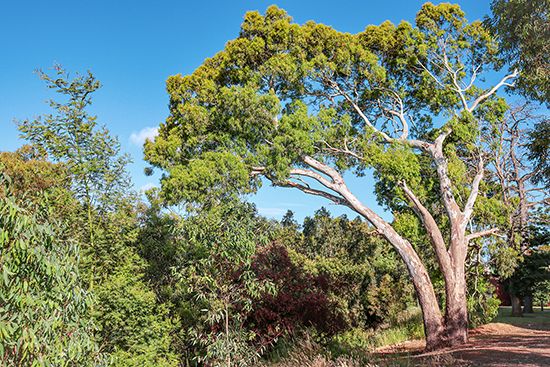
Boobook birds are found across a variety of habitats in Australia, New Zealand, the Lesser Sunda Islands, Timor, and New Guinea. While they inhabit diverse environments within these regions, they are most commonly found in eucalyptus forests.1
What are the physical characteristics of a boobook bird?
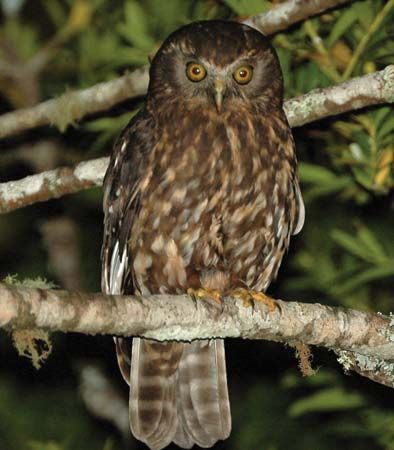
The boobook (Ninox novaeseelandiae) is a small owl characterized by specific physical traits that aid in its survival and camouflage.
Physical Characteristics
- Size: Adult boobooks typically grow to a height of 25–33 cm (approximately 10–13 inches).1
- Plumage: The feathers of an adult are primarily dark brown, featuring streaks and mottles of white across the head and back. The underside of the bird is generally whiter, marked with streaks of lighter brown.1
- Variations: While the general boobook has the coloration described above, related species like the Christmas Island boobook (Ninox natalis) exhibit chestnut-brown plumage, which serves as camouflage in dense rainforests, and possess bright yellow eyes that contrast with their muted body color.2
These physical attributes allow the boobook to blend effectively into its natural environment, particularly within the eucalyptus forests it frequently inhabits.1
How do boobooks communicate, and what does their call sound like?
Boobooks are renowned for their distinctive vocalizations, which serve as their primary means of communication. Their call is a repetitive, rhythmic sound that is often described as “boo-book.” This unique vocalization is so characteristic that it has earned the species common nicknames based on the sound, such as “mopoke” in Australia and “morepork” in New Zealand.1
Like many other birds, boobooks utilize these auditory signals for essential social and territorial functions. Vocalizations are typically employed to establish and maintain territories, attract potential mates, and identify neighbors or partners. Beyond these primary songs, owls also use various vocalizations to signal aggression, such as bill snapping, which serves as a common threat display. While these calls are vital for social interaction, it is important to note that owls also rely heavily on their acute sense of hearing to locate and capture prey by detecting subtle auditory cues in their environment.56
Sources
- Boobook — Encyclopædia Britannica
- boobook owl — Merriam-Webster
- owl - Reproduction and development — Encyclopædia Britannica
- Christmas plants and animals: 12 festive species - Christmas boobook ( Ninox natalis ) — Encyclopædia Britannica
- sound reception - Uses of hearing in birds — Encyclopædia Britannica
- Bird - Sound — Encyclopædia Britannica
Published on · 2 min read