Booby
Boobies are tropical seabirds belonging to the family Sulidae. They are widely distributed across the Atlantic, Pacific, and Indian oceans.
Where are booby birds typically found, and what habitats do they prefer?
Boobies are tropical seabirds belonging to the family Sulidae. They are widely distributed across the Atlantic, Pacific, and Indian oceans.1
Regarding their habitat and behavior:
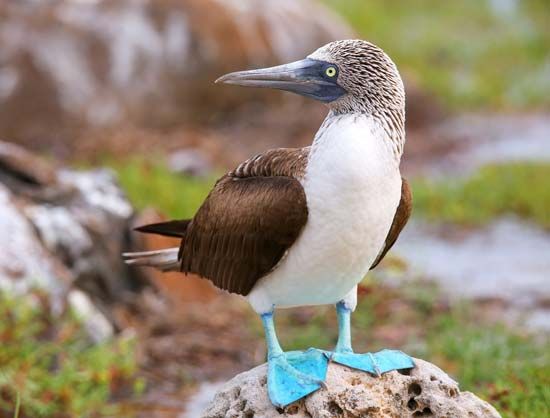
- Geographic Range: While some species like the red-footed booby and masked booby are wide-ranging, the blue-footed booby is specifically found in the Pacific region, ranging from southern California to northern Peru and throughout the Galápagos Islands.1
- Nesting: These birds nest in colonies, typically laying their eggs on the ground in rudimentary nests. They are known for their lack of fear toward humans, which historically made them vulnerable to early mariners.1
- Foraging: Boobies are highly adapted to a marine environment, spending much of their time flying high above the ocean to locate fish and squid. They hunt by performing swift, vertical plunge-dives into the water.12
How many species of booby birds exist, and what are some of the most well-known ones?
There are approximately six or seven species of booby birds, which are large tropical seabirds belonging to the family Sulidae.1
Some of the most well-known species include:
- Blue-footed booby: Famous for its bright blue feet and legs, this species is found in the Pacific region, ranging from southern California to northern Peru and throughout the Galápagos Islands.14
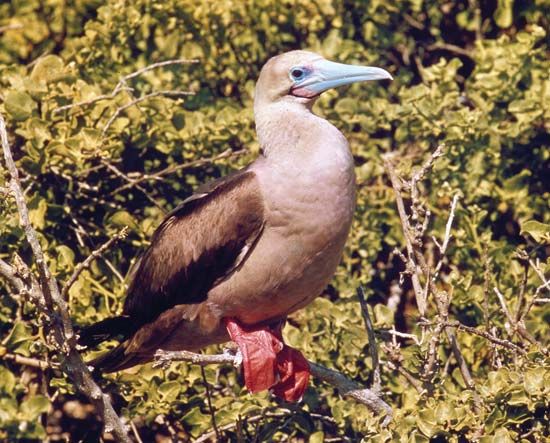
- Red-footed booby: A wide-ranging species found across the Atlantic, Pacific, and Indian oceans.15
- Masked booby: Also known as the blue-faced booby, this species is similarly widespread across tropical oceans.1
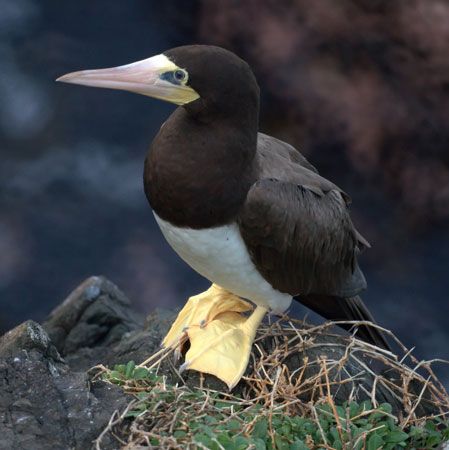
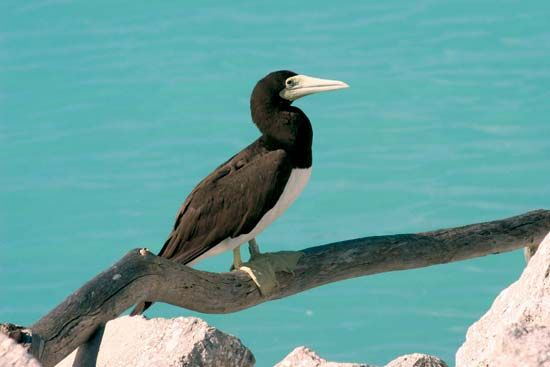
- Brewster’s booby: A grayish-brown subspecies of the brown booby that occurs from the Gulf of California to the Galápagos Islands.6
These birds are characterized by their cigar-shaped bodies and long, narrow wings, which they use to hunt by plunge-diving into the ocean for fish and squid.1
What are the unique feeding and diving behaviors of booby birds?
Booby birds are highly specialized for a hunting strategy that relies on momentum gained from aerial dives. Their unique feeding and diving behaviors include:
- Plunge-Diving: Boobies fly high above the ocean to locate schools of fish and squid. Upon sighting prey, they perform a swift, vertical plunge-dive from heights of up to 30 meters (100 feet).317
- Physiological Adaptations: To survive the impact of striking the water and the pressure of reaching depths as great as 25 meters (80 feet), boobies possess specialized air sacs under the skin that act as a protective, spongy mattress. Additionally, their nostrils are permanently closed to prevent water intake, and they feature a specialized air sac in the skull for further protection.38
- Group Hunting: Some species, such as the blue-footed booby, often hunt in groups, diving almost simultaneously. This behavior is frequently initiated by a disyllabic whistle, which may serve to confuse schools of fish and increase the success rate of the hunt.37
- Aerial Capture: Certain species, including the red-footed booby, are also capable of catching flying fish directly in the air.7
How did booby birds get their name, and what does it mean?
The name “booby” for these seabirds is derived from their perceived lack of intelligence and their extreme tameness toward humans. Early mariners gave them this name because the birds showed little fear, making them easy to approach and capture.9
The term “booby” itself is a modification of the Spanish word bobo, which translates to an awkward or foolish person, or a “dope”. This Spanish term likely originated from the Latin word balbus, meaning “stammering”. It is important to note that this usage is etymologically distinct from the separate, sometimes vulgar term for “breast,” which is an alteration of the word bubby.1012
Sources
- booby — Encyclopædia Britannica
- 10 Bird Names that Sound Like Insults (and Sometimes Are) | 'Booby' — Merriam-Webster
- blue-footed booby: Top Questions — Encyclopædia Britannica
- red-footed booby — Merriam-Webster
- blue-footed booby — Merriam-Webster
- Brewster's booby — Merriam-Webster
- pelecaniform - Feeding ecology — Encyclopædia Britannica
- pelecaniform - Distinguishing characteristics — Encyclopædia Britannica
- booby — Merriam-Webster
- booby — Merriam-Webster
Published on · 3 min read