Blue-footed Booby
The blue-footed booby (Sula nebouxii) is a large seabird native to arid islands and coastal regions along the eastern Pacific Ocean, ranging from Baja…
What is Blue-footed booby?
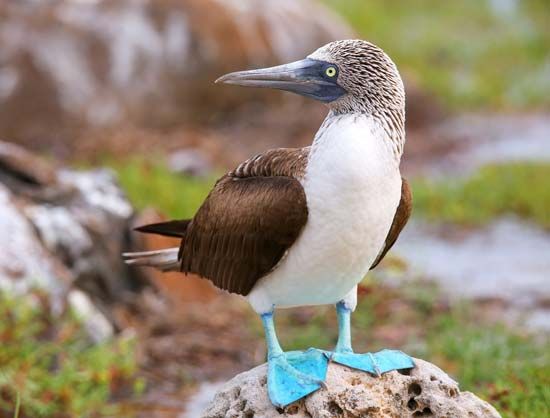
The blue-footed booby (Sula nebouxii) is a large seabird native to arid islands and coastal regions along the eastern Pacific Ocean, ranging from Baja California to Peru.1
Distinguished from other members of the Sulidae family by its bright blue webbed feet, the species derives its name from the Spanish word bobo, meaning “foolish” or “clownish,” a reference to its awkward gait and lack of fear toward people. These birds are skilled hunters that plunge-dive into the ocean from heights of up to 30 meters to catch fish and squid.1
Their iconic blue feet are not merely aesthetic; they are vital for courtship displays. The blue coloration is produced by carotenoids obtained from their diet, serving as an indicator of a bird’s health and maturity to potential mates. Currently, the IUCN classifies the species as being of least concern.1
How do blue-footed boobies use their feet during courtship displays?
During courtship, the blue-footed booby’s feet serve as a critical visual signal of the bird’s health and maturity. Males perform an elaborate high-stepping display to attract females, who show a preference for mates with a brighter blue color. This vibrant blue coloration is derived from [carotenoids], a pigment obtained through the consumption of fish.32
Interestingly, research indicates that this preference is mutual, as males also demonstrate a tendency to favor females with more vibrant blue feet over those with duller-colored feet. Beyond their role in attracting a mate, the feet are essential for the pair’s reproductive success; they are heavily supplied with blood vessels that transmit heat, allowing parents to effectively incubate their eggs.32
What are some other unique adaptations that help seabirds hunt underwater?
Seabirds have evolved a variety of specialized adaptations to navigate the challenges of hunting underwater, ranging from physical structures that protect them during high-speed impacts to physiological traits that facilitate efficient movement.
Impact Protection and Buoyancy
- Air Sacs: Many plunge-diving birds, such as boobies, tropic birds, and brown pelicans, possess a system of subcutaneous air sacs. These act as a spongy mattress, protecting the bird from the force of hitting the water at high speeds.56
- Nostril Reduction: To prevent water from entering the respiratory system during dives, many species have reduced or permanently closed external nostrils, forcing air to enter through specialized openings at the base of the bill.56
- Plumage and Density: Birds like cormorants and anhingas have wettable plumage that traps little air. This reduces buoyancy, allowing them to submerge easily from the surface without needing the momentum of an aerial dive.5
Locomotion and Propulsion
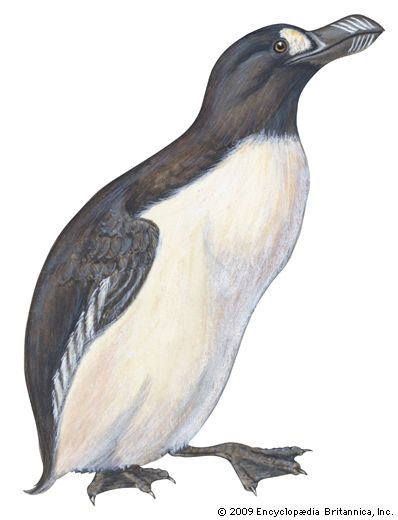
- Wing Modification: Some species, such as penguins and auks, have modified their wings into paddles or flippers. These allow them to “fly” underwater, providing thrust and lift.789
- Streamlining: Specialized divers like loons feature elongated, streamlined bodies with hind legs positioned at the extreme posterior, which maximizes efficiency during underwater pursuit.7
Why is the Galapagos Islands ecosystem so important for studying bird species?
The Galapagos Islands are a vital site for studying bird species because they serve as a premier natural laboratory for observing adaptive radiation. When ancestral bird populations arrived on these remote, competition-free islands, they encountered a variety of unoccupied ecological niches. Over time, these populations diverged into distinct species, each uniquely adapted to specific environments and diets.12
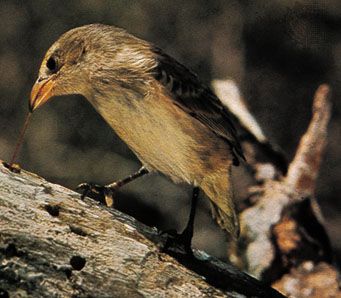
The most famous example is the Galapagos finch, a group of 14 species that evolved from a single common ancestor. Their most notable differences lie in the shape and size of their bills, which have specialized to allow them to probe, grasp, bite, or crush food in diverse ways. This process provided Charles Darwin with critical evidence for his theory of natural selection, demonstrating that species are not immutable.131214
Beyond finches, the archipelago hosts other unique birds, such as the flightless cormorant and the Galapagos penguin, which provide further insight into how isolated populations evolve in response to specific environmental pressures.1415
Sources
- blue-footed booby — Merriam-Webster
- blue-footed booby — Encyclopædia Britannica
- blue-footed booby: Top Questions — Encyclopædia Britannica
- pelecaniform - Courtship behaviour — Encyclopædia Britannica
- pelecaniform - Feeding ecology — Encyclopædia Britannica
- Locomotion - Tetrapodal vertebrates — Encyclopædia Britannica
- Bird - Swimming and diving — Encyclopædia Britannica
- pelecaniform - Distinguishing characteristics — Encyclopædia Britannica
- Biosphere - Hydrostatic pressure — Encyclopædia Britannica
- Charadriiform - Adaptations for flight — Encyclopædia Britannica
- thoracic squeeze — Encyclopædia Britannica
- Galapagos finch — Encyclopædia Britannica
- Galapagos Islands — Encyclopædia Britannica
- adaptive radiation — Encyclopædia Britannica
- evolution - Adaptive radiation — Encyclopædia Britannica
- Galapagos penguin — Encyclopædia Britannica
Published on · 3 min read