Brant
The term "Brant" refers to two distinct entities:
What is Brant?
The term “Brant” refers to two distinct entities:
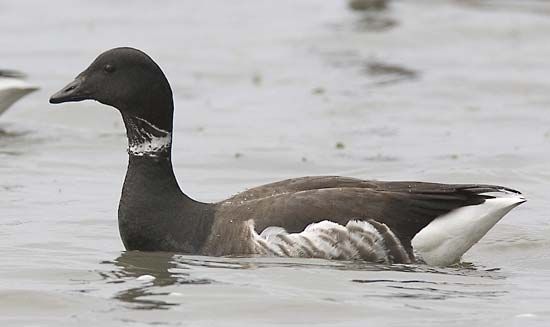
- Biological: The brant (Branta bernicla) is a small waterfowl belonging to the goose family. It is characterized by its dark plumage, black head and neck, and a narrow white neck ring. These birds breed in the Arctic and migrate to Eurasia and North America during the winter.123
- Geographical: Brant is also the name of a city located in southeastern Ontario, Canada.2
How do brant geese survive in the harsh Arctic environment?
The provided search results do not contain specific information regarding the physiological or behavioral adaptations that allow brant geese to survive in the harsh Arctic environment.
The available data confirms that the brant (Branta bernicla) is a waterfowl that breeds in the Arctic and migrates to Eurasia and North America during the winter. While general information about goose behavior—such as their tendency to pair for life, nest on the ground, and utilize V-formations during migration to conserve energy—is available, the specific mechanisms for Arctic survival are not detailed in the provided text.13
What are the main differences between the Branta and Anser genera of geese?
The genera Anser and Branta both belong to the family Anatidae and represent the primary groups of waterfowl commonly referred to as geese. While they share many biological traits—such as being monogamous, nesting on the ground, and migrating in V-formations—they are distinguished by their general classification and physical characteristics:
- Anser: These are commonly known as the “gray geese.” This genus includes species such as the white-fronted geese and is the ancestral group from which most modern domestic geese are descended, specifically the greylag and the swan goose.1
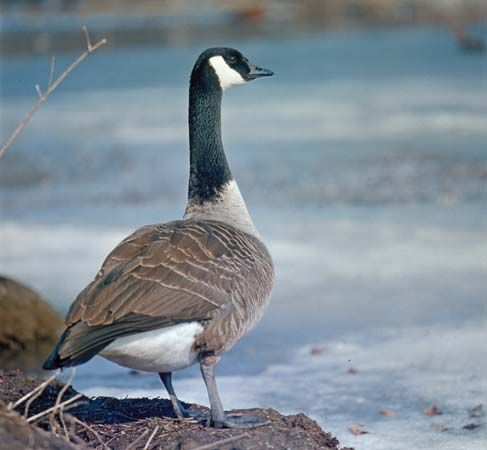
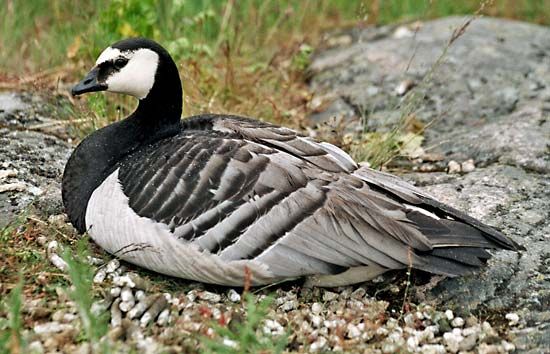
- Branta: These are referred to as the “black geese.” This genus includes the Canada goose, the barnacle goose, the nene, and the brant. They are generally characterized by darker plumage compared to the gray geese.31
Both genera share adaptations like bills adapted for grazing on grasses and sedges, and both exhibit similar social behaviors, such as living in flocks called gaggles.1
Why do geese migrate in V-formations?
Geese, along with other waterfowl such as ducks, pelicans, and cranes, travel in V-formations during migration primarily to conserve energy.63
By flying in this specific arrangement, the birds take advantage of air currents, known as vortices, that are generated by the wing tips of the birds flying in front of them. This aerodynamic benefit allows the flock to travel more efficiently over long distances. Additionally, the formation is highly cohesive, and in some species, members of the group take turns leading the formation before dropping back into the wake of another bird to rest.36
Sources
- Brant — Encyclopædia Britannica
- Brant — Merriam-Webster
- Goose — Encyclopædia Britannica
- Barnacle goose — Encyclopædia Britannica
- Canada goose — Encyclopædia Britannica
- Migration - Modes of migration — Encyclopædia Britannica
Published on · 2 min read