Bot Fly
Bot flies (family Oestridae) employ diverse and specialized strategies to deposit their eggs and infect their hosts. Because these insects are parasitic on…
How do bot flies lay their eggs, and how do the larvae enter a host?
Bot flies (family Oestridae) employ diverse and specialized strategies to deposit their eggs and infect their hosts. Because these insects are parasitic on mammals, their methods vary by species:12
- Ingestion: The horse bot fly deposits hundreds of eggs on a horse’s body, legs, or lips. When the animal licks itself, the moisture and friction trigger the larvae to hatch and enter the mouth, eventually attaching to the stomach or intestinal lining.1
- Skin Penetration: Warble flies penetrate the skin of cattle directly, migrating through the body to settle under the skin of the back. Similarly, the human bot fly attaches its eggs to other insects, such as mosquitoes. When these carriers land on a host, the warmth of the host’s body causes the eggs to hatch, allowing the larvae to burrow into the skin.1
- Direct Deposition: Some species, such as the sheep bot fly, deposit active larvae directly into the nostrils of the host.1
How do bot flies affect humans and what are the symptoms of a bot fly infestation?
Bot flies (family Oestridae) can affect humans primarily through a condition known as myiasis, which is the infestation of body tissues by fly larvae. While many bot fly species target specific animals, the human bot fly (Dermatobia hominis) is known to infect humans, livestock, and deer.4
How Infestation Occurs
The human bot fly utilizes a unique strategy to reach a host. The female attaches her eggs to other insects, such as mosquitoes or stable flies. When these carrier insects land on a human, the warmth of the host’s body triggers the eggs to hatch, allowing the tiny larvae to burrow directly into the skin.4
Symptoms of Infestation
Infestation by bot fly larvae typically manifests as follows:
- Skin Lesions: The larvae penetrate unbroken skin, often resulting in boil-like lesions or creeping eruptions as they develop within the tissue.5
- Tissue Damage: As the larvae feed on the host’s tissue, they can cause localized inflammation and discomfort.5
Treatment for such superficial infestations generally involves the mechanical extraction of the larvae, often preceded by irrigation of the area.5
What are bot flies and how are they different from other fly species?
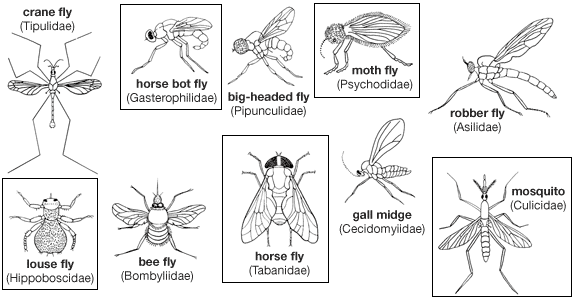
Bot flies (family Oestridae) are a distinct group of insects within the order Diptera. While they share the general characteristics of flies—such as having two wings and sucking mouthparts—they are uniquely specialized as obligate parasites of mammals during their larval stage.16
Key Differences from Other Fly Species
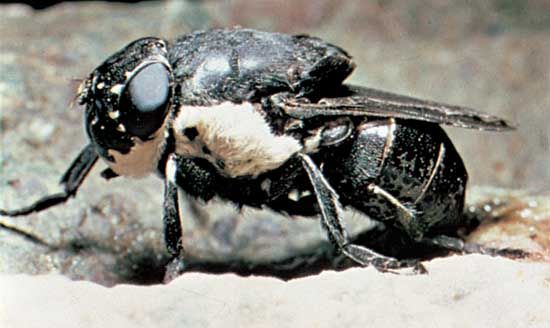
- Appearance: Adult bot flies are typically stout, hairy, and beelike in appearance, but they lack the bristles found on many other fly species.17
- Larval Parasitism: Unlike many other flies that breed in decaying organic matter, sewage, or plant tissues, bot fly larvae are internal parasites that live within the tissues or cavities of living mammals.167
- Specialized Life Cycles: Bot flies have evolved highly specific methods for infecting hosts. For example, some species deposit eggs on a host’s fur to be ingested during grooming, while others penetrate the skin directly or deposit larvae into the nostrils.1
- Adult Behavior: Many adult bot flies are noted for their swift flight, with some species capable of moving at speeds of 20–30 km (12–19 miles) per hour.1
What are some of the most well-known species of bot flies?
The family Oestridae includes several well-known species, each characterized by their specific host preferences and parasitic behaviors:
- Human bot fly (Dermatobia hominis): Found in tropical America, this species is notable for using other insects, such as mosquitoes, to transport its eggs to a host, which can include humans, livestock, and deer.
- Horse bot flies (Gasterophilus species): These are significant pests that deposit eggs on a horse’s body. Once ingested, the larvae attach to the lining of the stomach or intestine to feed.
- Warble flies (Hypoderma lineatum and H. bovis): These flies infect cattle by penetrating the skin. The larvae migrate through the body before settling under the skin of the animal’s back, creating characteristic lumps known as warbles.
- Sheep bot fly (Oestrus ovis): This species deposits larvae into the nostrils of sheep, which can lead to a nervous condition in the animals known as blind staggers.
- Rodent bot flies (Cuterebra species): This group includes species like C. cuniculi, which infects rabbits, and the tree squirrel bot fly (C. emasculator), which targets squirrels.
Sources
- bot fly — Encyclopædia Britannica
- Diptera - Eggs — Encyclopædia Britannica
- botfly — Merriam-Webster
- myiasis — Encyclopædia Britannica
- Do blow flies spread disease? — Encyclopædia Britannica
- Diptera - Annotated classification — Encyclopædia Britannica
- Diptera - General features — Encyclopædia Britannica
- oestrid — Merriam-Webster
- Diptera - Molts and larval stages — Encyclopædia Britannica
Published on · 3 min read