Bouri
The Bouri site in Ethiopia’s Afar region is a significant location for paleoanthropological research, yielding several key fossil discoveries that provide…
What major fossil discoveries have been made at the Bouri site?
The Bouri site in Ethiopia’s Afar region is a significant location for paleoanthropological research, yielding several key fossil discoveries that provide insight into human evolution:
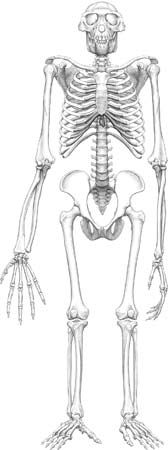
- Australopithecus garhi: Discovered in 1997 and dating to approximately 2.5 million years ago, this species exhibits a mosaic of features. While it shares a prognathic face with A. afarensis, it possesses larger cheek teeth and a sagittal crest, suggesting an evolutionary link toward robust australopiths.12
- Homo erectus: Excavations have uncovered a well-preserved cranium approximately one million years old, which features a brain size more than double that of A. garhi.1
- Archaic Homo: Deposits dating to roughly 250,000 years ago have yielded fossils of archaic Homo.1
In addition to these hominin remains, the site is notable for animal bones displaying cut marks, which represent some of the earliest evidence of stone tool use. Researchers have also recovered abundant early Acheulean industry tools, as well as late Acheulean tools in the younger deposits.1
What evidence of early hominid diet and lifestyle has been uncovered at the Bouri site?
Evidence of early hominid lifestyle and diet at the Bouri site in Ethiopia is primarily derived from the analysis of animal remains and stone tool technology found in the area.
- Evidence of Tool Use: Animal bones discovered at the site exhibit distinct cut marks, which serve as some of the earliest evidence of stone tool use in the record of human evolution. While these bones were found near Australopithecus garhi fossils, a definitive association between that specific species and the tools could not be confirmed.12
- Technological Advancement: The site contains an abundance of early Acheulean industry stone tools, as well as late Acheulean tools in younger deposits, indicating a long-term presence of hominins who utilized sophisticated tool-making techniques.1
- Environmental Context: Analysis of animal fossils found at the site indicates that the hominins lived in an open grassland environment, which likely influenced their dietary resources and survival strategies.1
How was the Bouri site first discovered, and when did systematic excavations begin?
Sorry, the Britannica knowledge base does not contain information regarding the initial discovery of the Bouri site or the specific timeline of when systematic excavations began.
What geological features make the Bouri site unique for preserving ancient remains?
The Bouri site, located in the Awash River valley of Ethiopia, is geologically significant due to its extensive and well-preserved sedimentary record. This site provides a rare, multi-layered chronological window into human evolution spanning over two million years.
The unique preservation at Bouri is characterized by:
- Diverse Chronological Deposits: The site contains distinct fossil-bearing layers ranging from approximately 2.5 million years old—yielding Australopithecus garhi—to deposits roughly one million years old, and more recent layers dating to approximately 250,000 years ago.
- Evidence of Technological Evolution: The presence of both early and late Acheulean industry stone tools within these stratified deposits allows researchers to track the development of tool-making techniques alongside the evolution of hominin species, such as Homo erectus and archaic Homo.
- Environmental Preservation: The sedimentary layers have effectively preserved animal fossils that provide clear indicators of the ancient open grassland environment, offering critical context for the dietary and survival behaviors of the hominins who inhabited the region.
Sources
- Bouri — Encyclopædia Britannica
- Australopithecus - Australopithecus afarensis and Au. garhi — Encyclopædia Britannica
Published on · 2 min read