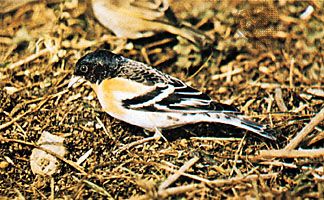
Bowerbird
Bowerbirds (family Ptilonorhynchidae) are distinguished from other bird species primarily by their elaborate courtship behaviors, which involve the…
What are the unique characteristics of bowerbirds that set them apart from other bird species?
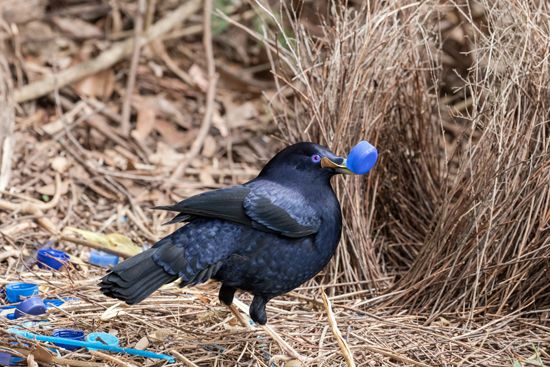
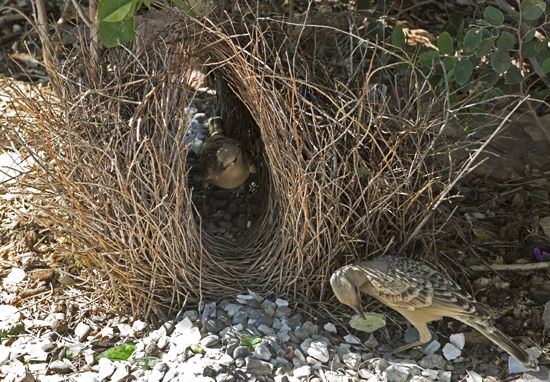
Bowerbirds (family Ptilonorhynchidae) are distinguished from other bird species primarily by their elaborate courtship behaviors, which involve the construction of complex structures known as bowers. Unlike most birds that build nests solely for rearing young, male bowerbirds construct these specialized courts to attract females, who later lay their eggs in simple, separate nests.1
These bowers are categorized into three distinct types:
- Mat or platform: A thick pad of plant material decorated with various objects.1
- Maypole: A tower of twigs built around saplings, often accompanied by a “lawn” of moss decorated with flowers and berries.1
- Avenue: Two parallel walls of sticks built on a twig mat.1
A particularly unique characteristic is the use of tools and artistic techniques; for instance, some species create a “paint” from vegetable pulp, charcoal, and saliva to decorate the interior walls of their bowers. Furthermore, male gardeners (genus Amblyornis) exhibit remarkable architectural skill, with some species constructing huts that resemble a child’s playhouse. These displays serve as honest indicators of male quality, as they are often costly to produce and maintain.12
What role does color play in bowerbird courtship and mate selection?
In bowerbird courtship, color serves as a critical component of sexual selection, functioning primarily as an honest indicator of a male’s quality and fitness to potential mates.67
While many male birds rely on bright plumage to attract females, many bowerbirds utilize an external approach. Instead of relying solely on their own body color, males of many species decorate their elaborate bowers with brightly colored objects such as flowers, berries, and leaves. This strategy allows them to attract females while remaining less conspicuous to predators, as the display is centered on the bower rather than the male’s own body.81
The use of color in these displays is highly intentional:
- Artistic Decoration: Males often curate specific color palettes, such as the stagemaker arranging leaves with their silvery sides facing upward.1
- Tool Use: Some species, such as the satin bowerbird, create “paint” from vegetable pulp, charcoal, and saliva to color the interior walls of their bowers, sometimes incorporating green leaves as a decorative tool.1
- Honest Signaling: Because these displays are time-consuming and require significant effort to maintain, they serve as reliable signals of a male’s health and genetic robustness. A male capable of gathering and maintaining a vibrant, well-decorated bower demonstrates his vitality to females, who use these visual cues to select the highest-quality mates.67
What is the diet of bowerbirds, and how does it vary among different species?
The provided search results do not contain specific information regarding the diet of bowerbirds or how it varies among different species. While the results detail the courtship behaviors, nesting habits, and general feeding habits of birds as a broad group, they do not provide data on the specific dietary requirements or variations within the family Ptilonorhynchidae.
What are some interesting examples of objects that bowerbirds collect for their bowers?
Bowerbirds are renowned for their elaborate courtship displays, which involve constructing structures known as bowers and decorating them with a variety of objects to attract females. These collections often include:
- Natural Decorations: Many species, such as the gardener bowerbirds, embellish their moss-covered lawns with colorful flowers and berries.
- Leaves: The stagemaker (or tooth-billed catbird) arranges leaves with their silvery sides facing upward to create a distinct visual effect, carefully removing any that wither.
- Shiny and Colored Objects: Bowers are frequently adorned with a wide array of found items that are notable for their color or reflective properties.
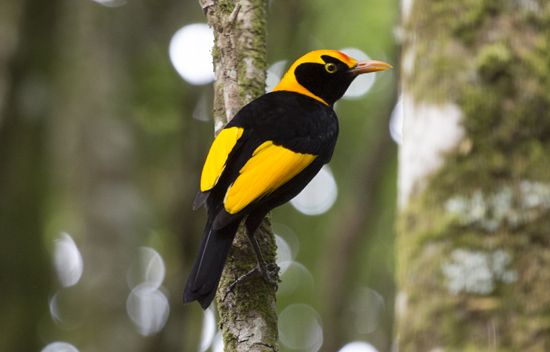
- Tools and Pigments: Some species, including the satin bowerbird and regent bowerbird, create a “paint” using a mixture of vegetable pulp, charcoal, and saliva. They apply this to the interior walls of their bowers and may even use a green leaf as a tool to assist in the application.
Sources
- Bowerbird — Encyclopædia Britannica
- Animal social behavior - Social interactions involving sex — Encyclopædia Britannica
- mimicry - Parasitic weaverbirds — Encyclopædia Britannica
- mimicry - The importance of the signal receiver — Encyclopædia Britannica
- Passeriform - Plumage and pterylosis — Encyclopædia Britannica
- coloration - Reproductive signals — Encyclopædia Britannica
- coloration - Optical functions: combination of concealing and advertising coloration — Encyclopædia Britannica
- Why are male animals more colorful? — Encyclopædia Britannica
- coloration - The selective agent — Encyclopædia Britannica
- Bird - Feeding habits — Encyclopædia Britannica
- Passeriform - Territoriality and courtship — Encyclopædia Britannica
- bowerbird — Merriam-Webster
Published on · 3 min read