Boysenberry
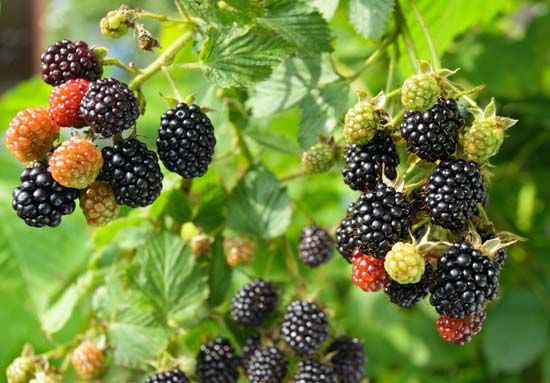
The boysenberry is a large, dark reddish-black bramble fruit, widely considered a variety of blackberry. It is a hybrid, likely developed by crossing…
What is Boysenberry?
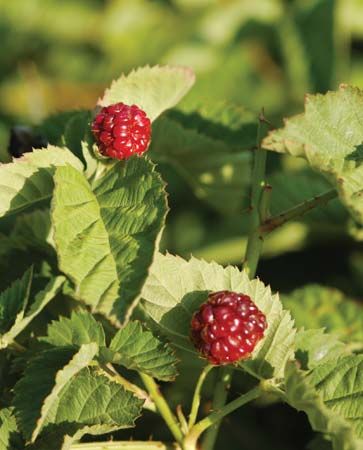
The boysenberry is a large, dark reddish-black bramble fruit, widely considered a variety of blackberry. It is a hybrid, likely developed by crossing blackberries with loganberries or raspberries.12
Developed in the early 1920s by horticulturist Rudolph Boysen in California, the fruit was later popularized commercially by Walter Knott of Knott’s Berry Farm. Known for its sweet and tangy flavor, the boysenberry is highly valued for use in pies, cobblers, and preserves.1
While its commercial popularity declined due to a short shelf life, it remains a favorite in home gardens and at farmers’ markets, particularly in the United States and New Zealand.1
What is the difference between a loganberry and a boysenberry?
The loganberry and boysenberry are both bramble fruits in the Rosaceae family, but they differ in their origins and characteristics:
Origins and Development
- Loganberry: Developed in 1881 by James Harvey Logan in Santa Cruz, California, it is considered a hybrid of the wild Pacific coast blackberry and the red raspberry.1
- Boysenberry: Developed in the early 1920s by Rudolph Boysen in Anaheim, California, it is a larger fruit believed to be a more complex cross involving blackberries, loganberries, and/or raspberries.3
Characteristics
- Appearance: The loganberry is deep wine-red and tart, while the boysenberry is a larger, dark reddish-black fruit with a sweet and tangy flavor.31
- Cultivation: Both are known for having short shelf lives, which limits their commercial scale. Loganberries are notably grown in Oregon, Washington, England, and Australia, whereas boysenberries are primarily associated with the Pacific coast of the United States and New Zealand.31
How are hybrid fruits created by horticulturists?
Horticulturists and plant breeders create hybrid fruits and other crops by employing various scientific techniques designed to combine desirable traits from different parent plants. The primary goal is often to achieve hybrid vigor, or heterosis, which can result in increased yields, improved uniformity, and better resistance to diseases or environmental stressors.567
Key methods used in the development of hybrid varieties include:
- Controlled Crossbreeding: Breeders select parent plants with specific, complementary traits and perform controlled pollination to produce offspring. In some cases, such as with maize, breeders use “double-cross” techniques, involving four inbred lines to balance desirable and undesirable characteristics.56
- Pollination Control: To ensure specific crosses, breeders may use cytoplasmic male sterility, a system that prevents a plant from producing viable pollen. This allows the plant to be pollinated exclusively by a chosen male parent, ensuring all resulting seeds are the desired hybrids.5
- Genetic and Chemical Techniques: Scientists may use colchicine to induce chromosome doubling, which has led to many new fruit and vegetable varieties. Additionally, modern genetic modification allows for the precise insertion or deletion of DNA segments to express targeted traits.89
- Vegetative Propagation: Once a superior hybrid is created, horticulturists often maintain the specific gene combination through cloning methods such as grafting, budding, or using cuttings, ensuring that all subsequent plants remain identical to the parent.810
What is the history of Knott’s Berry Farm?
Knott’s Berry Farm in Buena Park, California, began in 1920 when Walter and Cordelia Knott leased 10 acres of land to grow berries. The venture expanded from a roadside stand to a tearoom and market by 1928, eventually evolving into a restaurant famous for chicken dinners and a theme park featuring a mining ghost town.12
The farm gained fame for the boysenberry, a hybrid developed by Rudolph Boysen from a loganberry, raspberry, and blackberry. Walter Knott began nurturing these plants in 1932, leading to significant commercial success. By 1960, the theme park had overtaken the original berry farm operations, prompting the family to move berry production to Modesto. The Knott family maintained ownership until 1997, when the park was sold to Cedar Fair, L.P.12
Today, the 160-acre complex celebrates themes like the Old West and early Spanish California, and it includes a replica of Independence Hall.12
Sources
- Boysenberry — Encyclopædia Britannica
- boysenberry — Merriam-Webster
- Loganberry — Encyclopædia Britannica
- youngberry — Merriam-Webster
- Plant breeding - Breeding cross-pollinated species — Encyclopædia Britannica
- genetics - Agriculture and animal husbandry — Encyclopædia Britannica
- Plant breeding - Hybrid varieties — Encyclopædia Britannica
- Origins of agriculture - Maize, or corn — Encyclopædia Britannica
- Plant breeding - Goals — Encyclopædia Britannica
- genetic modification — Merriam-Webster
- Fruit farming - The variety: its propagation and improvement — Encyclopædia Britannica
- Knott’s Berry Farm — Encyclopædia Britannica
Published on · 3 min read