Boxwood
Boxwood refers to any plant within the family Buxaceae, an order of dicotyledonous flowering plants known as Buxales. These plants are typically evergreen…
What is boxwood?
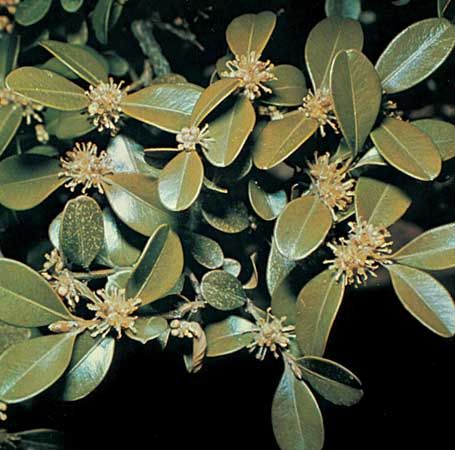
Boxwood refers to any plant within the family Buxaceae, an order of dicotyledonous flowering plants known as Buxales. These plants are typically evergreen shrubs or small trees characterized by leathery, simple leaves arranged alternately along their stems.123
The most widely cultivated genus within this family is Buxus, which includes approximately 70 species. Notable varieties include:2
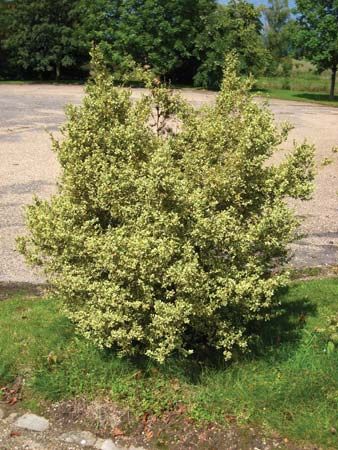
- Common box (B. sempervirens): Frequently used for topiary, hedges, and garden borders.3
- Japanese box (B. microphylla).13
- Korean box (B. sinica) and the tall boxwood tree (B. balearica).13
Native to North America, Europe, North Africa, and Asia, these plants produce small, petal-less flowers and fruit in the form of capsules or drupes. Beyond the genus Buxus, the family also includes other plants such as Sarcococca (sweet box) and the ground cover Pachysandra.132
What is the art of topiary?
Topiary is the horticultural practice of training living trees and shrubs into artificial, decorative shapes through precise pruning and trimming. While often described as the art of the “tree barber,” practitioners frequently refer to it as the work of a “tree mason” or “leafage sculptor,” as it involves creating architectural or representational forms.45
The practice dates back to at least the 1st century CE, reportedly invented by a friend of the Roman emperor Augustus. Early applications focused on simple geometric shapes like cones, columns, and spires to provide garden accents, eventually evolving into elaborate figures such as ships, animals, and building facades.45
Topiary is best suited for thickly leaved evergreen plants, with box, yew, and cypress being traditional favorites. Historically, the art flourished in regions like England and the Netherlands where stonework was expensive, making living sculpture a cost-effective alternative. Although it reached a height of popularity in the 17th and 18th centuries, it remains a staple in formal garden design today.45
What are some other popular evergreen shrubs for landscaping?
Beyond boxwood, several other evergreen shrubs are popular in landscaping due to their hardiness and ability to be shaped:
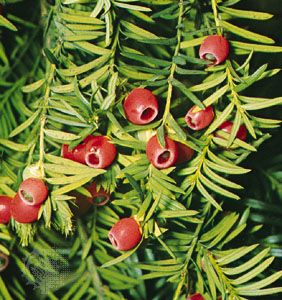
- Yew (Taxus): These ornamental evergreens are highly valued for their rich, dark-green foliage. Because they produce new growth easily from behind cut branches, they are among the few conifers frequently used for formal hedges and topiary. The English yew is particularly notable for its longevity and variety, including the compact, columnar Irish yew.67
- Privet (Ligustrum): These shrubs and small trees are widely utilized for hedges, screens, and ornamental plantings. They are known for their creamy-white, fragrant flower clusters and black berries. Common varieties include the hardy common privet, the glossy privet, and the Japanese privet, many of which are available in variegated forms.8
It is important to note that both yews and certain privets contain compounds that can be toxic to humans or livestock if ingested, so they should be selected with care depending on your garden’s environment.678
How do botanists classify different plant families?
Botanists classify plant families by organizing them into systems that reflect their evolutionary history, or phylogeny. While early classification methods were “artificial” and based on superficial similarities, modern taxonomy relies on a combination of molecular, morphological, and chemical evidence to group plants that share a common ancestor.91011
Modern Taxonomic Approaches
The current standard for flowering plants is the Angiosperm Phylogeny Group (APG) system. This system prioritizes the following methods:
- Molecular Analysis: Scientists sequence segments of DNA from cell nuclei and chloroplasts. By measuring the degree of molecular similarity, researchers can determine how closely related different plant groups are.1011
- Morphological and Anatomical Studies: Botanists examine physical traits, such as pollen development, flower structure, and leaf venation, using advanced tools like scanning electron microscopes.121013
- Chemotaxonomy: This field analyzes the chemical composition of plants. Because species often differ in their metabolic products, these biochemical signatures provide objective, quantitative data to support classification.10
- Numerical Taxonomy: Using computer techniques, researchers quantify relationships between species to depict them graphically.10
These methods are supported by long-term research in herbaria and controlled environments like botanical gardens, which allow for the study of plants under consistent conditions.10
Sources
- boxwood — Encyclopædia Britannica
- box — Encyclopædia Britannica
- Buxales — Encyclopædia Britannica
- topiary — Encyclopædia Britannica
- gardening - Training and pruning — Encyclopædia Britannica
- yew — Encyclopædia Britannica
- English yew — Encyclopædia Britannica
- Privet — Encyclopædia Britannica
- Plant - Critical appraisal — Encyclopædia Britannica
- Asparagales - Organization and taxonomy — Encyclopædia Britannica
- Botany - Taxonomic aspects — Encyclopædia Britannica
- Plant - Classification of angiosperms — Encyclopædia Britannica
- Angiosperm - Annotated classification — Encyclopædia Britannica
Published on · 3 min read