Avens
Avens refers to perennial flowering plants belonging to the rose family, primarily within the genus Geum.
What is avens?
Avens refers to perennial flowering plants belonging to the rose family, primarily within the genus Geum.12
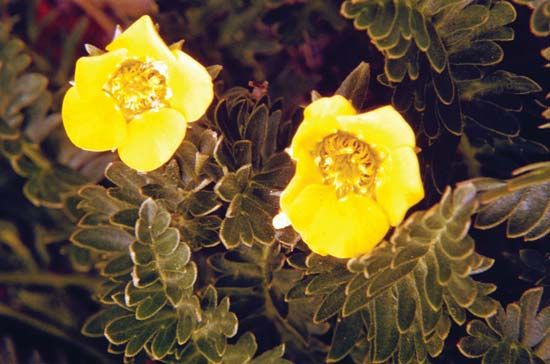
These plants typically grow no taller than 60 cm (2 feet) and feature basal leaves that are deeply lobed or compound. Their flowers, which appear in shades of white, red, orange, or yellow, are usually five-petaled and measure about 2–3 cm in diameter. Most species are found in the Arctic or in north and south temperate zones.1
The term is also associated with the genus Dryas, often called mountain avens, which consists of evergreen shrubs that are closely related to Geum. Unlike the typical five-petaled flowers of the rose family, Dryas species are distinguished by having eight petals.12
What are some other common plants in the rose family?
The Rosaceae family, commonly known as the rose family, is a diverse group of approximately 2,500 species that includes many economically significant food crops and popular ornamental plants.45
Common Food Crops
Many members of this family are widely cultivated for their edible fruits:
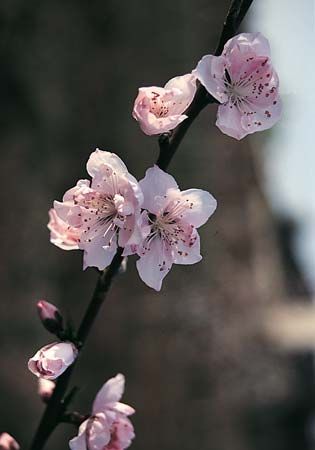
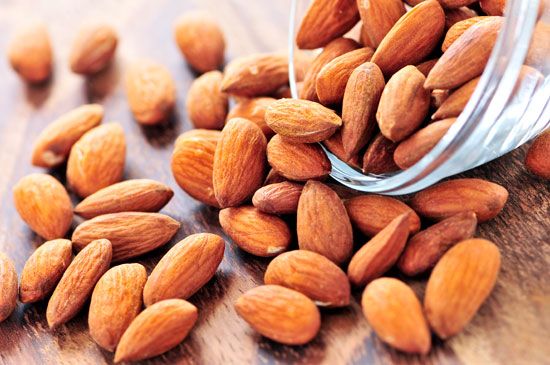
- Stone fruits: Almonds, apricots, cherries, nectarines, peaches, and plums.5
- Pome fruits: Apples, loquats, pears, and quinces.5
- Berries: Blackberries, boysenberries, loganberries, raspberries, and strawberries.5
Common Ornamentals
Beyond the rose itself, the family includes various plants valued for their aesthetic appeal:
- Flowering shrubs and trees: Cherry laurel, cotoneaster, crab apple, firethorn, flowering quince, hawthorn, mountain ash, serviceberry, and spirea.5
- Herbaceous perennials: Burnet, cinquefoil, goatsbeard, and lady’s mantle.5
How do perennial plants differ from annuals?
The primary difference between annual and perennial plants lies in their life cycle and longevity.
Annual Plants
An annual is a plant that completes its entire life cycle—germination, growth, flowering, and death—within a single growing season. Because these plants die after producing seeds, the only part of the plant that survives from one year to the next is the seed itself, which remains in the soil to begin the cycle again. Common examples include corn, beans, marigolds, and zinnias/plant/marigold), and zinnias.789
Perennial Plants
A perennial is a plant that persists for several years. While their aboveground portions may die back in autumn, these plants survive through specialized underground structures such as bulbs, rhizomes, corms, or tubers. In the following growing season, they produce new growth from these surviving parts. This category includes all trees and shrubs, as well as many herbaceous flowers like chrysanthemums and poppies.108
What are the main differences between Geum and Dryas?
Both Geum (avens) and Dryas (mountain avens) are members of the Rosaceae family, but they exhibit distinct structural and growth differences:
- Growth Habit: Geum consists of approximately 50 species of perennial flowering plants that rarely exceed 60 cm (2 feet) in height and feature basal, compound, or deeply lobed leaves. In contrast, Dryas comprises about three species of evergreen shrubs.1
- Flower Structure: The flowers of Geum typically feature five petals, which is standard for many members of the rose family. Dryas flowers are distinguished by having eight petals.1
While both genera are found in temperate or Arctic regions, their classification as either herbaceous perennials or evergreen shrubs marks a significant botanical distinction.112
Sources
- avens — Encyclopædia Britannica
- ginkgophyte — Encyclopædia Britannica
- avens — Merriam-Webster
- Rosaceae — Encyclopædia Britannica
- list of economically important members of the family Rosaceae — Encyclopædia Britannica
- Rosales — Encyclopædia Britannica
- Is That Plant 'Perennial' or 'Annual'? — Merriam-Webster
- Annual — Encyclopædia Britannica
- Perennial — Encyclopædia Britannica
- Angiosperm - General features — Encyclopædia Britannica
- Plant development - Senescence in plants — Encyclopædia Britannica
- geum — Merriam-Webster
Published on · 2 min read