Anatidae
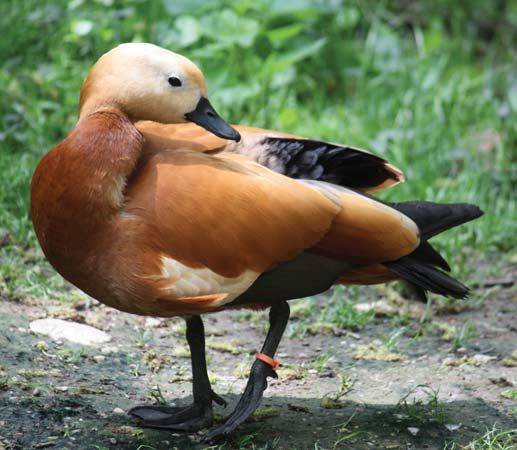
Birds in the Anatidae family—which includes ducks, geese, and swans—are generally characterized by a chunky build, medium-to-long necks, and a distinct bill…
What are the distinguishing physical characteristics of birds in the Anatidae family?
Birds in the Anatidae family—which includes ducks, geese, and swans—are generally characterized by a chunky build, medium-to-long necks, and a distinct bill structure.1
Key physical characteristics include:
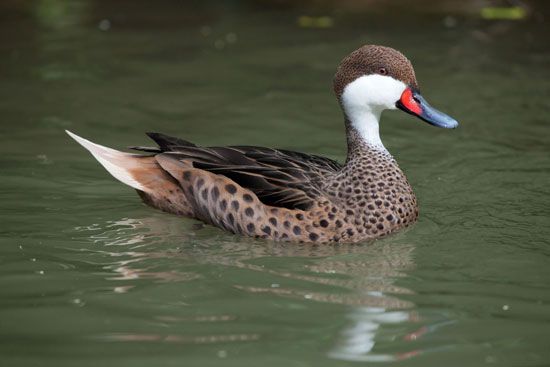
- Bill: Typically broad and flattened with a rounded tip, often featuring a “nail” that creates a slight hook. The bill is covered in skin and contains a thick, fleshy tongue. Most species possess lamellae—parallel plates along the edges of the mandibles—used for straining food from water or mud.12
- Feet: Most species have fully webbed front toes for swimming, though the hind toe is lobed. In some species, such as the nene, reduced webbing allows for better movement on land.32
- Anatomy: A notable feature is the trachea, which can be straight or elaborately looped to produce specific sounds. Additionally, males possess an intromittent organ (a vascularized sac) that facilitates mating on water.2
- Wings: While wing shapes vary, many species feature horny knobs or spurs on the wrist joint, which are sometimes used for defense.2
Which major subfamilies are included within the Anatidae family?
Classification systems for the Anatidae family vary among experts. While some systems divide the family into three primary subfamilies, others recognize seven distinct subfamilies to better reflect taxonomic relationships.45
Under the seven-subfamily classification, the family includes:
- Anseranatinae: Represented by the magpie goose, which exhibits traits shared with both screamers and other waterfowl.45
- Anserinae: Includes swans and typical geese.5
- Anatinae: Comprises dabbling ducks, perching ducks, and various atypical geese.5
- Tadorninae: Includes shelducks, sheldgeese, and steamer ducks.5
- Merginae: Known as sea ducks, this group includes mergansers, eiders, scoters, and goldeneyes.5
- Dendrocygninae: Includes the whistling ducks5.
- Oxyurinae: Comprises the stiff-tailed ducks.5
What are some unique behavioral traits observed in Anatidae birds?
Birds in the Anatidae family exhibit a fascinating blend of innate and learned behaviors, many of which are highly ritualized to facilitate social interaction and reproduction.67
Social and Reproductive Displays
Waterfowl are generally gregarious, using complex social signals to maintain flock cohesion and establish dominance orders. Many of these signals, such as wing-stretching or body-shaking, are derived from daily maintenance activities like preening.6
- Pair-Bonding: Swans and geese, which often pair for life, engage in a “triumph ceremony” involving mutual calling and head-waving after driving off intruders. In contrast, many ducks have shorter-lived bonds and exhibit elaborate group courtship displays, such as the “head-up-tail-up” or “grunt-whistle” postures seen in dabbling ducks.6
- Bizarre Displays: The stiff-tailed ducks perform a unique display where males inflate their necks and beat them with their bills to produce a chittering sound that ends in a burp. Whistling ducks are known for a mutual “step-dance” performed after copulation.6
Learning and Development
While many display patterns are innate, waterfowl also rely on learning. Imprinting is a critical process where newly hatched young identify a moving object as their parent. Additionally, migratory routes and feeding traditions—such as geese adapting to new farm crops—are often learned from other members of the group.6
What is the typical diet of Anatidae birds, and how does it vary among different species?
Members of the Anatidae family are primarily omnivorous birds, though their diets vary significantly based on species, habitat, and season. Their feeding habits are largely dictated by specialized bill structures, which have undergone extensive adaptive radiation to exploit diverse food sources.13214
Feeding Strategies and Dietary Variation
- Dabbling Ducks: Species such as mallards feed in shallow water or on land, often using a “tipping up” behavior to reach submerged vegetation without fully diving. They consume a mix of aquatic plants, seeds, grasses, and small invertebrate animals.13
- Diving Ducks: Adapted for underwater foraging, these birds can dive over 20 feet to reach food at the bottom of lakes and coastal waters. Their diet includes mussels, crabs, crayfish, and submerged vegetation.13
- Geese: Most geese are primarily herbivores, utilizing strong, serrated bills to graze on grasses and sedges. Some species, like the snow goose, possess heavy bills capable of digging for roots and tubers.3152
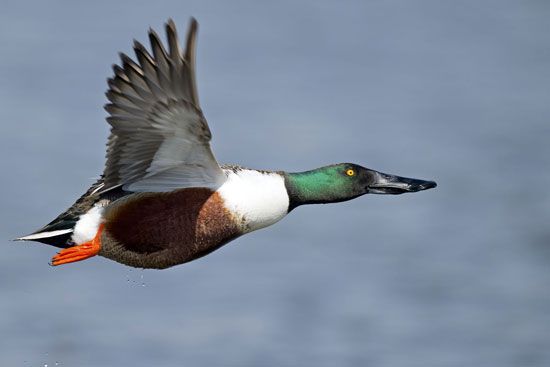
- Specialized Feeders: Mergansers have narrow, toothlike lamellae in their bills, which are ideal for catching and holding fish. Conversely, species like shovelers have extremely fine lamellae that allow them to strain tiny diatoms and plankton from the water’s surface.2
Dietary flexibility is essential for survival, particularly during migration, when birds must adapt to the resources available along their travel routes.13
Sources
- Dabbling duck — Encyclopædia Britannica
- Anseriform - Anatomy — Encyclopædia Britannica
- Anseriform - General features — Encyclopædia Britannica
- Anatidae — Encyclopædia Britannica
- Anseriform - Annotated classification — Encyclopædia Britannica
- Anseriform - Behaviour — Encyclopædia Britannica
- Reproductive behaviour - Birds — Encyclopædia Britannica
- Bird - Nesting — Encyclopædia Britannica
- Gruiform - Nesting — Encyclopædia Britannica
- Reproductive behaviour - Courtship — Encyclopædia Britannica
- Bird: Top Questions — Encyclopædia Britannica
- Anseriform - Evolution and paleontology — Encyclopædia Britannica
- What do ducks eat? — Encyclopædia Britannica
- Goose — Encyclopædia Britannica
- Galliform - Habitat selection and food habits — Encyclopædia Britannica
- Diving duck — Encyclopædia Britannica
- Canada goose — Encyclopædia Britannica
Published on · 4 min read