Canada Goose
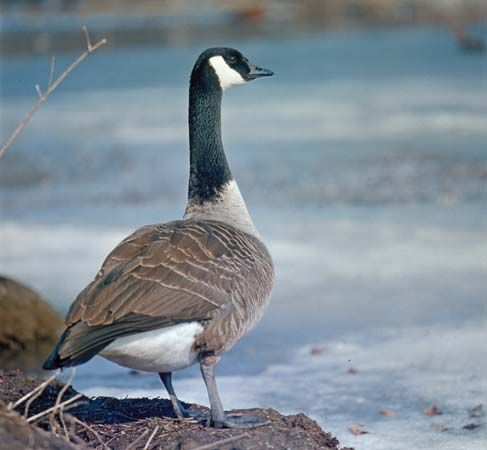
The scientific name of the Canada goose is Branta canadensis.
What is the scientific name of the Canada goose and what does it mean?
The scientific name of the Canada goose is Branta canadensis.12
The genus name, Branta, is New Latin derived from the English word “brant,” which refers to a type of small goose. The term “brant” itself originates from the Middle English brand gos, meaning “burnt goose,” likely in reference to the bird’s dark, charred-looking plumage. The specific epithet, canadensis, is a Latinized adjective meaning “of Canada,” reflecting the bird’s primary breeding range across North America.342
Together, the name classifies the bird as a member of the genus of wild geese characterized by dark, patterned plumage and slender necks.3
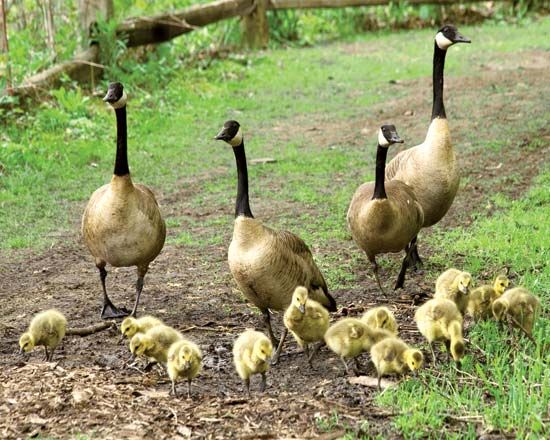
How long do Canada geese typically live in the wild?
In the wild, Canada geese typically live for 10 to 15 years. While some individuals may survive for 15 to 20 years or more with luck and cunning, wild populations face significant challenges, including high mortality rates among first-year birds. In contrast, these birds can live for more than 30 years when kept in captivity.25
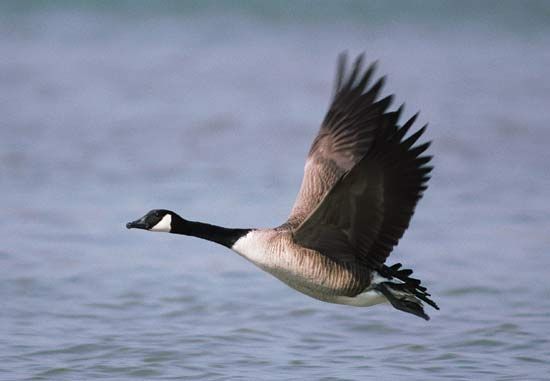
How have Canada geese adapted to urban environments in recent years?
Canada geese have successfully adapted to urban and suburban environments by exploiting human-altered landscapes that mimic their natural habitat requirements. Their primary adaptation involves utilizing golf courses, parks, and airport grounds, which provide an abundance of short, manicured lawns that are ideal for their grazing habits.2
This shift has been supported by several factors:
- Dietary Flexibility: As almost exclusive plant eaters, geese use their serrated bills to efficiently graze on the grasses found in these human-made environments.2
- Resident Populations: The release of decoy birds to attract migratory geese for hunting, combined with the proliferation of lawns, has established large, nonmigratory populations in the eastern United States. These birds no longer follow traditional migratory paths, instead remaining in urban areas year-round.25
- Habitat Availability: The expansion of these attractive, open spaces has allowed populations to increase significantly, leading to their presence in areas where they were once rare.2
While these adaptations have allowed the species to thrive, their high numbers in urban settings often lead to conflicts, as they are frequently viewed as pests due to the large amounts of waste they produce.2
Where do Canada geese typically live and migrate?
Canada geese naturally inhabit areas near lakes, ponds, marshes, and fields, where they graze on grasses and sedges using their serrated bills. In recent years, they have also become common in urban and suburban environments, such as parks, golf courses, and airports, which provide abundant manicured lawns.25
Regarding their movement, Canada geese exhibit two primary behaviors:
- Migratory Populations: These birds breed across North America, including Canada and Alaska, during warmer months. They migrate to winter in the southern United States and Mexico, often traveling in V-formations to conserve energy by utilizing air currents.25
- Resident Populations: Throughout much of the United States and parts of southern Canada, there are large, nonmigratory populations. These resident geese remain in their local areas year-round rather than following traditional migratory paths.25
Additionally, Canada geese were introduced to parts of northern Europe in the 17th century for sport and as ornamental waterfowl.2
Sources
- Canada goose — Merriam-Webster
- Canada goose — Encyclopædia Britannica
- Branta — Merriam-Webster
- brant — Merriam-Webster
- Goose — Encyclopædia Britannica
- Anseriform - Life history — Encyclopædia Britannica
Published on · 3 min read