Buck Island Reef National Monument
Buck Island Reef National Monument serves as a vital protected area for scientific observation and environmental recovery in the Caribbean Sea.
What role does Buck Island Reef National Monument play in scientific research and education?
Buck Island Reef National Monument serves as a vital protected area for scientific observation and environmental recovery in the Caribbean Sea.
Following its significant expansion in 2001, the monument discontinued fishing across its 30-square-mile area. This action created a controlled environment that allows researchers to study the recovery of depleted fish stocks and damaged coral reefs. By providing a sanctuary for diverse marine life—including endangered hawksbill sea turtles and brown pelicans—the site functions as a living laboratory for observing the restoration of complex marine ecosystems.1
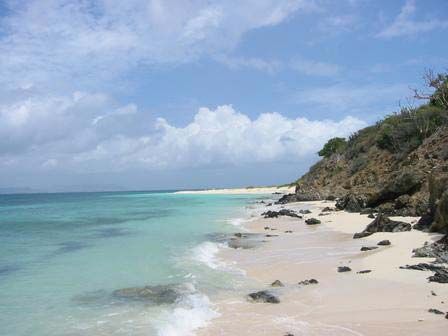
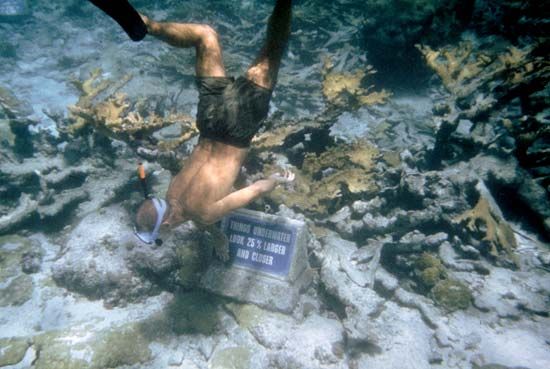
Educationally, the monument promotes public awareness of marine conservation through direct engagement. Visitors can explore the area’s natural history via an underwater trail designed for snorkeling and scuba diving, as well as a land-based nature trail. These features provide unique opportunities for the public to observe coral formations, sea fans, and tropical fish in their natural habitat, fostering a deeper understanding of the importance of protecting United States Virgin Islands biodiversity.1
What challenges does Buck Island Reef National Monument face in terms of management and preservation?
Buck Island Reef National Monument faces several management and preservation challenges stemming from both historical land use and the introduction of non-native species.
Historical and Ecological Challenges
- Legacy of Land Degradation: For approximately 200 years starting in the 1750s, the island was utilized as pastureland for goats. This practice led to extensive tree cutting and overgrazing, which stripped the island of its native vegetation. While the goats were removed in the 1950s to allow for natural recovery, the ecosystem continues to bear the marks of this long-term environmental stress.1
- Invasive Species: The introduction of the mongoose, originally brought to the island to control the rat population, has created an ongoing threat to the local ecosystem. The mongoose now preys upon native reptiles and birds, complicating efforts to protect and restore the island’s indigenous wildlife populations.1
Management Considerations
- Access and Protection: Because the monument is accessible only by boat, management must balance the logistical requirements of public access—such as maintaining the underwater snorkeling and scuba diving trails—with the need to protect the fragile barrier reef and surrounding marine habitats.1
Are there any endangered species that call Buck Island Reef home, and what efforts are being made to protect them?
Buck Island Reef National Monument provides a critical habitat for endangered hawksbill sea turtles and brown pelicans.1
To protect these and other marine resources, the monument underwent a significant expansion in 2001, increasing its size from 1.4 square miles to approximately 30 square miles. A primary conservation effort within this expanded area is the total discontinuation of fishing. By establishing this “no-take” zone, the monument allows depleted fish stocks and damaged coral reefs to recover, which in turn strengthens the overall health of the ecosystem that these endangered species rely upon.1
While these protections are in place, the monument continues to face ecological challenges, such as the presence of the non-native mongoose. Originally introduced to control rat populations, the mongoose is known to prey on native reptiles and birds, which complicates ongoing efforts to safeguard indigenous wildlife populations.1
What recreational activities are available for visitors to Buck Island Reef National Monument?
Visitors to Buck Island Reef National Monument can enjoy several recreational activities, primarily focused on the island’s unique marine and terrestrial environments:
- Snorkeling and Scuba Diving: These are the primary activities at the monument. Visitors can explore a dedicated underwater trail that showcases the barrier reef, which features elkhorn coral, sea fans, grottoes, gorgonians, and a variety of tropical fish.1
- Beach Activities: The island offers beautiful white sand beaches for visitors to enjoy.1
- Hiking: There is a land-based nature trail available for those who wish to explore the island’s interior.1
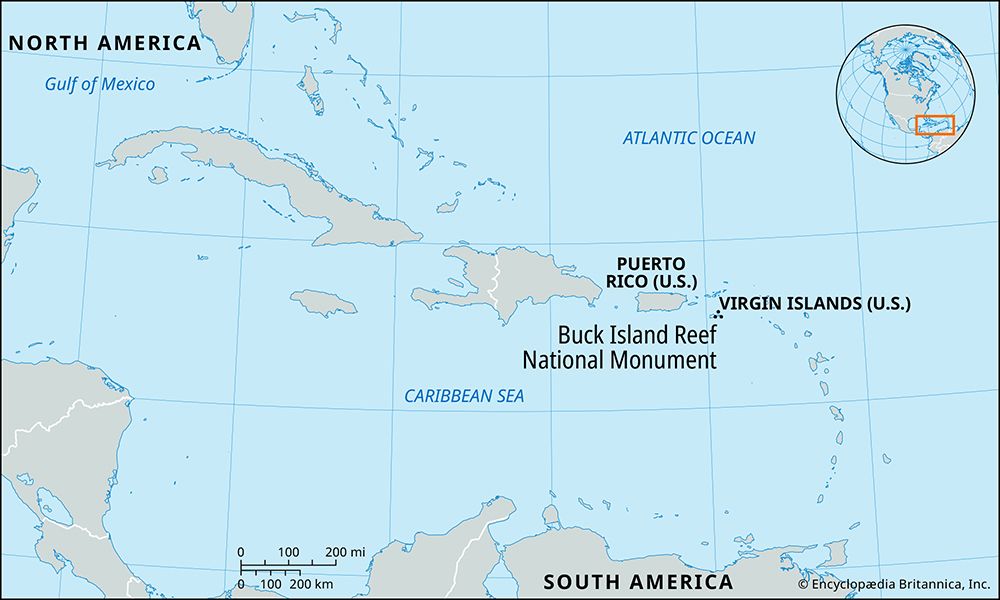
Because the monument is located off the northern coast of St. Croix and is accessible only by boat, visitors should plan their transportation accordingly to reach these sites.1
Sources
- Buck Island Reef National Monument — Encyclopædia Britannica
- Buck Island Reef National Monument — Merriam-Webster
- Virgin Islands Coral Reef National Monument — Encyclopædia Britannica
- Virgin Islands National Park — Encyclopædia Britannica
Published on · 3 min read