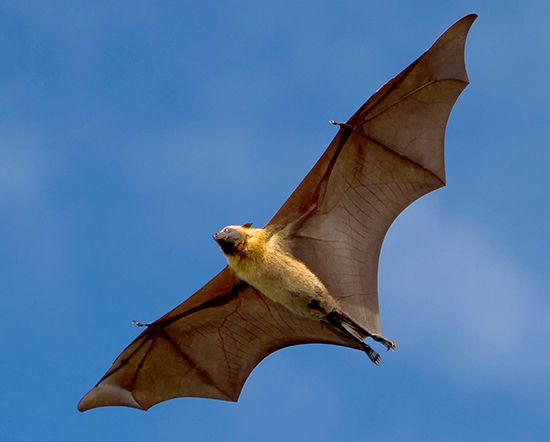
Bulldog Bat
The bulldog bat (family Noctilionidae) has evolved several specialized physical and behavioral adaptations to thrive in its aquatic environment:
What are some interesting adaptations bulldog bats have developed for their aquatic lifestyle?
The bulldog bat (family Noctilionidae) has evolved several specialized physical and behavioral adaptations to thrive in its aquatic environment:
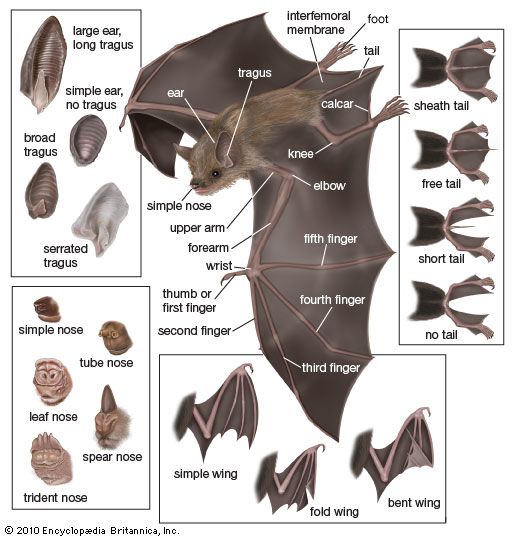
- Specialized Hind Feet: Their most distinctive feature is a pair of large, wide, and flat hind feet equipped with long, hooklike claws, which are perfectly suited for snatching prey directly from the water’s surface.1
- Water Repellency: Both the wings and the large tail membrane are coated in an oily substance that acts as a water repellent, allowing the bats to swim well and navigate the water surface effectively.1
- Advanced Sensory Hunting: They utilize echolocation to detect subtle ripples in the water caused by fish or insects. In areas with high prey density, they can also drag their claws through the water to catch prey at random.1
- Storage Capacity: Once prey is captured, it is transferred to the mouth and stored in large cheek pouches, allowing the bat to continue foraging efficiently.1
What is the diet of bulldog bats, and how do they catch their prey?
The diet of bulldog bats (family Noctilionidae) varies by species, though both primarily forage low over water. The greater bulldog bat, or fisherman bat (Noctilio leporinus), specializes in catching fish, while the lesser bulldog bat (Noctilio albiventris) feeds mostly on insects.1
These bats employ several sophisticated hunting strategies:
- Echolocation: They use echolocation to detect small ripples on the water’s surface caused by fish or fluttering insects.1
- Physical Capture: Once prey is detected, the bat uses its large, wide hind feet, which are equipped with long, hooklike claws, to snatch the victim from the water.1
- Random Foraging: In areas with high prey density or familiar hunting grounds, they may drag their claws through the water for several meters to catch prey at random without relying on echolocation.1
- Aerial Hunting: Insects may also be captured in mid-air using the bat’s wing or tail membrane.1
After capture, the prey is transferred to the mouth, briefly chewed, and stored in large cheek pouches to allow for continued foraging.1
What role do bulldog bats play in their ecosystem?
Bulldog bats (family Noctilionidae) serve as specialized nocturnal predators within their tropical lowland ecosystems. By foraging low over water, they occupy a unique ecological niche that distinguishes them from most other bat species.1
Their role in the ecosystem is primarily defined by their predatory impact on aquatic and aerial populations:
- Population Control: The greater bulldog bat (Noctilio leporinus) acts as a specialized predator of fish, while the lesser bulldog bat (Noctilio albiventris) primarily consumes insects. By targeting these prey sources, they help regulate the populations of small aquatic organisms and flying insects in their environment.1
- Nocturnal Activity: Their nocturnal hunting patterns allow them to exploit prey that may be inactive or sleeping at night, providing them with a distinct competitive advantage.4
- Energy Management: By foraging at night, these bats avoid the physiological stresses of daytime activity, such as high ambient temperatures and the risk of dehydration, which is critical given their large, exposed wing membranes.4
While their specific interactions with other species are not fully detailed in the provided records, their specialized hunting strategies—ranging from echolocation to random surface dragging—demonstrate a highly efficient adaptation to their environment.1
How do bulldog bats differ from other bat species in terms of behavior and social structure?
Bulldog bats (family Noctilionidae) exhibit several behavioral and physical adaptations that distinguish them from many other bat species. While most bats share the general nocturnal pattern of roosting by day and foraging by night, bulldog bats have evolved specialized traits for their unique environment.14
Behavioral and Physical Distinctions
- Aquatic Foraging: Unlike the majority of bat species, bulldog bats are specialized to forage low over water. They possess large, wide hind feet with long, hooklike claws specifically adapted for snatching prey from the water’s surface.1
- Specialized Hunting: They utilize echolocation to detect ripples caused by fish or insects. Furthermore, they exhibit a unique “random foraging” behavior, where they drag their claws through the water to catch prey without relying on echolocation, a strategy not commonly seen in other bats.1
- Anatomical Adaptations: They feature distinct cheek pouches used to store prey after capture, allowing them to continue hunting without returning to a roost. Additionally, their wings and tail membranes are covered in an oily, water-repellent substance, and they are capable of swimming.1
- Social Structure: While specific details regarding their complex social hierarchies are limited, they are known to roost in colonies during the day, a common trait among many bats, though their specific reliance on tropical lowland habitats for these colonies is a defining characteristic.1
Sources
- bulldog bat — Encyclopædia Britannica
- bat - Food habits — Encyclopædia Britannica
- mammal - Food habits — Encyclopædia Britannica
- bat - Activity patterns — Encyclopædia Britannica
Published on · 4 min read