Canada Lynx
The Canada lynx (Lynx canadensis) is a medium-sized wildcat native to the boreal forests of Canada, Alaska, and parts of the northern United States. While it…
What is Canada lynx?
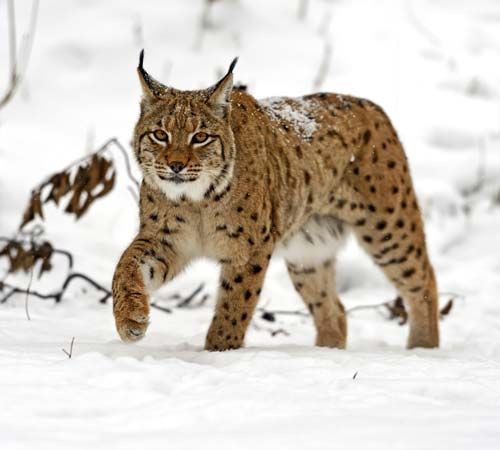
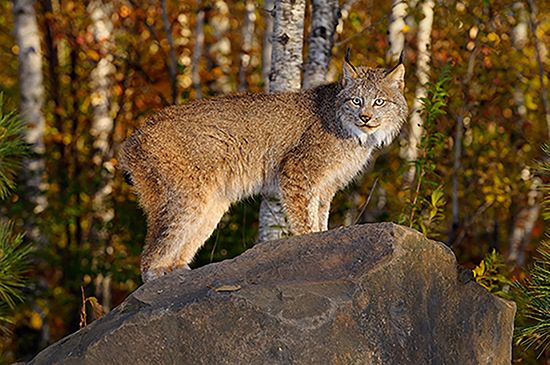
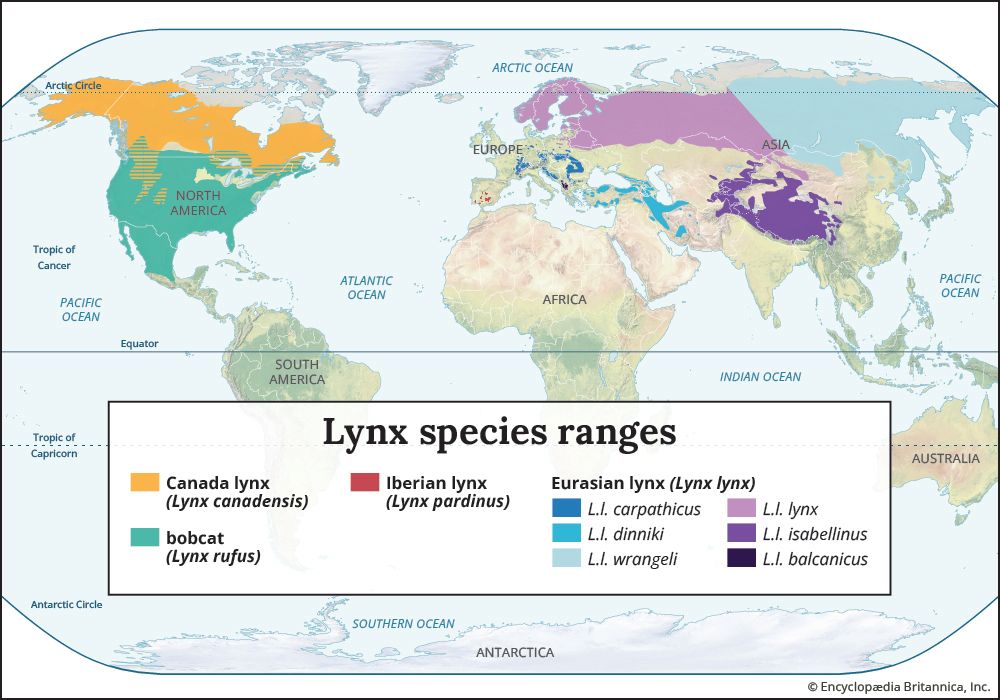
The Canada lynx (Lynx canadensis) is a medium-sized wildcat native to the boreal forests of Canada, Alaska, and parts of the northern United States. While it resembles the bobcat, the Canada lynx is distinguished by its longer legs, larger paws with furry pads, longer ear tufts, and a tail that is black all over at the tip.123
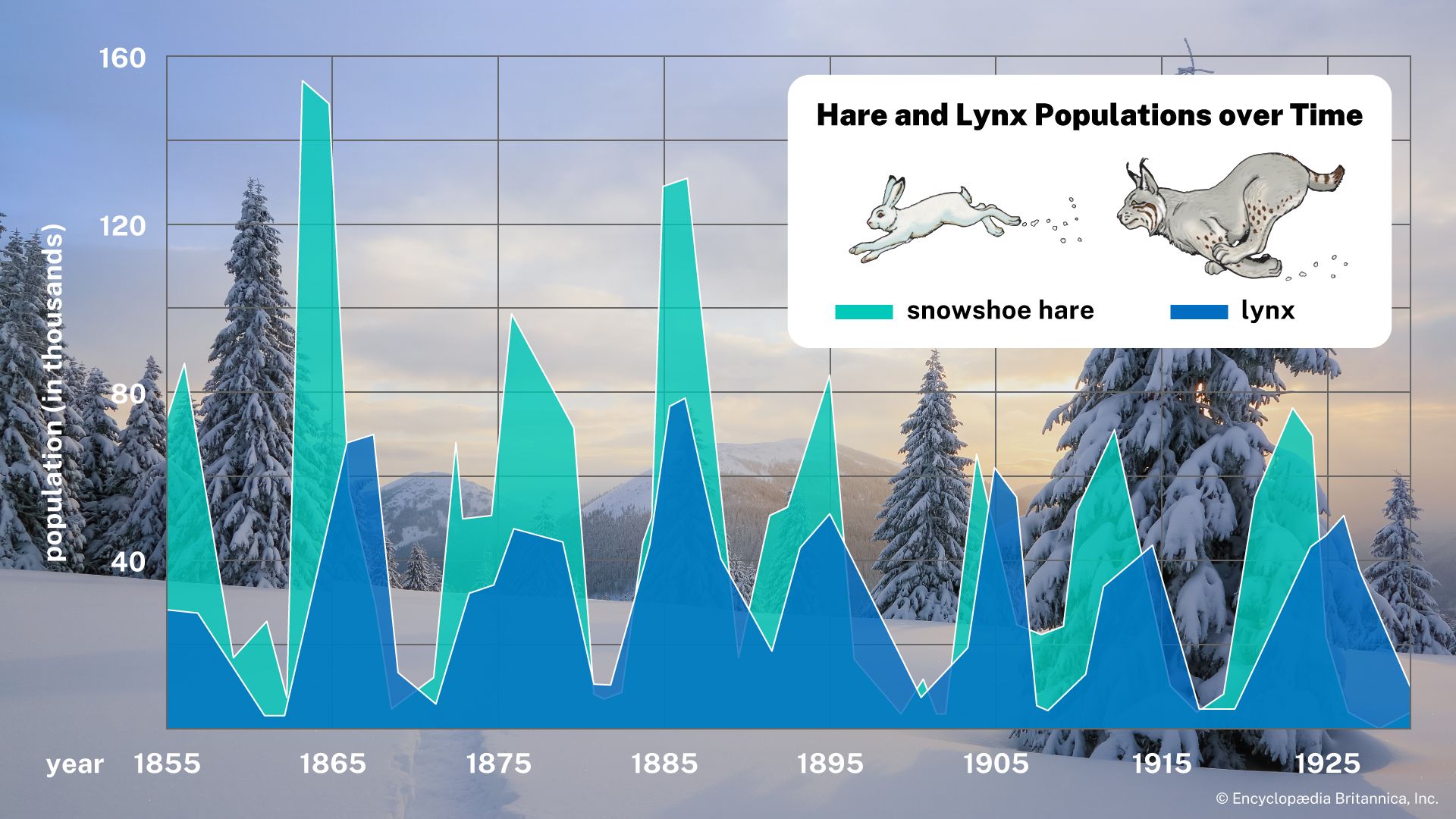
This secretive, solitary feline is an ambush predator whose survival is closely tied to the snowshoe hare, which constitutes the vast majority of its diet. The populations of both species follow a cyclical pattern, rising and falling in roughly 10-year intervals.14
Although the Canada lynx has faced range contraction due to habitat loss and fragmentation, it is currently classified as a species of Least Concern by the IUCN. It remains a protected species under CITES to prevent overexploitation from the fur trade.15
How do Canada lynx use their large paws to survive in deep snow?
The Canada lynx is exceptionally well-adapted to life in deep snow, primarily due to its specialized paws. These large, densely furred appendages function similarly to snowshoes, which allows the animal to distribute its weight effectively across the surface of the snow.6
By increasing the surface area of their feet, these paws prevent the lynx from sinking into deep drifts, providing the support necessary for efficient movement and hunting in their native boreal forest environments. This physical adaptation is a critical component of their survival, enabling them to navigate snowy terrain with ease while pursuing their primary prey, the snowshoe hare.614
Why is the snowshoe hare population so important to the survival of the Canada lynx?
The snowshoe hare is the primary food source for the Canada lynx, comprising between 35 and 100 percent of its diet. A single lynx requires approximately 0.4 to 0.5 hares daily to satisfy its energy requirements. Because of this heavy reliance, the lynx is willing to travel vast distances—sometimes exceeding 1,200 km—to locate these prey populations.4
The relationship between the two species is defined by a 10-year population cycle. As hare density increases, the lynx population follows with a one- to two-year lag, with lynx density potentially increasing by as much as 17 times during peak hare abundance. When hare numbers crash, the lynx population declines accordingly.4
Furthermore, the availability of snowshoe hare is a critical factor in the reproductive success of the Canada lynx; their breeding cycles are directly linked to the abundance of this prey. While the lynx can supplement its diet with birds, squirrels, and other small mammals during periods of scarcity, the snowshoe hare remains the fundamental driver of lynx population dynamics.84
What are the main physical differences between a Canada lynx and a bobcat?
While the Canada lynx and the bobcat are closely related, they possess distinct physical characteristics that allow them to be identified. The following table summarizes the primary differences between the two species:
Feature
Bobcat
Canada Lynx
Facial Ruff
Smaller, without a dark margin
Larger, with a prominent dark margin
Ear Tip
Shorter tuft
Longer tuft
Tail Tip
Dark on upper side, white on underside
Dark all over
Paws
Smaller, without furry pads
Larger, with furry pads
Coat Colors
More brownish or reddish, with distinct dark spots and stripes
More grayish, with indistinct spots
In addition to these features, the Canada lynx is generally taller and has longer legs than the bobcat, which contributes to its specialized ability to navigate deep snow. While the bobcat is the smallest of the four lynx species, the Canada lynx is specifically adapted to boreal forest environments where its large, furred paws act as natural snowshoes.657
Sources
- Canada lynx - Distribution and habitat — Encyclopædia Britannica
- Canada lynx — Encyclopædia Britannica
- Canada lynx - Conservation status — Encyclopædia Britannica
- Canada lynx - Diet — Encyclopædia Britannica
- bobcat — Encyclopædia Britannica
- Canada lynx - Physical features — Encyclopædia Britannica
- lynx — Encyclopædia Britannica
- Canada lynx: Top Questions — Encyclopædia Britannica
Published on · 3 min read