Eurasian Lynx
The Eurasian lynx (Lynx lynx) is a medium-sized, long-legged wild cat native to the boreal and deciduous forests, mountains, and grasslands of Europe and…
What is Eurasian lynx?
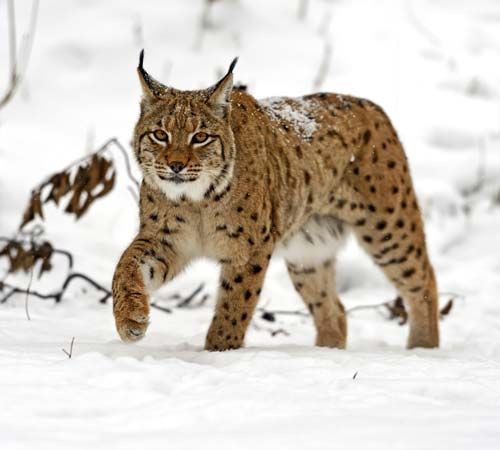
The Eurasian lynx (Lynx lynx) is a medium-sized, long-legged wild cat native to the boreal and deciduous forests, mountains, and grasslands of Europe and Asia. As the largest member of the genus Lynx, it stands as Europe’s third-largest predator, trailing only the brown bear and gray wolf1.12
Adults typically weigh between 18 and 36 kg (40 to 80 pounds) and reach lengths of 70 to 130 cm. They are specialized hunters that primarily prey on ungulates such as roe deer, chamois, and musk deer, though they will also consume smaller prey like hares, rodents, and birds when necessary.23
While the species is currently classified as of least concern by the IUCN, it faces ongoing threats from poaching, habitat loss, and vehicle collisions3. Conservation efforts, including reintroduction programs, have been vital in helping regional populations recover.14
What are the other three species in the Lynx genus?
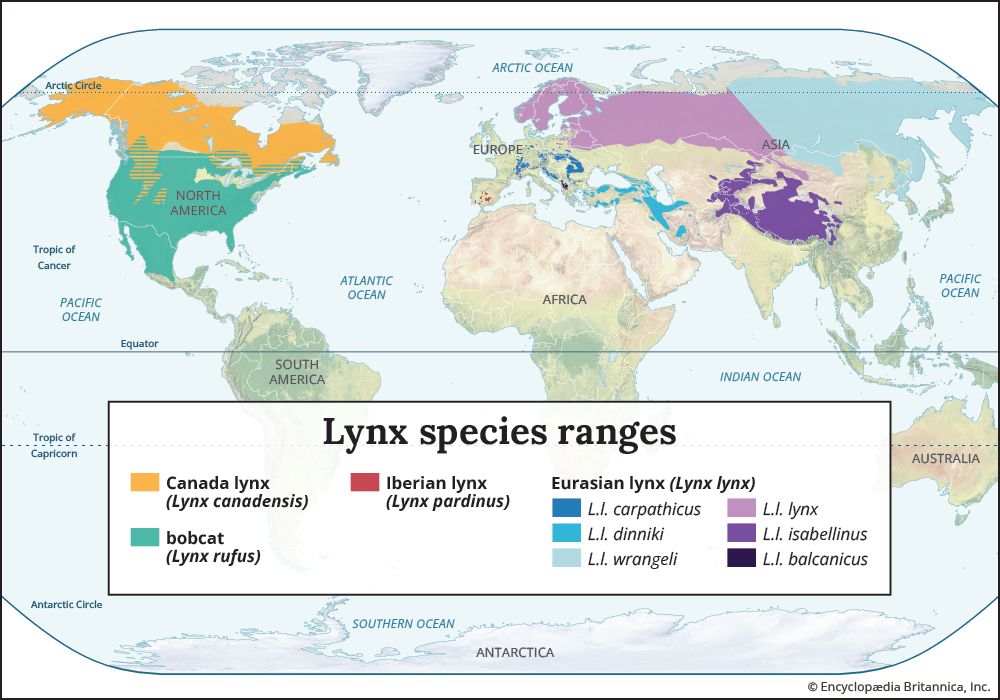
The genus Lynx consists of four distinct species of short-tailed cats. In addition to the Eurasian lynx (Lynx lynx), the other three species are:5
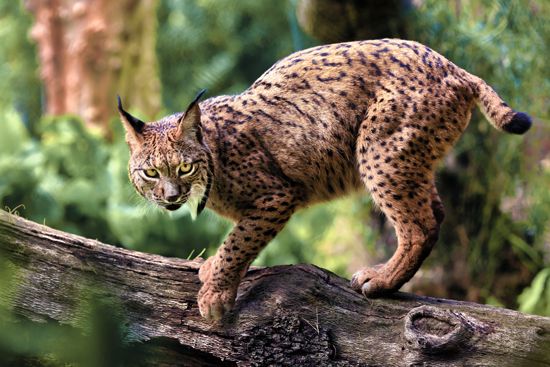
- Iberian lynx (Lynx pardinus): A medium-sized feline endemic to the Iberian Peninsula in southwestern Europe, primarily found in parts of Spain and Portugal.45
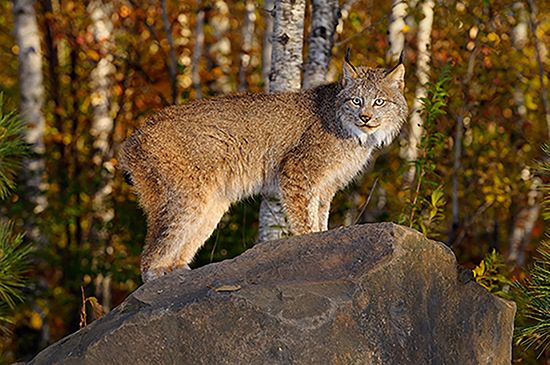
- Canada lynx (Lynx canadensis): A North American species found throughout the forested regions of Alaska and Canada, as well as parts of the northern United States.56
- Bobcat (Lynx rufus): Also known as the bay lynx, this is the smallest of the four species. It is found across the contiguous United States, southern Canada, and parts of Mexico.57
How do Eurasian lynxes adapt to living in cold, snowy environments?
The Eurasian lynx (Lynx lynx) possesses several physical adaptations that allow it to thrive in cold, snowy environments. Most notably, the species is equipped with broad, furry paws that function similarly to snowshoes, supporting the animal’s weight and enabling it to travel across deep snow with ease.89
Additionally, the Eurasian lynx is protected by a soft, thick coat that provides essential insulation against freezing temperatures. This fur exhibits seasonal variations, often becoming denser and grayer in the northern parts of its range during the winter months to better suit the environment. These physical traits, combined with the cat’s long legs, help it navigate its boreal habitat effectively while hunting for prey.81
What is the difference between a critically endangered population and a species of least concern?
The International Union for Conservation of Nature (IUCN) classifies species based on their risk of extinction using the IUCN Red List of Threatened Species. The primary difference between these two categories lies in the population health and survival prospects of the organisms involved.12
- Critically Endangered (CR): This is the most serious category for species still found in the wild. It identifies organisms facing an extremely high risk of extinction. A species is typically designated as critically endangered if it has experienced a population decline of 80 to more than 90 percent over 10 years (or three generations), has fewer than 50 mature individuals remaining, or occupies a very restricted geographic range.1312
- Least Concern (LC): This category is reserved for species that are pervasive and abundant. After a careful scientific assessment, these species are determined to be at a low risk of extinction, as their populations are stable or sufficiently large to maintain long-term viability.12
Sources
- Eurasian lynx — Encyclopædia Britannica
- Eurasian lynx - Diet — Encyclopædia Britannica
- Eurasian lynx - Conservation status — Encyclopædia Britannica
- lynx — Encyclopædia Britannica
- Iberian lynx: Top Questions — Encyclopædia Britannica
- Canada lynx - Distribution and habitat — Encyclopædia Britannica
- bobcat — Encyclopædia Britannica
- Eurasian lynx - Physical features — Encyclopædia Britannica
- Eurasian lynx - Distribution and habitat — Encyclopædia Britannica
- Eurasian lynx - Ecological and economic value — Encyclopædia Britannica
- Canada lynx - Physical features — Encyclopædia Britannica
- endangered species - IUCN Red List of Threatened Species — Encyclopædia Britannica
- critically endangered species — Encyclopædia Britannica
- sloth - Conservation status — Encyclopædia Britannica
Published on · 3 min read