Cape Frio
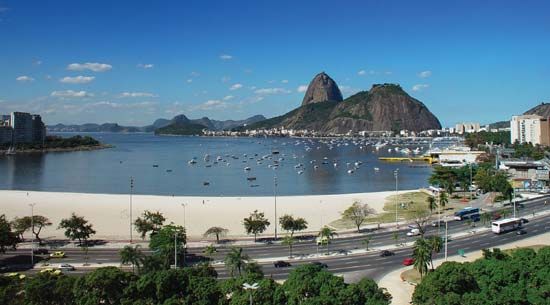
Cape Frio is a prominent headland located on the southeastern Atlantic coast of Brazil within the state of Rio de Janeiro, situated approximately 70 miles…
What is Cape Frio?
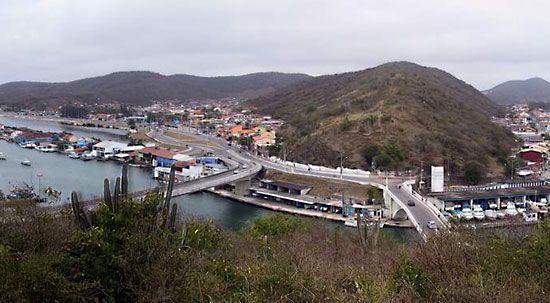
Cape Frio is a prominent headland located on the southeastern Atlantic coast of Brazil within the state of Rio de Janeiro, situated approximately 70 miles (113 km) east of the city of Rio de Janeiro.12
Discovered in 1503 by the explorer Amerigo Vespucci, the area served as a stronghold for pirates during the 16th century. Today, the cape is a popular tourist destination known for its favorable climate and historical landmarks, including the São Mateus Fort, which was constructed by the French. The site is currently home to the towns of Cabo Frio and Arraial do Cabo.1
Who was Amerigo Vespucci and why is he famous?
Amerigo Vespucci (1454–1512) was an Italian merchant, navigator, and explorer who played a significant role in the early exploration of the New World. He served as the piloto mayor (chief navigator) in Seville, where he was responsible for preparing official maps and examining the licenses of other pilots.3
He is most famous for two primary reasons:
- Identification of the “New World”: During his 1501–1502 expedition to South America, Vespucci became convinced that the lands being explored were not part of Asia, as previously thought, but rather a distinct “New World”.3
- The Origin of the Name “America”: In 1507, the cartographer Martin Waldseemüller published a map that applied the name “America” to the newly discovered lands, honoring Vespucci as the discoverer. This name eventually spread to encompass both North and South America.3
While his legacy has been subject to historical controversy regarding the number and authenticity of his voyages, he remains a pivotal figure in the history of Atlantic exploration and early travel literature.3
What role did pirates play in the history of the Brazilian coast?
During the early period of Brazil’s colonization, the Portuguese crown maintained only a tenuous hold on the territory, leaving the coastline vulnerable to European rivals who exploited this neglect. Pirates and interlopers, particularly the French, played a significant role in challenging Portuguese authority by trespassing on their claims and illicitly harvesting and shipping brazilwood to Europe.51
Specific locations became hubs for these activities. For instance, Cape Frio served as a notable 16th-century pirate stronghold, and the French even constructed the São Mateus Fort in that area. Additionally, figures such as the Frenchman Jean-François Duclerc were known to prey on ships in the vicinity of Guanabara Bay.67
The persistent presence of these interlopers, combined with the threat posed by other colonial powers, eventually compelled the Portuguese crown to shift its focus from Asian trade to establishing a more systematic government and permanent settlements in Brazil during the 1530s.51
Why were forts like São Mateus built by the French in Brazil?
Forts like São Mateus were built by the French in Brazil to secure their presence and protect their interests during a period when the Portuguese crown exercised only “shadowy control” over the region.68
Because the Portuguese initially viewed Brazil primarily as a stopover for trade rather than a site for permanent settlement, they left much of the coastline vulnerable to European rivals. The French took advantage of this neglect to trespass on Portuguese claims and engage in the illicit, highly profitable trade of brazilwood, a tropical hardwood used as a textile dye.68
Cape Frio, where the French constructed the São Mateus Fort, served as a strategic pirate stronghold for these interlopers. By establishing such fortifications, the French were able to defend their trading operations and maintain a foothold against Portuguese attempts to assert authority over the territory.16
Sources
- Cape Frio — Encyclopædia Britannica
- Frio, Cape — Merriam-Webster
- Amerigo Vespucci — Encyclopædia Britannica
- Amerigo Vespucci — Merriam-Webster
- Brazil - Exploration and initial settlement — Encyclopædia Britannica
- history of Latin America - The early period — Encyclopædia Britannica
- piracy — Encyclopædia Britannica
- Brazil - Dutch and French incursions — Encyclopædia Britannica
Published on · 3 min read