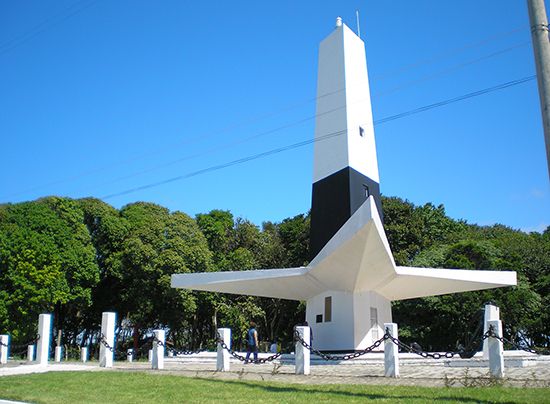
Cape São Roque
Cape São Roque is a headland located on the northeastern Atlantic coast of Brazil, situated within the state of Rio Grande do Norte approximately 20 miles…
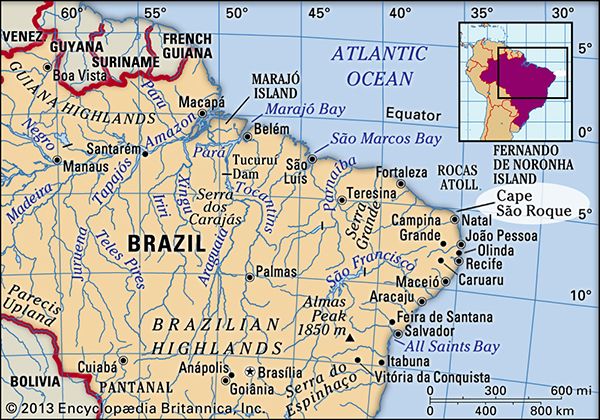
What is Cape São Roque?
Cape São Roque is a headland located on the northeastern Atlantic coast of Brazil, situated within the state of Rio Grande do Norte approximately 20 miles (32 km) north of the state capital, Natal.12
While it is often cited as the easternmost point of the South American continent, this is a common misconception. The true eastern extremity of the continent is actually Cape Branco, which is located further to the south-southeast.1
Where is Cape Branco located?
Cape Branco is located on the Atlantic coast of the state of Paraíba in eastern Brazil. It is situated approximately 5 miles (8 km) southeast of João Pessoa, the state capital.3
Geographically, the cape serves as the easternmost point of the South American continent. The area is characterized by white sand beaches and prominent sedimentary formations known as taboleiros, which rise sharply above the coastline to heights between 150 and 500 feet (45 m and 150 m). Additionally, the Cape Branco lighthouse, located at Point Seixas, marks this easternmost extremity.314
What is the geography of the Rio Grande do Norte state?
Rio Grande do Norte is a state in northeastern Brazil characterized by diverse coastal and inland terrain. Its geography is defined by the following features:
- Coastal Regions: The northern seaboard is low and sandy, featuring dunes and coconut palms. South of the capital, Natal, the coast is forested and contains economically significant salt marshes. Inland from this coast, the terrain rises gradually to low mesas known as taboleiros.6
- Interior Uplands: Moving inland from the south and Natal, the land rises abruptly to the northern edge of the Borborema Plateau, a hilly region that extends into neighboring states. The western interior is marked by several mountain ranges.6
- Climate and Hydrology: Most of the state is semiarid, with the exception of the southern coastal strip, which receives abundant rainfall. Due to the limited precipitation, the state’s rivers—including the Açu (Piranhas), Apodi, and Potengi—are intermittent. Temperatures in Natal typically range from 77 to 86 °F (25 to 30 °C), though higher elevations remain cooler.6
How do headlands form along a coastline?
Headlands form along a coastline primarily due to the differential erosion of rock formations. When a coastline consists of alternating bands of hard, resistant rock (such as granite or massive limestone) and softer, more easily eroded material (such as clay, silt, or certain sandstones), the softer sections are worn away more rapidly by wave action and weathering.9
As the softer rock is eroded to form bays, the harder, more resistant rock remains projecting out into the sea. These protruding landforms are known as headlands—also referred to as promontories or points.109
The process is influenced by the way waves approach the shore. As waves encounter shallower water near the coast, they undergo refraction, causing them to turn and sweep into the bays. This concentration of wave energy against the softer rock accelerates the formation of the bay, while the headlands continue to stand out as prominent features of the landscape. Over time, these headlands may develop further erosional features, such as caves, natural bridges, or sea stacks, as they are continuously battered by the sea.911
Sources
- Cape São Roque — Encyclopædia Britannica
- São Roque, Cape — Merriam-Webster
- Cape Branco — Encyclopædia Britannica
- Paraíba — Encyclopædia Britannica
- João Pessoa — Encyclopædia Britannica
- Rio Grande do Norte — Encyclopædia Britannica
- Rio Grande do Norte — Merriam-Webster
- Natal — Encyclopædia Britannica
- coastal landforms - Sea cliffs — Encyclopædia Britannica
- coast — Encyclopædia Britannica
- coastal landforms - Sea stacks — Encyclopædia Britannica
- headlands — Merriam-Webster
- coastal landforms - Landforms of erosional coasts — Encyclopædia Britannica
- headland — Merriam-Webster
- sound - Refraction — Encyclopædia Britannica
- bay — Encyclopædia Britannica
Published on · 2 min read