Catskill Delta
The Catskill Delta is a massive sedimentary structure deposited in the northeastern United States during the Middle and Late Devonian Period. Named for its…
What is Catskill Delta?
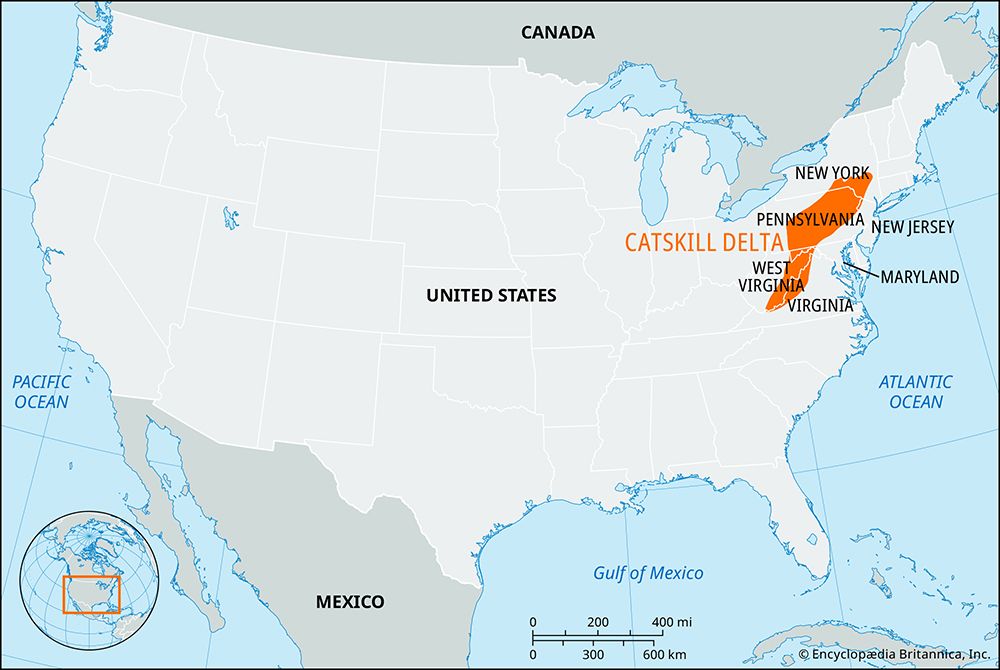
The Catskill Delta is a massive sedimentary structure deposited in the northeastern United States during the Middle and Late Devonian Period. Named for its prominent exposures in the Catskill Mountains of New York, the delta was formed by numerous streams flowing westward from the rising Appalachian Highlands1.1
This geological feature represents the westernmost clastic wedge resulting from the Acadian orogeny—a significant mountain-building event caused by the collision of the Avalonia Terrane with the North American Plate. As the delta grew, it created a broad coastal lowland extending over 320 km, with submerged portions reaching as far as present-day Ohio. By the end of the Devonian, the shoreline had shifted significantly into western New York and northwestern Pennsylvania.21
What is the Devonian Period known for?
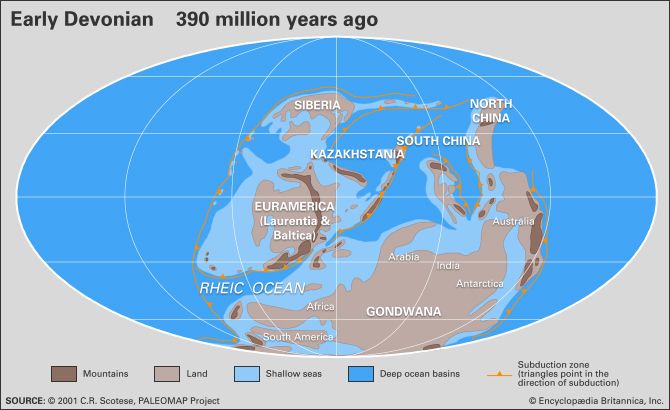
The Devonian Period (approximately 419.2 to 359 million years ago) is a significant interval in Earth’s history, often characterized by the following developments:
The Age of Fishes
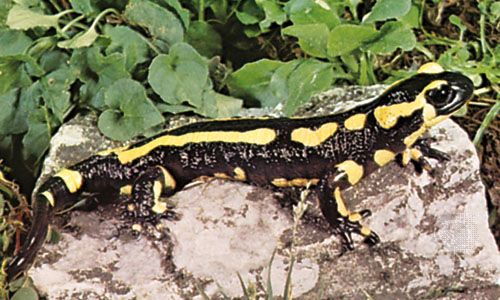
The period is widely known as the “Age of Fishes” due to the remarkable diversification and abundance of fish species in the world’s oceans. This era saw the earliest extensive evolutionary radiation of fish, as well as the emergence of the first four-legged amphibians toward the end of the period, marking the colonization of land by vertebrates.34
Biological and Environmental Milestones
- Terrestrial Life: Forests first appeared early in the Devonian, and plants began to colonize freshwater rivers and lakes. The first insects, such as wingless collembolans, also emerged.345
- Marine Life: The seas were home to diverse invertebrates, including ammonites, brachiopods, and trilobites. Massive coral reefs and stromatoporoids flourished in shallow continental shelf seas.5
- Geology: The period featured the formation of the Old Red Sandstone continent, created by the union of Laurentia and Baltica into the landmass known as Laurussia or Euramerica.4
Extinction Events
The Devonian experienced several significant extinction episodes, such as the Taghanic Event, the Kellwasser Event, and the Hangenberg Event. These were often associated with periods of low oxygen (anoxia) in the oceans, fluctuating sea levels, and potential climate shifts, resulting in the loss of 70 to 80 percent of all animal species.63
How do mountains form during an orogeny?
An orogeny is a mountain-building event characterized by intensive deformation of the Earth’s crust, typically occurring in linear belts over relatively short geological timeframes. This process involves significant folding, faulting, regional metamorphism, and magmatic activity.8
Mountains generally form through three primary tectonic mechanisms:
- Continent-Continent Collision: When two buoyant landmasses converge, neither subducts significantly. Instead, the crust thickens and deforms, forcing rock skyward to create lofty ranges like the Himalayas. This process often involves the creation of deep crustal roots and is supported by isostasy.9
- Subduction-Related Collision: As an oceanic plate sinks beneath a continental plate, the process triggers voluminous magmatism and episodic uplift that squeezes the crust upward. The Andes Mountains are a classic example of this type of mountain building.1011
- Rift-Type Orogenesis: Mountains can also form where tectonic plates spread apart, leading to high-angle faulting and the creation of block-fault (horst-graben) terrain, such as the Basin and Range Province.11
What are sedimentary rocks and how do they form?
Sedimentary rocks are rocks formed at or near Earth’s surface through the accumulation and lithification of sediment or by the precipitation of minerals from solution at surface temperatures. While they cover 75 to 90 percent of Earth’s surface, they represent only a small fraction of the total volume of the crust.14
Formation Processes
The creation of sedimentary rock generally follows these stages:
- Weathering and Erosion: Preexisting rocks are broken down by physical and chemical weathering. The resulting products are transported by water, wind, or ice and eventually deposited as sediment.19
- Lithification: This is the process of converting loose sediment into solid rock. It involves compaction, which reduces pore space, and cementation, where minerals like silica or calcite precipitate in pore spaces to weld grains together.151416
- Direct Precipitation: Some rocks, such as certain limestones or evaporites, form by direct chemical precipitation from solution without an initial sediment stage.14
Classification
Sedimentary rocks are broadly categorized into:
Sources
- Catskill Delta — Encyclopædia Britannica
- Acadian orogeny — Encyclopædia Britannica
- A Journey Through Time Since the Precambrian - Devonian Period: 419.2 million to about 359 million years ago — Encyclopædia Britannica
- Devonian Period - Paleoclimate — Encyclopædia Britannica
- Devonian Period - Extinction events — Encyclopædia Britannica
- Devonian Period - Significant geologic events — Encyclopædia Britannica
- Devonian Period - Invertebrates — Encyclopædia Britannica
- orogeny — Encyclopædia Britannica
- plate tectonics - Mountains by subduction — Encyclopædia Britannica
- volcano - Subduction volcanoes — Encyclopædia Britannica
- continental landform - Orogenic geomorphic systems — Encyclopædia Britannica
- plate tectonics - Mountains by continental collision — Encyclopædia Britannica
- diastrophism — Encyclopædia Britannica
- lithification — Encyclopædia Britannica
- rock: Top Questions — Encyclopædia Britannica
- sedimentary rock - Classification systems — Encyclopædia Britannica
- river - Environments of deposition — Encyclopædia Britannica
- sedimentary rock - Mineralogical and geochemical composition — Encyclopædia Britannica
- sedimentary rock — Encyclopædia Britannica
- cementation — Encyclopædia Britannica
Published on · 3 min read