Capybara
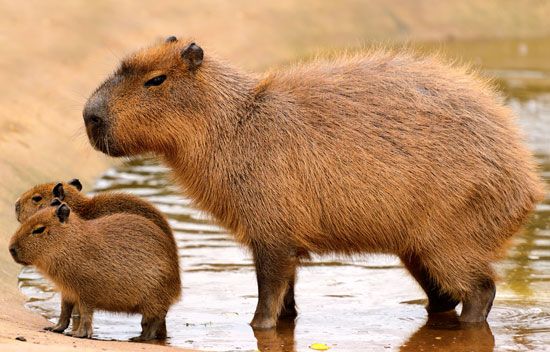
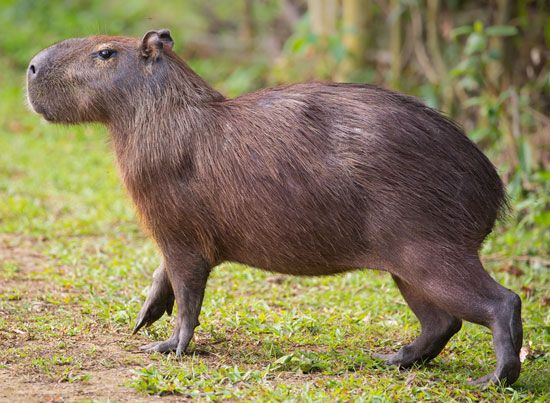
Capybaras are large, semiaquatic rodents native to Central and South America. Their natural range extends from Panama in the north down to Argentina in the…

Where are capybaras naturally found, and what kind of habitats do they prefer?
Capybaras are large, semiaquatic rodents native to Central and South America. Their natural range extends from Panama in the north down to Argentina in the south.1
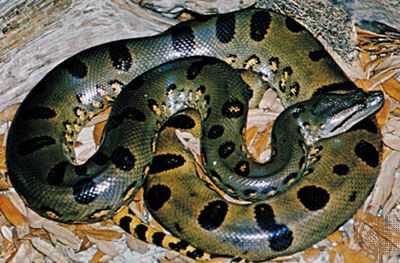
These animals are highly dependent on water and prefer habitats characterized by forests and wetlands. They are typically found living in groups along the banks of lakes and rivers. Because they are semiaquatic, they frequently enter the water to escape predators, such as jaguars and anacondas, and they spend much of their day resting under cover along these water edges.1
While the larger capybara species is widespread throughout the Amazon River basin and regions from Venezuela to northern Argentina, the lesser capybara is more restricted to areas in Panama, Colombia, and northwestern Venezuela.1
How long do capybaras typically live, and what is their reproductive cycle like?
Capybaras have a relatively straightforward reproductive cycle. Females typically produce one litter per year, consisting of three to eight young. The gestation period for these rodents lasts approximately 100 to 110 days.1
Regarding their lifespan, the provided information does not specify the typical life expectancy of capybaras in the wild or in captivity.
Are there any conservation efforts or concerns related to capybaras?
Currently, both the capybara (Hydrochoerus hydrochaeris) and the lesser capybara (H. isthmius) are classified as species of least concern by the International Union for Conservation of Nature and Natural Resources.1
While they are not currently facing major conservation threats, they are utilized as a resource in various parts of South America. The smaller species is frequently hunted for food, while the larger species is often ranched for its meat and hides, which are processed into leather goods. Additionally, in cultivated areas, capybaras may be viewed as pests because they consume crops such as melons, grain, and squash.1
How do capybaras spend their time during the day and night?
Capybaras are semiaquatic rodents that follow a distinct daily routine centered around their wetland habitats.
During the day, they typically spend most of their time resting under cover along the banks of lakes and rivers. They are most active during the morning and evening, which is when they normally feed. As vegetarians, they graze on various plants, though they may occasionally consume crops like melons, grain, and squash when near cultivated areas.1
Because they are shy animals, they often associate in groups for protection. If threatened by predators such as jaguars or anacondas, they readily swim and dive into the water to elude them.1
Sources
- capybara — Encyclopædia Britannica
Published on · 2 min read