Anaconda
Anacondas and pythons are both among the world's largest snakes, but they differ significantly in their biology and physical build.
How do anacondas compare to other large snake species like pythons?
Anacondas and pythons are both among the world’s largest snakes, but they differ significantly in their biology and physical build.
Physical Differences
While reticulated pythons are generally the longest snakes in the world, green anacondas are the heaviest and most robust. Anacondas possess a much larger girth, often weighing nearly twice as much as a python of similar length.123
Habitat and Distribution
The two groups occupy different regions:
- Pythons: Primarily inhabit the Old World tropics, including sub-Saharan Africa, India, Southeast Asia, and Australia.1
- Anacondas: Native to South America, they are semiaquatic and highly adapted to life in the Amazon and Orinoco River basins.13
Reproductive Habits
A fundamental biological distinction lies in how they reproduce:
- Pythons are oviparous, meaning they lay eggs that the female incubates.1
- Anacondas are viviparous, retaining eggs within their bodies to give birth to live young1.3
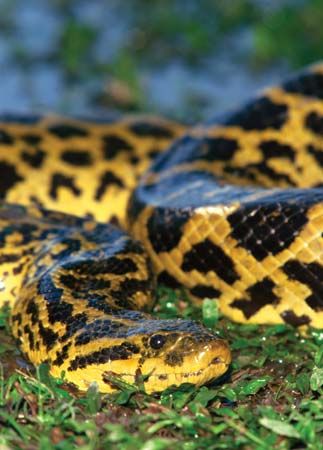
What role do anacondas play in their ecosystem, and are there any conservation concerns?
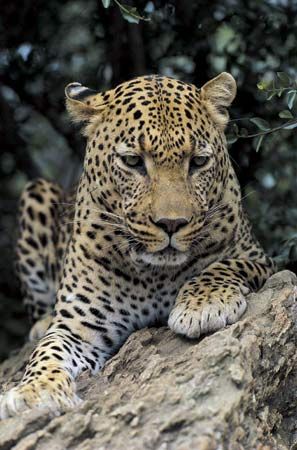
Anacondas serve as significant apex predators within their South American ecosystems. By consuming a wide variety of vertebrates—including fish, caimans, birds, and mammals such as capybaras, deer, and tapirs—they play a crucial role in regulating prey populations. While adult anacondas have few natural enemies, they are occasionally preyed upon by jaguars, and juveniles must hide to avoid various carnivores.54
Conservation Concerns
Although most anaconda species are currently classified as being of least concern by the International Union for Conservation of Nature, they face several human-induced threats:54
- Habitat Loss: The draining of wetland habitats for agricultural expansion poses a significant risk to their survival.5
- Persecution: Anacondas are frequently targeted by humans out of fear or in retaliation for attacks on livestock, with the larger green anacondas often bearing the brunt of this hostility.54
- Exploitation: These snakes are hunted for their meat and hide, and they are also sought after for the illegal pet trade.54
We could dive deeper into the specific reproductive behaviors of these snakes or explore the differences between the northern and southern green anaconda species.
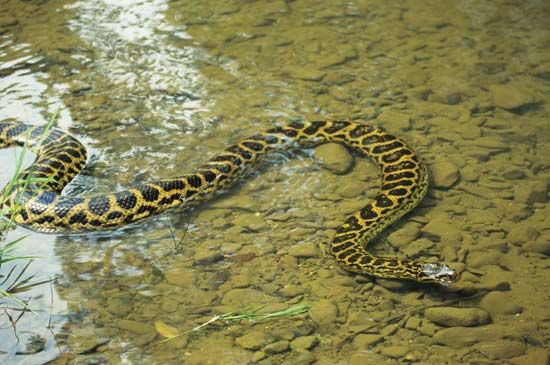
Where are anacondas typically found in the wild, and what type of habitat do they prefer?
Anacondas are native to tropical South America, where they are primarily found in the Amazon River and Orinoco River basins. Their range extends across various countries, including Brazil, Colombia, Venezuela, Ecuador, Peru, Bolivia, Paraguay, Guyana, Suriname, French Guiana, Trinidad and Tobago, and northeastern Argentina.34
Preferred Habitat
As semiaquatic snakes, anacondas are highly adapted to life in water and thrive in shallow, slow-moving environments. Their preferred habitats include:3
- Wetlands: They are commonly found in swamps and marshes.34
- River Systems: They frequent streams and the seasonally flooded reaches of river basins.34
- Terrestrial Areas: While they spend most of their time in the water, they can also be found on land in thick vegetation and occasionally in trees. During dry seasons, individuals in seasonally flooded areas may move to find water or burrow into the mud to survive.3
What is the largest anaconda ever recorded, and how does this compare to average sizes?
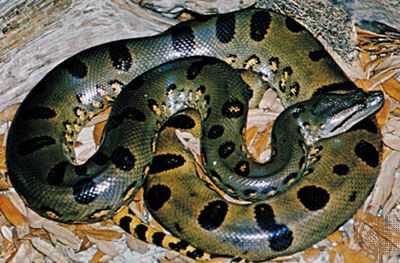
While popular media often depicts anacondas as massive, multi-story monsters, these portrayals are significantly exaggerated. In reality, the green anaconda (Eunectes species) is recognized as the world’s largest snake by weight and girth, rather than length.24
Size Comparison
- Average Size: The average length of a green anaconda is approximately 5.5 meters (18 feet).4
- Largest Recorded: While some reports have claimed specimens reaching up to 9 meters (30 feet) in length, these figures often lack rigorous scientific verification. A frequently cited report from 1960 describes a specimen shot in Brazil that measured 8.5 meters (27.7 feet) long.42
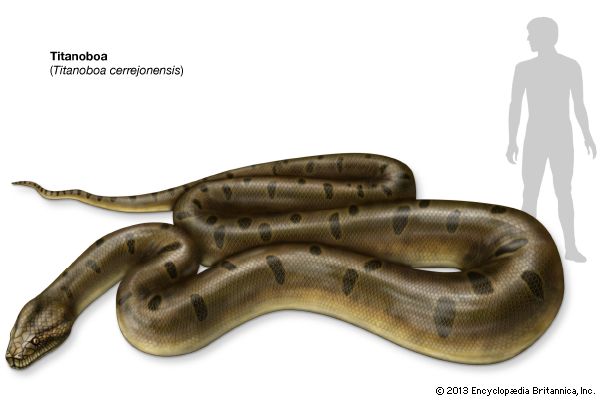
Although the reticulated python can grow longer than the green anaconda, the anaconda is significantly heavier. A large green anaconda can weigh as much as 250 kg (about 550 pounds), which is nearly double the weight of a reticulated python. This immense mass is supported by their significant girth, which can reach about 30 cm (1 foot) in diameter.24
Sources
- What are the differences between pythons and anacondas? — Encyclopædia Britannica
- What is the largest snake in the world? — Encyclopædia Britannica
- What are the differences between anacondas and boa constrictors? — Encyclopædia Britannica
- green anaconda — Encyclopædia Britannica
- anaconda — Encyclopædia Britannica
Published on · 3 min read