Carduelidae
Carduelidae was formerly the accepted name for a family of songbirds within the order Passeriformes. This group comprised approximately 112 species of…
What is Carduelidae?
Carduelidae was formerly the accepted name for a family of songbirds within the order Passeriformes. This group comprised approximately 112 species of active, gregarious birds found in woodlands and brushlands across the globe, with the exception of the Pacific islands.1
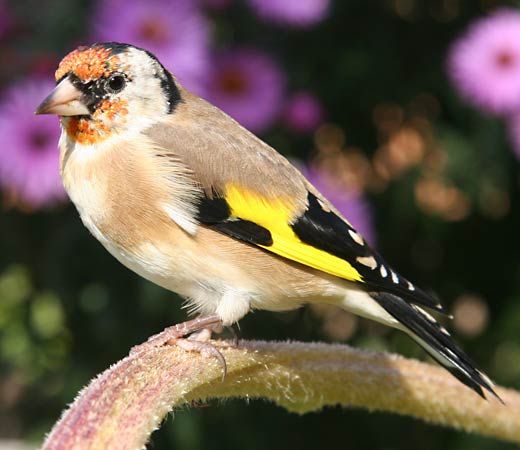
Notable birds previously categorized under this family included goldfinches, siskins, rosefinches, crossbills, bullfinches, and canaries. In modern taxonomy, these species are now classified as part of the family Fringillidae, which contains the true finches.12
What are the main physical characteristics that define the family Fringillidae?
The family Fringillidae, commonly known as true finches, is defined by several distinct physical characteristics that adapt them to their seed-eating lifestyle.42
Key Physical Characteristics
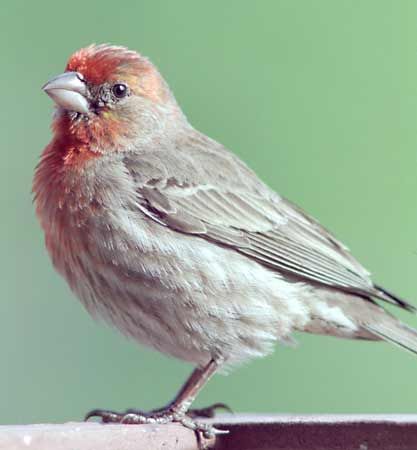
- Bill Structure: The most defining feature of the family is a strong, conical bill that is short and typically thick at the base. This specialized tool is highly effective for cracking the seeds of grasses and weeds.25
- Size and Build: These are small, compactly built songbirds, generally ranging in length from 10 to 27 cm (3 to 10 inches).2
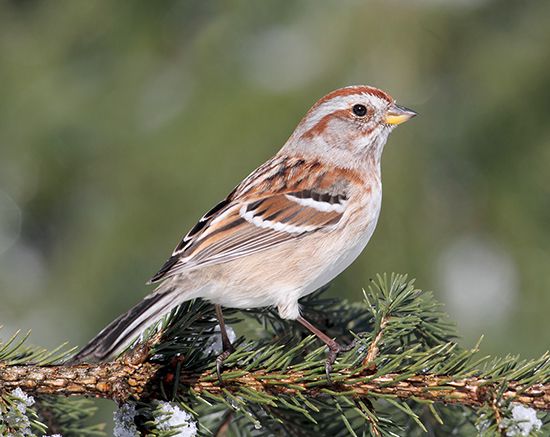
- Plumage and Coloration: Many species are brightly colored, often featuring various shades of red or yellow. Species that inhabit grass or low bushes often possess protective coloration, appearing streaked or spotted to blend into their environment.2
- Sexual Dimorphism: Members of this family frequently exhibit well-marked sexual dimorphism, where males and females differ in appearance; in these cases, juveniles typically resemble the females.5
While these traits are characteristic of the family, it is important to note that the term “finch” is also applied to various other songbird families, such as Emberizidae, Thraupidae, and Estrildidae, which may share similar appearances due to convergent evolution.42
How do DNA studies change the way scientists classify bird species?
Historically, scientists classified birds primarily by relying on structural characteristics, such as plumage, bill and foot anatomy, and the arrangement of bones and muscles. While these methods provided a foundation for understanding avian relationships, they often struggled to distinguish between homologies—traits inherited from a common ancestor—and analogies, which are similarities that arise independently due to similar environments.8910
Advances in molecular genetics have transformed this field by allowing researchers to analyze the sequence of units within DNA and protein molecules10. By measuring the differences in these sequences, scientists can quantify how much species have diverged since sharing a common ancestor.10
This molecular approach, combined with computerized construction of phylogenetic trees, provides a more precise method for testing taxonomic hypotheses. Different molecules, such as mitochondrial DNA or ribosomal RNA, evolve at different rates, allowing researchers to select the appropriate “molecular clock” for the specific age of the group being studied.810
What are some common differences between true finches and other birds often called finches?
The term “finch” is a common name applied to a wide variety of small, conical-billed songbirds across several different families. While they share similar appearances due to their seed-eating habits, they are not all closely related.46
True Finches vs. Other “Finches”
- True Finches (Fringillidae): This family consists of approximately 230 species, including grosbeaks, euphonias, and chaffinches. They are defined by their strong, short, and thick-based bills, which are specialized for cracking seeds. Many exhibit sexual dimorphism, where males and females differ in appearance, with juveniles typically resembling the females.4611
- Other “Finches”: Many other birds commonly called finches belong to distinct families, such as Emberizidae (which includes sparrows and buntings), Thraupidae, and Estrildidae. For example, the famous Galapagos finch is actually classified within the family Emberizidae.46212
These groups often share similar physical traits, such as conical bills, because they have evolved to fill similar ecological niches, a phenomenon known as convergent evolution.136
Sources
- Carduelidae — Encyclopædia Britannica
- Finch — Encyclopædia Britannica
- Passeriform - Critical appraisal — Encyclopædia Britannica
- Fringillidae — Encyclopædia Britannica
- Passeriform - Annotated classification — Encyclopædia Britannica
- Fringillidae — Merriam-Webster
- frigate bird — Encyclopædia Britannica
- Bird - Distinguishing taxonomic features — Encyclopædia Britannica
- Galliform - Distinguishing taxonomic features — Encyclopædia Britannica
- phylogeny - Evidence for specific phylogenies — Encyclopædia Britannica
- Falconiform - Evolution and paleontology — Encyclopædia Britannica
- Emberizidae — Encyclopædia Britannica
- Galapagos finch — Encyclopædia Britannica
Published on · 3 min read