Hawaiian Honeycreeper
Hawaiian honeycreepers are a group of birds belonging to the family Drepanididae that evolved exclusively in the Hawaiian Islands. While they share the name…
What are Hawaiian honeycreepers and how are they unique among bird species?
Hawaiian honeycreepers are a group of birds belonging to the family Drepanididae that evolved exclusively in the Hawaiian Islands. While they share the name “honeycreeper” with certain Western Hemisphere species, they are distinct, being closely related to cardueline finches rather than the tanager family.12
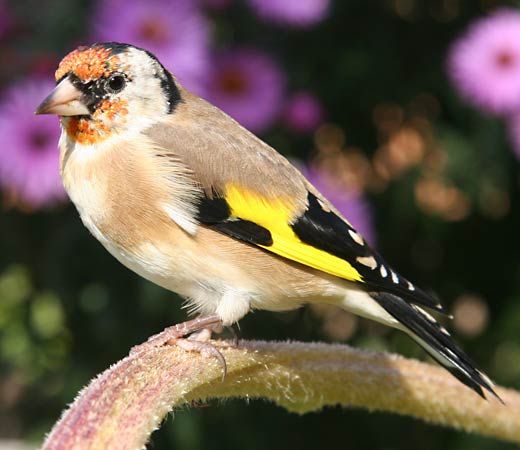
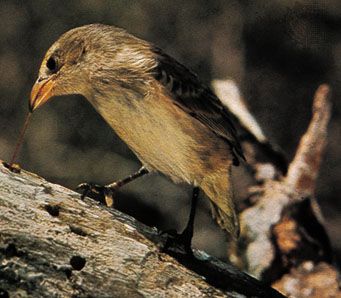
Their uniqueness lies in a remarkable evolutionary radiation similar to that of Darwin’s finches in the Galapagos Islands. Isolated in the mid-Pacific, they diversified into a wide array of forms:
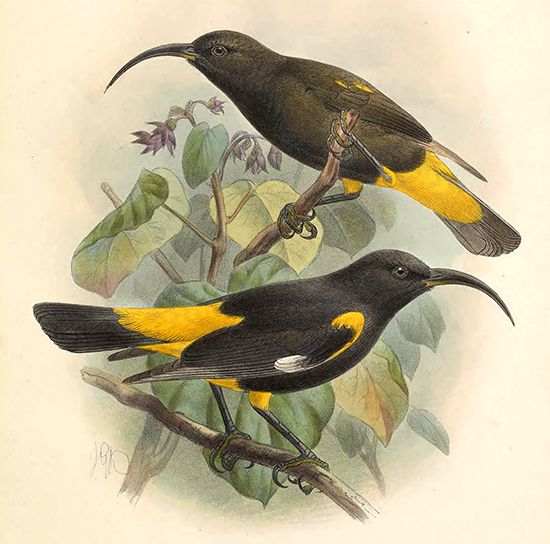
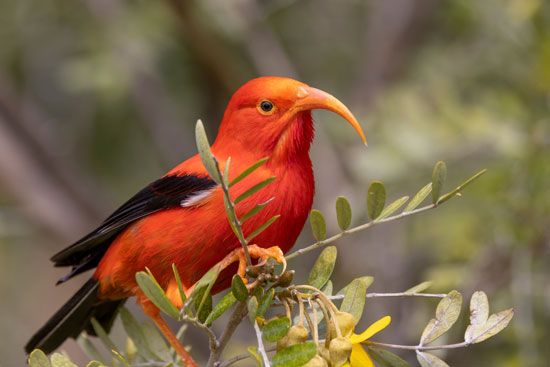
- Nectar-feeders: Often possess thin bills and red-and-black plumage.1
- Seed and insect-eaters: Typically feature finchlike bills and greenish plumage.1
- Intermediate forms: Some species bridge the gap between these two dietary specializations.1
Most of these birds possess a specialized, troughlike, and brush-tipped tongue adapted for their varied diets. Unfortunately, due to habitat destruction and the introduction of foreign species, many of these unique birds are now endangered or extinct.1
How have climate change and habitat loss affected Hawaiian honeycreeper populations?
Climate change and habitat loss have severely impacted Hawaiian honeycreeper populations, contributing to the extinction of approximately one-third of known species.3
The Impact of Habitat Loss
Habitat destruction, driven by the introduction of nonnative herbivores like goats, pigs, and sheep, has devastated the native forests honeycreepers depend on. These animals overgraze essential plants, such as the mamane tree—a primary food source for the endangered palila—and nectar-producing lobelias that evolved specifically to be pollinated by honeycreepers. Additionally, the overharvesting of koa trees has reduced the habitat of insectivorous species like the akiapolaau.14
The Role of Climate Change and Disease
The most critical threat to surviving honeycreepers is avian malaria, transmitted by invasive mosquitoes. Historically, honeycreepers survived by retreating to high-elevation forests where cool temperatures prevented mosquito survival. However, climate change has caused a series of unusually warm summers, allowing mosquitoes to migrate to higher altitudes (up to 1,900 meters). This expansion into previously safe, high-elevation refuges has increased the prevalence of the disease, further endangering the remaining populations.35
How do the beaks of different Hawaiian honeycreeper species vary, and why?
The Hawaiian honeycreepers (family Drepanididae) exhibit a remarkable diversity in beak morphology, which serves as a classic example of adaptive radiation. Derived from a single ancestral lineage, these birds evolved to exploit a wide variety of ecological niches in the Hawaiian Islands that were otherwise unoccupied.172
Variation in Beak Morphology
The bills of these species are highly specialized to match their specific diets and foraging behaviors:2
- Nectar-feeders: These species typically possess thin, pointed, and often decurved (downward-curved) bills, which allow them to probe deep into flowers to reach nectar and tiny insects.12
- Seed-eaters: These birds feature heavy, stout, and finchlike bills, which provide the mechanical strength necessary for crushing seeds and fruits.12
- Insectivorous and Intermediate forms: Other species possess bills adapted for probing into wood or bark to extract insects, while some species exhibit intermediate bill shapes that allow them to exploit a broader range of food sources.12
Why Beaks Vary
This extreme variation is driven by natural selection in response to different feeding habits. Because bills are evolutionarily plastic, they adapt relatively quickly to the specific food resources available in an environment. By evolving distinct bill shapes, different honeycreeper lineages were able to minimize competition and efficiently utilize the diverse resources present across the archipelago.27
How do scientists study and monitor Hawaiian honeycreeper populations in the wild?
Scientists and conservationists monitor and manage Hawaiian honeycreeper populations primarily by focusing on the mitigation of avian malaria, which is a leading cause of their decline. Because the disease is transmitted by invasive mosquitoes, management strategies often involve:
- Mosquito Control: Efforts are made to eliminate standing-water catchments that serve as breeding grounds for mosquitoes, thereby reducing the transmission of the Plasmodium parasite.1
- Habitat Protection: Conservationists work to protect and restore native forest ecosystems. Over 1,000,000 acres of land in Hawaii have been set aside to preserve these habitats, which are essential for the survival of endemic species.3
- Researching Genetic Resistance: Scientists are actively investigating ways to facilitate the evolution of genetic resistance in sensitive honeycreeper species. This approach is supported by observations that some low-elevation populations of the amakihi have already begun to evolve natural resistance to the disease.1
- Monitoring High-Elevation Refuges: Because honeycreepers have historically survived by retreating to high-elevation forests where temperatures are too cool for mosquitoes, researchers closely monitor these areas. Recent data showing the migration of mosquitoes to higher elevations (up to 1,900 meters) has become a primary focus for conservation tracking.1
Sources
- Hawaiian honeycreeper — Encyclopædia Britannica
- Honeycreeper — Encyclopædia Britannica
- avian malaria — Encyclopædia Britannica
- Hawaii - Plant and animal life — Encyclopædia Britannica
- conservation - Secondary extinctions — Encyclopædia Britannica
- mosquito — Encyclopædia Britannica
- evolution - Adaptive radiation — Encyclopædia Britannica
- piciform - Form and function — Encyclopædia Britannica
- Passeriform - Bill — Encyclopædia Britannica
Published on · 3 min read