Carpet Moss
Carpet moss refers to the genus Hypnum, which is distinguished by its tendency to form dense, carpet-like green mats in various global habitats, particularly…
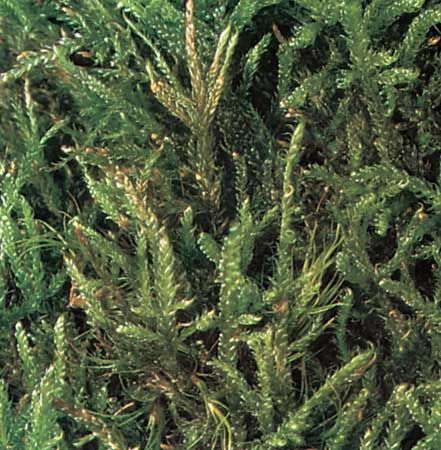
What are the key characteristics that distinguish carpet moss from other types of moss?
Carpet moss refers to the genus Hypnum, which is distinguished by its tendency to form dense, carpet-like green mats in various global habitats, particularly on decaying wood in moist environments. While some species are aquatic, most are terrestrial.1
Key characteristics of carpet moss include:
- Growth Pattern: These plants grow in large, dense mats, a trait shared by specific varieties like sheet moss (H. curvifolium), which is a member of the Hypnum genus.12
- Reproductive Structures: In many species, male and female reproductive organs are found on separate plants. The spore cases, or capsules, are cylindrical and curved, featuring distinct beaked lids.1
- Leaf Morphology: The leaves, or phyllids, of common species such as H. cupressiforme are notably curved.1
It is important to note that the taxonomy of this group is considered contentious. Furthermore, while some mosses are categorized by their specific growth forms or habitats—such as cushion moss or peat moss—carpet moss is specifically defined by its membership in the family Hypnaceae.13
What are some common species of carpet moss?
The genus Hypnum, commonly known as carpet moss, comprises approximately 80 species of mosses within the family Hypnaceae. Because the taxonomy of this group is considered contentious, identifying specific species can be complex.1
Some notable species and examples associated with this genus include:
- Hypnum cupressiforme: A species common in Europe and widely distributed, though rare, in North America. It is characterized by its curved leaves, or phyllids.1
- Hypnum curvifolium: Commonly referred to as sheet moss, this golden-green species is frequently utilized by florists.12
It is worth noting that while the feather moss (or plume moss) was formerly classified as H. crista-castrensis, it is now recognized as a member of the genus Ptilium.1
Are there any practical uses or applications for carpet moss in gardening or landscaping?
Carpet moss, particularly the species known as sheet moss (Hypnum curvifolium), has practical applications primarily within the floral and decorative industries. Because of its characteristic growth pattern, which forms large, dense, carpet-like mats, it is frequently utilized by florists to construct and enhance flower arrangements.13
Historically, the uses of carpet moss extended beyond aesthetics. It was once used to stuff bedding, and there was a traditional belief that the moss could induce sleep. While it is valued today for its ability to cover soil or rocks in decorative settings, it is not typically cited for functional roles in large-scale landscaping or gardening, such as erosion control or soil enrichment, in the same manner as other ground covers.13
How does carpet moss reproduce and spread in its environment?
Carpet moss (Hypnum) reproduces and spreads through a combination of sexual and asexual processes, following the alternation of generations typical of mosses.4
Sexual Reproduction
In carpet moss, male and female reproductive organs are often borne on separate plants. When moisture from rain or heavy dew is present, biflagellate sperm are released to fertilize the eggs within the archegonia. This process leads to the development of a sporophyte generation, which remains attached to the leafy gametophyte. The sporophyte eventually produces spores within a cylindrical, beaked capsule. These spores are shed into the environment, where they may germinate to form a protonema—a threadlike structure that eventually gives rise to new leafy shoots.134
Asexual Spread
Beyond spore production, carpet moss spreads effectively through asexual means, including:
- Branching and Fragmentation: The plant can expand by branching, and individual fragments of the moss can regenerate into new colonies.4
- Regeneration: Tiny pieces of photosynthetic tissue are capable of developing into new plants under favorable conditions.4
This ability to proliferate from fragments allows carpet moss to form the dense, expansive mats for which it is named.15
Sources
- carpet moss — Encyclopædia Britannica
- list of mosses — Encyclopædia Britannica
- sheet moss — Encyclopædia Britannica
- Plant reproductive system - Mosses — Encyclopædia Britannica
- moss — Encyclopædia Britannica
Published on · 3 min read