Feather Moss
Feather moss refers to a plant belonging to the subclass Bryidae, specifically the species Ptilium crista-castrensis (formerly classified under the genus…
What is Feather moss?
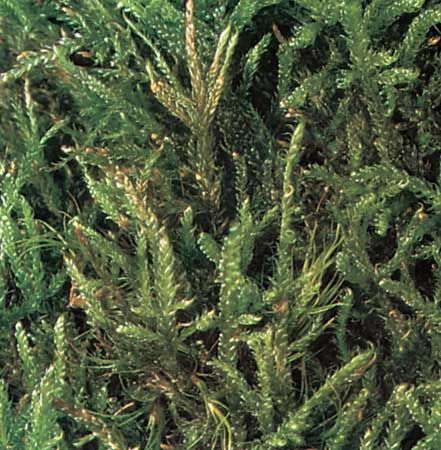
Feather moss refers to a plant belonging to the subclass Bryidae, specifically the species Ptilium crista-castrensis (formerly classified under the genus Hypnum). It is the sole species within the Ptilium genus.12
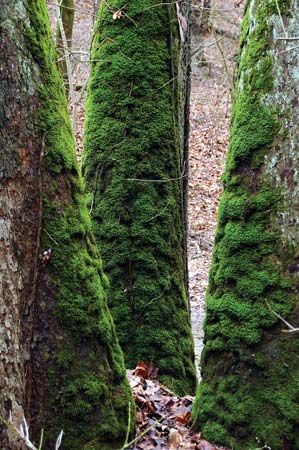
The name is derived from the plant’s distinct, feathery, or frondlike appearance. These mosses typically grow in dense, light green mats found on rotten wood, rocks, or peaty soil, particularly within the mountain forests of the Northern Hemisphere. Their leaves are characterized by curving, hooklike tips and often measure over 2 mm (0.1 inch) in length.12
What role do mosses play in forest ecosystems?
Mosses play several critical roles in forest ecosystems, acting as foundational elements for soil development, hydrology, and nutrient management.
Soil Formation and Succession
Mosses are often pioneer species that colonize bare rock surfaces, initiating the process of soil formation. As they grow and accumulate organic matter, they create a substrate that allows seed plants to take root. While these larger plants may eventually shade out the pioneer mosses, they create new, shaded microhabitats that support a diverse range of other bryophytes.3
Nutrient Cycling and Hydrology
- Nutrient Cycling: Mosses contribute to nutrient cycling by capturing limited precipitation and airborne minerals, effectively sequestering nutrients that might otherwise be unavailable to vascular plants.3
- Water Regulation: By forming deep, soft carpets, mosses act as a “gigantic sponge.” They absorb and retain vast quantities of water, which influences the water table and the hydrology of the surrounding landscape.3
- Vegetation Dynamics: Rapid evaporation from dense moss mats can impede moisture penetration to the root systems of seed plants, indirectly controlling the overall composition of forest vegetation.3
How do mosses reproduce without seeds?
Mosses reproduce through a complex process known as alternation of generations, which involves two distinct life stages: the sexual gametophyte and the asexual sporophyte.45
Sexual Reproduction
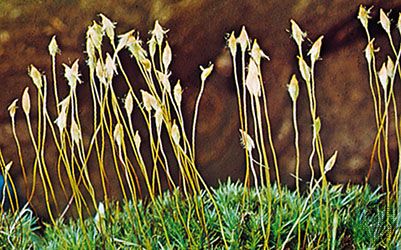
The leafy, green moss plant is the gametophyte generation. It produces male sex organs called antheridia and female organs called archegonia. When moisture is present—such as from rain or heavy dew—sperm are released from the antheridia and swim to the archegonia to fertilize the egg. This fertilization produces a zygote, which develops into the sporophyte. The sporophyte, which remains attached to and dependent on the gametophyte, produces spores within a capsule (sporangium). When these spores are released and germinate, they form a threadlike structure called a protonema, which eventually grows into a new leafy gametophyte.46758
Asexual Reproduction
Mosses can also reproduce vegetatively, bypassing the sexual cycle entirely:
- Fragmentation: Small pieces of stems, leaves, or rhizoids can regenerate into new, complete gametophytes.459
- Gemmae: Some species produce specialized masses of cells called gemmae that bud off to grow into new plants.4
What are some other common types of moss found in forests?
Beyond the well-known peat moss, forests host a wide variety of moss species, each adapted to specific microhabitats. Some common types include:
- Hair-cap moss (Polytrichum): Often found in areas with high soil acidity, these plants can grow up to 15 cm tall and frequently form large, dense beds or tussocks.10
- Cushion moss (Leucobryum): These form distinctive, grayish-white tufts that resemble pincushions in moist woods or swampy areas.11
- Fern moss (genus Thuidium): Named for their delicate, fern-like branching patterns.12
- Tree moss (genus Climacium): A common forest-floor dweller that often resembles a miniature tree.12
- Broom moss (Dicranum scoparium): Known for its characteristic appearance, often appearing as if it has been swept to one side.12
- Carpet moss (genus Hypnum): Frequently forms extensive, low-growing mats across the forest floor.12
It is important to note that many plants commonly called “moss” are not true mosses. For example, Spanish moss is a flowering plant, while reindeer moss and oak moss are actually lichens8.
Sources
- feather moss — Merriam-Webster
- feather moss — Encyclopædia Britannica
- bryophyte - Ecology and habitats — Encyclopædia Britannica
- bryophyte — Encyclopædia Britannica
- bryophyte - Reproduction and life cycle — Encyclopædia Britannica
- Plant reproductive system - Mosses — Encyclopædia Britannica
- bryophyte - Form and function — Encyclopædia Britannica
- moss — Encyclopædia Britannica
- Plant reproductive system - Variations in reproductive cycles — Encyclopædia Britannica
- hair-cap moss — Encyclopædia Britannica
- peat moss — Encyclopædia Britannica
- cushion moss — Encyclopædia Britannica
- list of mosses — Encyclopædia Britannica
Published on · 3 min read