Elf-cap Moss
Elf-cap moss refers to any of the 12 species within the genus Buxbaumia. These minute, atypical mosses are found in the Northern Hemisphere, typically…
What is Elf-cap moss?
Elf-cap moss refers to any of the 12 species within the genus Buxbaumia. These minute, atypical mosses are found in the Northern Hemisphere, typically growing on soil or decaying wood.1
Unlike most mosses, Buxbaumia is characterized by a unique life cycle where the asexual sporophyte phase is significantly larger and longer-lived than the sexual gametophyte phase. The male plants are distinguished by a single, clamshell-shaped structure that protects their sex organs, while female plants feature a long stalk supporting a distinctive cap-shaped capsule that holds their spores. Because the gametophyte is highly reduced and often dies shortly after fertilization, these plants can be difficult to spot in the wild.12
How do mosses reproduce without seeds?
Mosses reproduce through a process known as alternation of generations, which involves two distinct phases: the sexual gametophyte and the asexual sporophyte.34
Sexual Reproduction
The leafy green moss plant is the gametophyte generation. It produces sex organs—antheridia (male) and archegonia (female)—which often require moisture from rain or dew to allow sperm to swim to the eggs for fertilization. Once fertilized, the resulting zygote develops into the sporophyte generation, which typically consists of a stalk (seta) and a capsule (sporangium) that remains attached to and dependent on the gametophyte for nutrients. Inside the capsule, spores are produced via meiosis and eventually released into the environment.543
Asexual Reproduction
Mosses also reproduce vegetatively, which does not involve the production of spores or sex organs:
- Fragmentation: Small pieces of the gametophyte can break off and grow into new, complete plants.34
- Gemmae: Some species produce specialized clusters of cells called gemmae that bud off to form new gametophytes.3
- Protonema: When a spore germinates, it forms a protonema, a branching threadlike structure that can produce multiple buds, each capable of developing into a new leafy gametophore.654
What makes the sporophyte phase of Buxbaumia unique?
The sporophyte phase of Buxbaumia (elf-cap moss) is unique because it is significantly larger and longer-lived than the sexual gametophyte phase.1
In most mosses, the gametophyte is the dominant, persistent stage of the life cycle. However, Buxbaumia reverses this typical pattern: its asexual sporophyte—which consists of a long stalk (seta) supporting a distinctive cap-shaped capsule—is the most prominent part of the plant, while the gametophyte is highly reduced and often short-lived.1
Why are some moss species considered rare or uncommon?
The rarity or uncommon nature of certain moss species is primarily linked to their highly specialized habitats and specific environmental requirements. While many mosses are widespread, others are restricted to unique niches that are not commonly found in the landscape.8
Factors contributing to the limited distribution of these species include:
- Specialized Substrata: Some mosses require very specific surfaces for growth, such as copper-rich soil, the bases of quartz pebbles, or even decomposing animal waste, which are naturally scarce.8
- Microclimate Requirements: Many rare species are restricted to environments with precise conditions, such as the specific light levels found in shaded cavern mouths or the high humidity required by those that grow on the surfaces of leaves.8
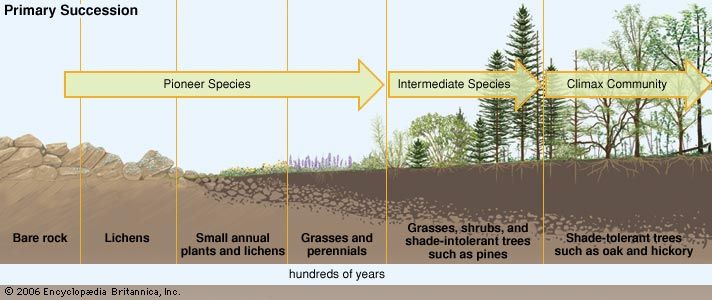
- Ecological Succession: Mosses often act as pioneer species on bare rock, but as more complex plants colonize and shade these areas, the original mosses may be eliminated. Consequently, species that rely on these early, transient stages of habitat development may appear uncommon as their preferred sites disappear.8
- Environmental Sensitivity: Because mosses are nonvascular and rely on moisture for reproduction and nutrient absorption, they are highly sensitive to changes in water availability and atmospheric conditions, making them vulnerable to habitat degradation.68
Sources
- elf-cap moss — Encyclopædia Britannica
- Buxbaumiales — Merriam-Webster
- bryophyte — Encyclopædia Britannica
- bryophyte - Form and function — Encyclopædia Britannica
- Plant reproductive system - Mosses — Encyclopædia Britannica
- moss — Encyclopædia Britannica
- Plant development - Preparatory events — Encyclopædia Britannica
- list of mosses — Encyclopædia Britannica
- bryophyte - Ecology and habitats — Encyclopædia Britannica
Published on · 3 min read