Fringe Moss
Fringe moss refers to any plant within the genus Grimmia, a group of bryophytes comprising over 100 species distributed globally.
What is Fringe moss?
Fringe moss refers to any plant within the genus Grimmia, a group of bryophytes comprising over 100 species distributed globally.1
These mosses typically grow on rocks or stone walls, though some species are found on roofs or in streams. For example, G. maritima grows in cushions up to four centimeters tall on seashore rocks. Generally, fringe mosses reach heights of one to three centimeters and feature blackish-green, lance-shaped leaves that are sometimes tipped with a white hair. Approximately 50 species are native to North America, while about 30 are found in Great Britain.1
How do mosses help in the process of soil formation?
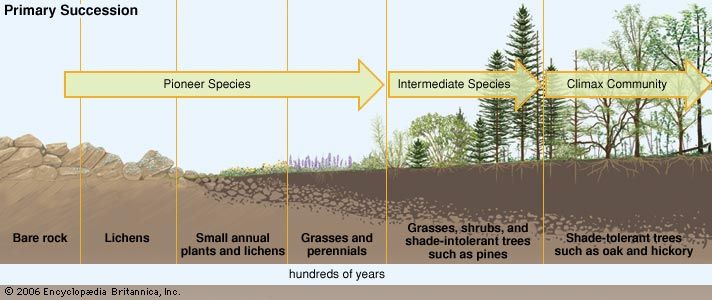
Mosses play a vital role in soil formation by acting as pioneer species that colonize bare rock surfaces. As these mosses grow and eventually die, their decomposing organic remains accumulate on the rock, creating the initial layers of soil necessary to support more complex plant life.3
This process is a key component of primary succession, which occurs in environments previously devoid of soil, such as areas left behind by retreating glaciers or recent lava flows. Once the mosses have established a thin layer of soil, they create a suitable substratum for seed plants to colonize the area. While these larger plants may eventually shade out and replace the pioneer mosses, the mosses remain essential to the ecosystem by contributing to nutrient cycling and maintaining the environmental conditions required for the developing forest vegetation.43
What are the main differences between mosses and vascular plants?
The primary differences between mosses (bryophytes) and vascular plants (tracheophytes) center on their internal structure, life cycles, and physical development.
Vascular Tissue and Anatomy
- Vascular Plants: These possess specialized tissues—xylem for water conduction and phloem for food transport—which allow them to grow to significant sizes and thrive in diverse terrestrial environments. They feature true roots, stems, and leaves, often reinforced by lignin for structural support.56
- Mosses: As nonvascular plants, mosses lack these complex conducting tissues and true organs. While some mosses have primitive water-conducting cells called hydroids, they generally rely on their immediate environment for moisture and rarely grow more than a few centimeters tall.7
Life Cycle and Dominant Generation
- Vascular Plants: The dominant, long-lived, and conspicuous phase of the life cycle is the sporophyte.57
- Mosses: The gametophyte is the dominant, independent, and photosynthetic phase, while the sporophyte remains dependent on the gametophyte for nutrition.87
Adaptations
Vascular plants are further adapted to land with a waxy cuticle to prevent dehydration and stomata for gas exchange. In contrast, mosses lack a well-developed cuticle, making them highly dependent on moist or shady habitats.57
Why do some moss species grow on rocks while others prefer soil?
The preference of moss species for specific substrates—such as bare rock or soil—is primarily determined by their need for a stable attachment point and a medium that can effectively retain moisture.3
- Rock-dwelling mosses: These species often act as pioneer organisms. They are capable of colonizing bare rock surfaces, where they begin the process of soil formation by accumulating organic matter as they grow and decompose. Some species are highly specialized, such as those that grow on the bases of quartz pebbles or copper-rich substrata.3
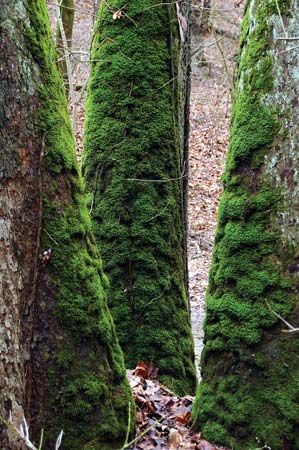
- Soil-dwelling mosses: Many mosses thrive on soil or the decaying remains of other plants. These environments provide a more consistent supply of moisture and nutrients, which are essential for the “richest luxuriance” of moss growth. In temperate forests, these mosses often form soft carpets on the forest floor, where they play a critical role in nutrient cycling and water retention.310
Ultimately, while some mosses are adapted to harsh, exposed surfaces, others require the stable, moisture-retentive conditions found in soil or on organic debris to flourish.3
Sources
- fringe moss — Encyclopædia Britannica
- bryophyte - Importance to humans and ecology — Encyclopædia Britannica
- bryophyte - Ecology and habitats — Encyclopædia Britannica
- ecological succession: Top Questions — Encyclopædia Britannica
- Plant - Definition of the category — Encyclopædia Britannica
- bryophyte — Encyclopædia Britannica
- Plant - Definition of the category — Encyclopædia Britannica
- lower vascular plant - Vascular system — Encyclopædia Britannica
- Plant - Division Bryophyta — Encyclopædia Britannica
- moss — Encyclopædia Britannica
Published on · 3 min read